Greek industry survey finds wage and hiring mismatch
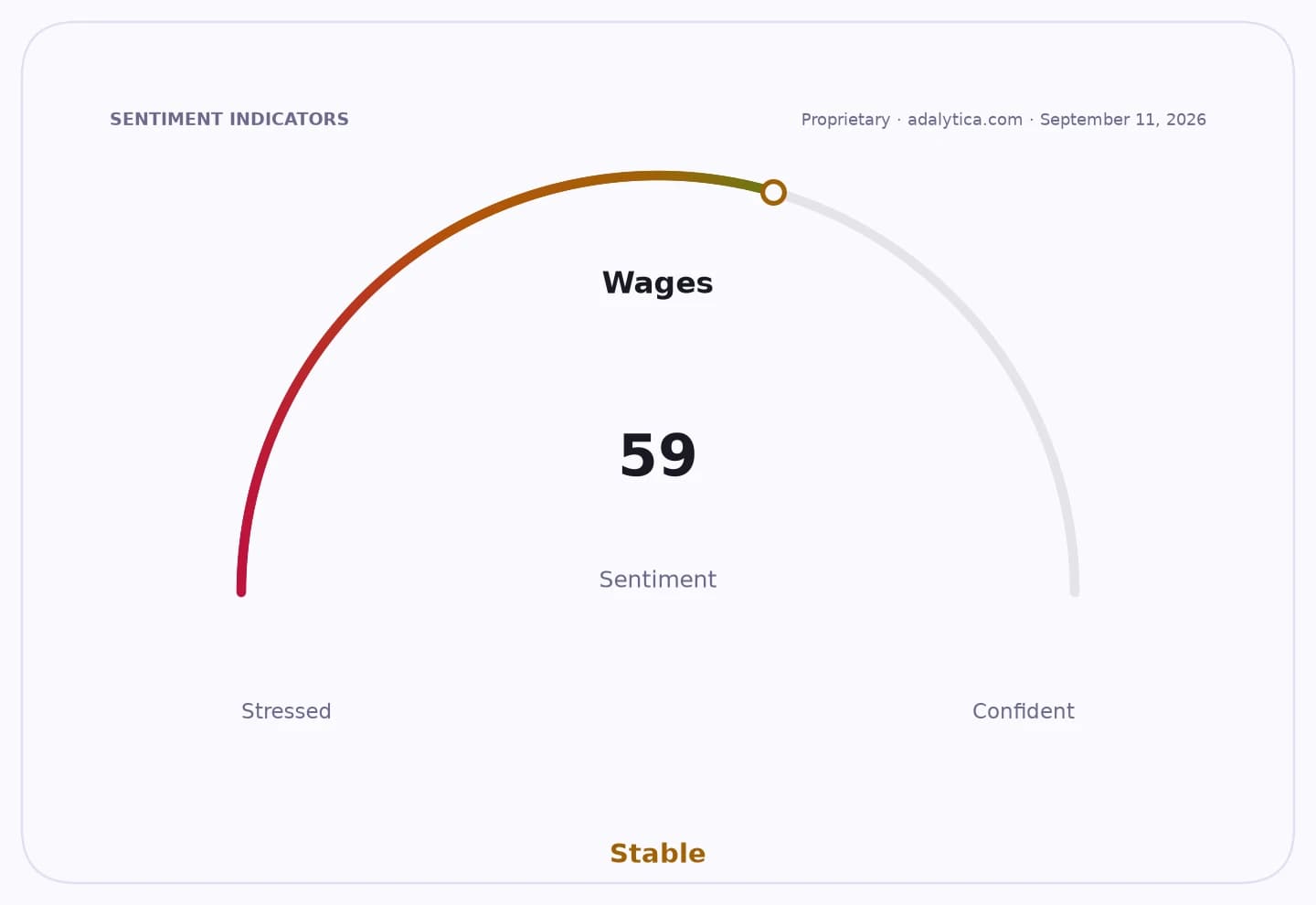
Greek industry is struggling to turn higher pay into hiring power, with a new survey showing that most jobseekers still misread factory work as low-paid and low-status even as employers say the sector can offer better wages than office roles.
The study, conducted by ETBA in partnership with Democritus University of Thrace, points to a labor-market mismatch that matters well beyond manufacturing. If industry cannot attract educated workers, production capacity, regional development and Greece’s broader competitiveness all come under pressure at a time when employers across the economy are already competing for scarce talent.
The first phase of the survey, based on 92 participants and presented in Thessaloniki, found that more than half of respondents had university, postgraduate or doctoral education, and another 14% had vocational training. Yet only about 10% currently work in industry, while 32 said they had worked there before and just nine do so now, a sign of labor leakage rather than a lack of available workers.
What stands out is not simply the weak pull of industrial jobs, but the gap between perception and reality. Some 66.3% of respondents did not know that industrial roles can pay more than comparable private-sector office jobs. That suggests the industry’s labor problem is at least partly one of communication and image, not just compensation.
The findings also show that pay remains the main lever for attracting workers back. Roughly 72%-73% of those not employed in industry said they would consider moving into the sector if wages were better. Career progression and a modern, safe workplace were also cited as important. In other words, wages may open the door, but conditions and advancement decide whether workers stay.
That has direct economic significance for Greece. Industry is one of the few sectors that can support higher productivity, regional jobs and a stronger domestic supply base. For areas such as Thrace, where deindustrialization has narrowed career options, the inability to retain young workers feeds migration to larger Greek cities or abroad. For businesses, it raises recruitment costs, slows expansion and constrains investment plans.
The challenge is sharper with Generation Z, which the researchers said now expects more than just a paycheck. Younger workers want career paths, stronger company culture and a better working environment, not merely a stable job. That puts pressure on industrial employers to modernize workplace practices, improve outreach and build a more visible pipeline from universities and vocational training into factory and plant jobs.
The broader message is that Greece’s industrial labor shortage may be less about prestige than information. The study’s authors argued that there is “ignorance, not lack of status,” around the sector. If employers can close that gap through internships, site visits and university partnerships, they may be able to tap a pool of educated workers who are not hostile to industry, only unconvinced by what it offers.
For investors, the implications are clear. Manufacturers with strong wage structures, training programs and local recruitment networks are better positioned to scale output than those relying on old labor-market assumptions. The winners are likely to be firms that can combine pay with advancement and workplace quality; the losers are employers that fail to adapt, and regions that continue to export their young workers.
| Entity | Gains | Losses |
|---|---|---|
| Industrial employers with strong pay and training | ▲Easier hiring | ▼ |
| Workers seeking higher wages | ▲Better options | ▼ |
| Greek manufacturing competitiveness | ▲Potential labor inflow | ▼ |
| Firms relying on outdated labor image | ▲ | ▼Recruitment and retention |