Greek minister warns on global security order
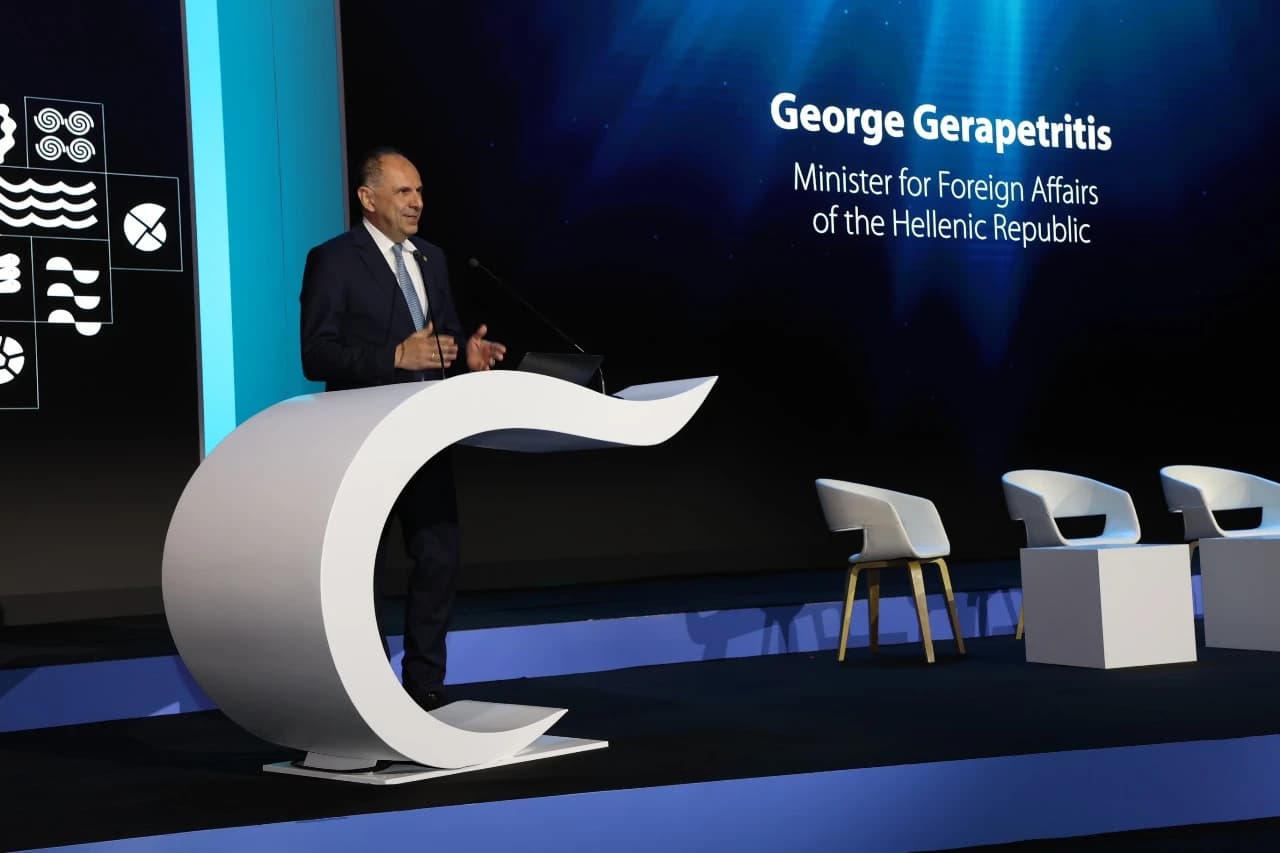
Greek Foreign Minister Giorgos Gerapetritis used a speech in Toronto to argue that the post-World War II security order is breaking down, with investors and policymakers now having to price a world where power increasingly outruns law.
That matters because the erosion of multilateral rules is not an abstract diplomatic complaint. It is feeding higher geopolitical risk premia across commodities, currencies, defence and safe-haven assets, while making it harder for states and companies to plan around trade routes, energy flows and conflict containment. Gerapetritis framed the shift as a structural break rather than a cyclical shock, saying “the complete retreat of international law and multilateralism” is leaving countries with fewer tools and fewer credible institutions to manage crises.
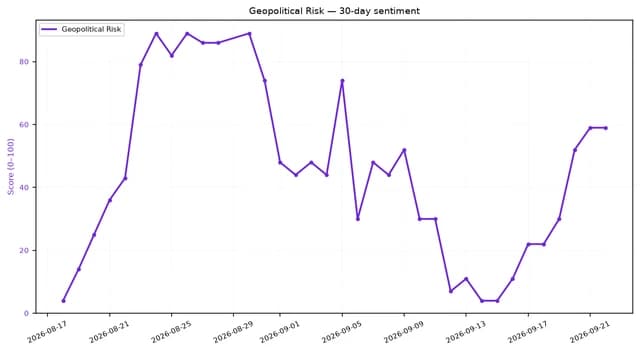
His warning lands against a backdrop of more than 60 armed conflicts worldwide, a record since the Second World War by his account, with fighting and instability spilling across regions rather than remaining contained. That fragmentation has direct economic costs: disruption in the Gulf and the Red Sea has tightened energy security, the collapse of Ukraine’s grain corridor has deepened food insecurity, and water stress is adding another layer of supply risk. For Europe, the result is a policy environment where defence spending, energy resilience and supply-chain diversification are moving up the agenda even as growth remains fragile.
For investors, the implications are clearest in asset prices. Gold has remained elevated and recently traded around $396.69 an ounce, having earlier in the year surged as high as $490, while the SPDR S&P 500 ETF Trust was last at $772.87, near its highs but still vulnerable if geopolitical shocks feed back into earnings and discount rates. Oil, tracked by USO, has also stayed expensive by historical standards at $147.47, reinforcing the view that geopolitical stress is still being transmitted into inflation expectations and transport costs even when equity markets look calm.
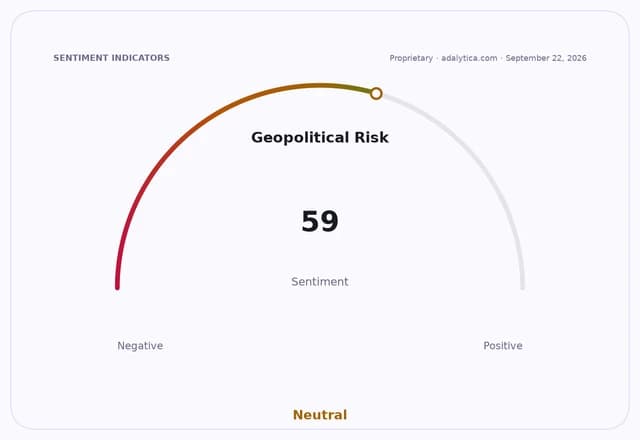
The market message is that “normal” correlations are breaking down. Safe havens are benefiting from instability, but the broader picture is less reassuring: the US dollar trade signal in the Adalytica model shows extreme greed, while global stability sentiment sits in neutral territory with fear still elevated. That combination suggests capital is seeking protection without fully discounting how persistent the fragmentation could become.
Gerapetritis also highlighted the weakness of the United Nations and the European Union’s veto-driven paralysis, arguing that the institutional architecture built after 1945 is struggling to produce binding responses to war. His comment that Europe must move toward strategic autonomy reflects a wider policy pivot already under way: governments are being pushed to build new alliances, raise defence spending and accept that the old assumption of rule-based predictability no longer holds.
The key investor question is whether this is a temporary phase of disorder or the new baseline for international relations. If it is the latter, then markets will have to live with higher structural volatility, more frequent supply shocks and a persistent bid for hard assets and defence exposure.
| Entity | Gains | Losses |
|---|---|---|
| Gold | ▲Safe-haven demand | ▼Risk assets |
| Oil producers | ▲Higher price support | ▼Consumers, importers |
| Defence sector | ▲Bigger budgets | ▼Fiscal flexibility |
| Multilateral institutions | ▲None | ▼Credibility and influence |