Grocery Outlet to Close 12 Stores
Grocery Outlet is closing 12 stores, including eight in California, as the budget grocer pushes to prune its footprint and protect profitability after a stretch of volatile trading and softer consumer spending.
The closures underscore how even value-focused retailers are being forced to trim underperforming locations while shoppers stay choosy and competition intensifies across the grocery aisle. Grocery Outlet said in its latest quarterly filing that it began a business optimization plan in the first quarter to strengthen long-term profitability and cash flow, improve execution and align its store base with a more disciplined growth strategy.
The company had 547 stores in California, Washington, Oregon, Pennsylvania, Tennessee, Nevada, Idaho and Maryland as of July 4, according to its filing. It expects lease exit costs of $50 million to $60 million tied to the restructuring, a sign the retreat will carry near-term cash costs even as management looks to improve economics over time.
For investors, the move is a reminder that discount grocers are not immune to margin pressure. Grocery Outlet shares have swung sharply over the past year and most recently traded at $11.32, above both the 50-day and 200-day moving averages, after a rebound from a June low near $6.40.
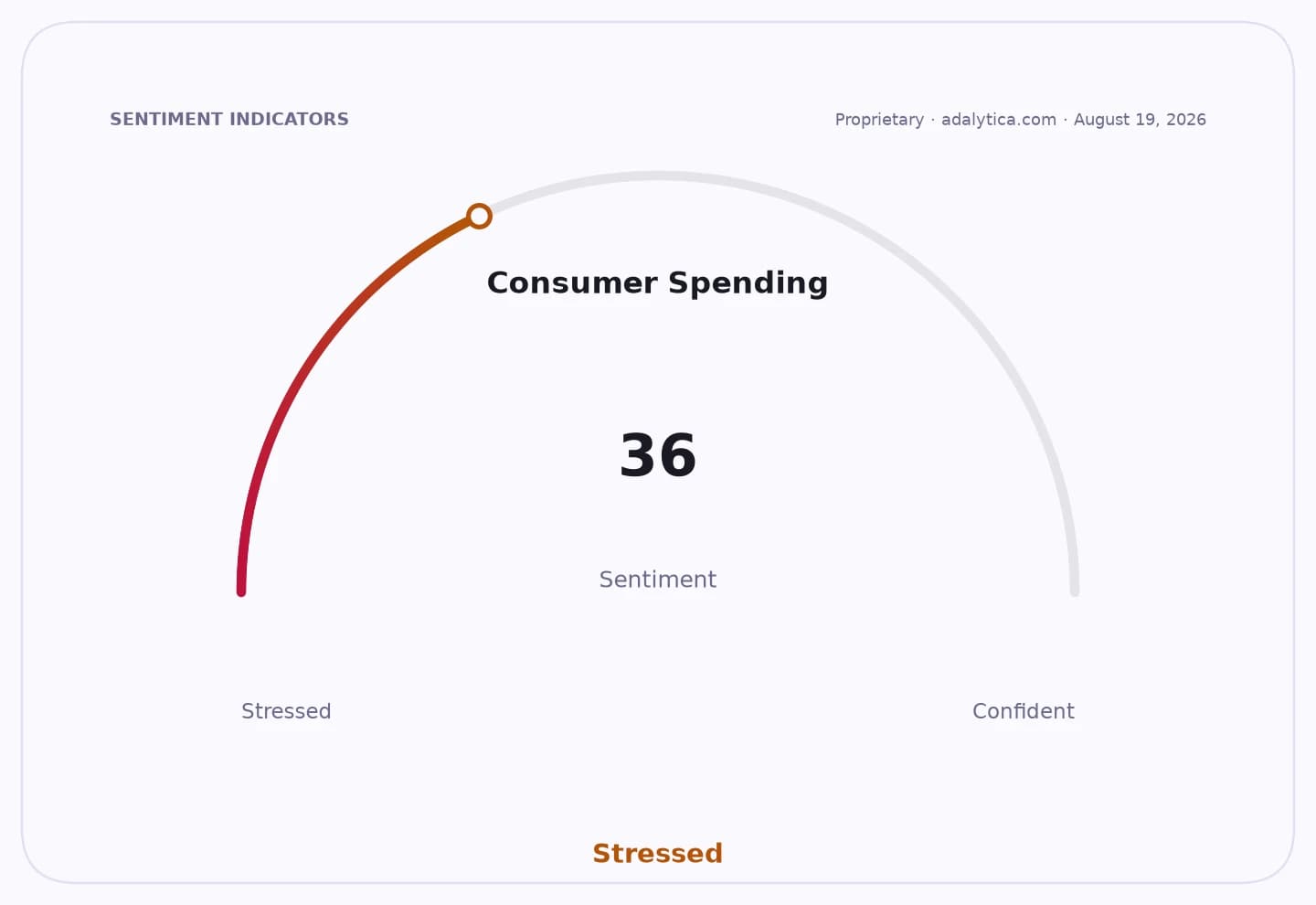
The timing also matters for the broader consumer backdrop. U.S. unemployment sits near 4.1% and inflation remains elevated, but Adalytica’s consumer spending sentiment is still neutral, while grocery and food spending sentiment has only recently recovered from weaker readings. That points to a household that is still value-conscious, but not necessarily spending freely enough to support every store in the chain.
Competitors including Walmart and Costco remain in stronger technical position than Grocery Outlet, with both trading above their 200-day moving averages and continuing to draw traffic from price-sensitive shoppers. For Grocery Outlet, the immediate focus now is whether the store closures and lease exits can lift margins without slowing growth too much.
The next catalyst is execution: investors will be watching whether the optimization plan improves same-store performance and cash flow, or whether further pruning is needed if consumer demand stays uneven.
| Entity | Gains | Losses |
|---|---|---|
| Grocery Outlet | ▲Lower overhead | ▼Fewer stores |
| Investors | ▲Potential margin lift | ▼Restructuring costs |
| Walmart / Costco | ▲Share gains | ▼Less room for smaller rivals |
| California landlords | ▲Filled space later | ▼Near-term lease exits |