Grocery Outlet Falls on Margin Pressure and Weak Traffic
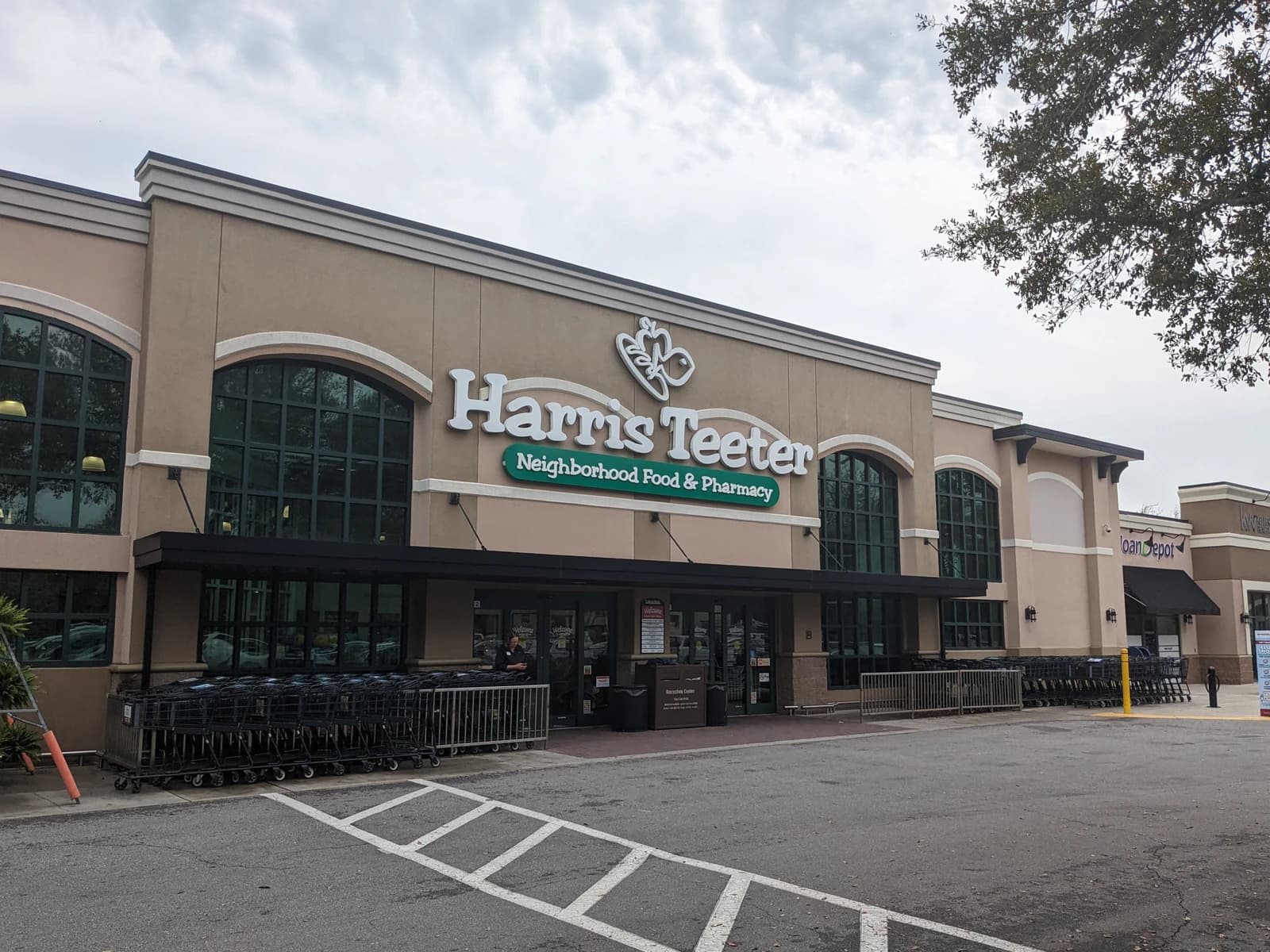
Grocery Outlet is emerging as the clearest casualty of a U.S. food-retail backdrop that is punishing value players even as consumers keep spending elsewhere.
The stock has fallen to $12.38, down sharply from near $16 in early October and far below its February peak above $20, a slide that has left it trading well under both its 50-day and 200-day moving averages. The latest move underscores investor skepticism that the discount grocer’s business model can quickly restore growth and margins after a year of heavy pressure from pricing competition, weaker traffic and a company overhaul.
That matters because Grocery Outlet is not a large-cap benchmark name; it is a read-through on how unforgiving the low-margin grocery channel has become. When shoppers trade down, investors often expect discounters to win. But the sector’s economics are more complicated. Grocers with thin margins can be squeezed by persistent promotions, higher shrink, uneven basket sizes and the need to invest in stores and distribution at the same time. Grocery Outlet’s own filings have pointed to rising promotional activity from competitors and a business optimization plan aimed at improving profitability and cash flow.
The market has already marked down the cost of that challenge. The shares remain near the lower end of their recent range, with momentum indicators still lagging despite the recent bounce in the broader consumer complex. By contrast, US Foods has held up much better, recently trading around $104, supported by a more stable foodservice model and less direct exposure to neighborhood grocery pricing wars. That divergence reflects where investors see operating leverage and where they see margin risk.
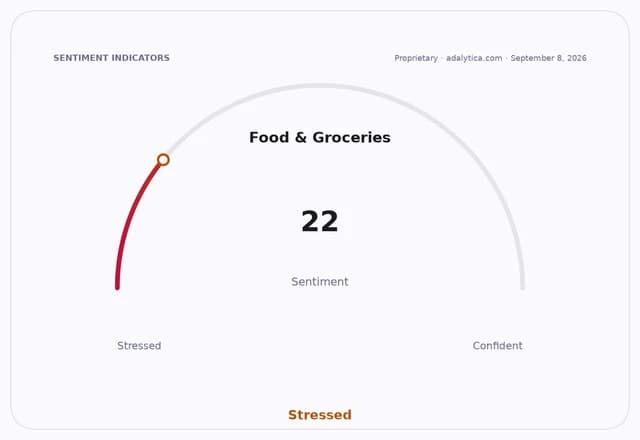
The broader consumer backdrop is mixed rather than uniformly weak. Adalytica’s Consumer Spending Sentiment gauge sits in “Greed,” suggesting households are still willing to spend, but Food and Grocery Spending Sentiment is in “Fear,” a sign that investors and market participants expect pressure to stay concentrated in staples. In practice, that means discounters and grocers are fighting for share in a market where shoppers are still spending, but are increasingly selective and price sensitive.
For Grocery Outlet, the key question is whether management can turn restructuring into visible store-level improvement before the market loses patience. A spin-off or separation of any underperforming business line can unlock value when the asset has clear standalone economics. It can also expose just how much of the franchise was being subsidized by a larger balance sheet. If the company can show better execution, the stock’s collapse could set up a rebound. If not, the market is likely to treat the recent bounce as a bear-market rally in a structurally difficult grocery business.
| Entity | Gains | Losses |
|---|---|---|
| Grocery Outlet turnaround investors | ▲Possible valuation reset | ▼Execution risk |
| Discounters and value grocers | ▲Trade-down traffic | ▼Margin pressure |
| US Foods and steadier foodservice names | ▲Relative defensiveness | ▼Less upside from grocery volatility |
| Shoppers | ▲Lower prices | ▼Fewer promotions if retailers pull back |