Guangxi unveils 500 billion yuan AI financing plan
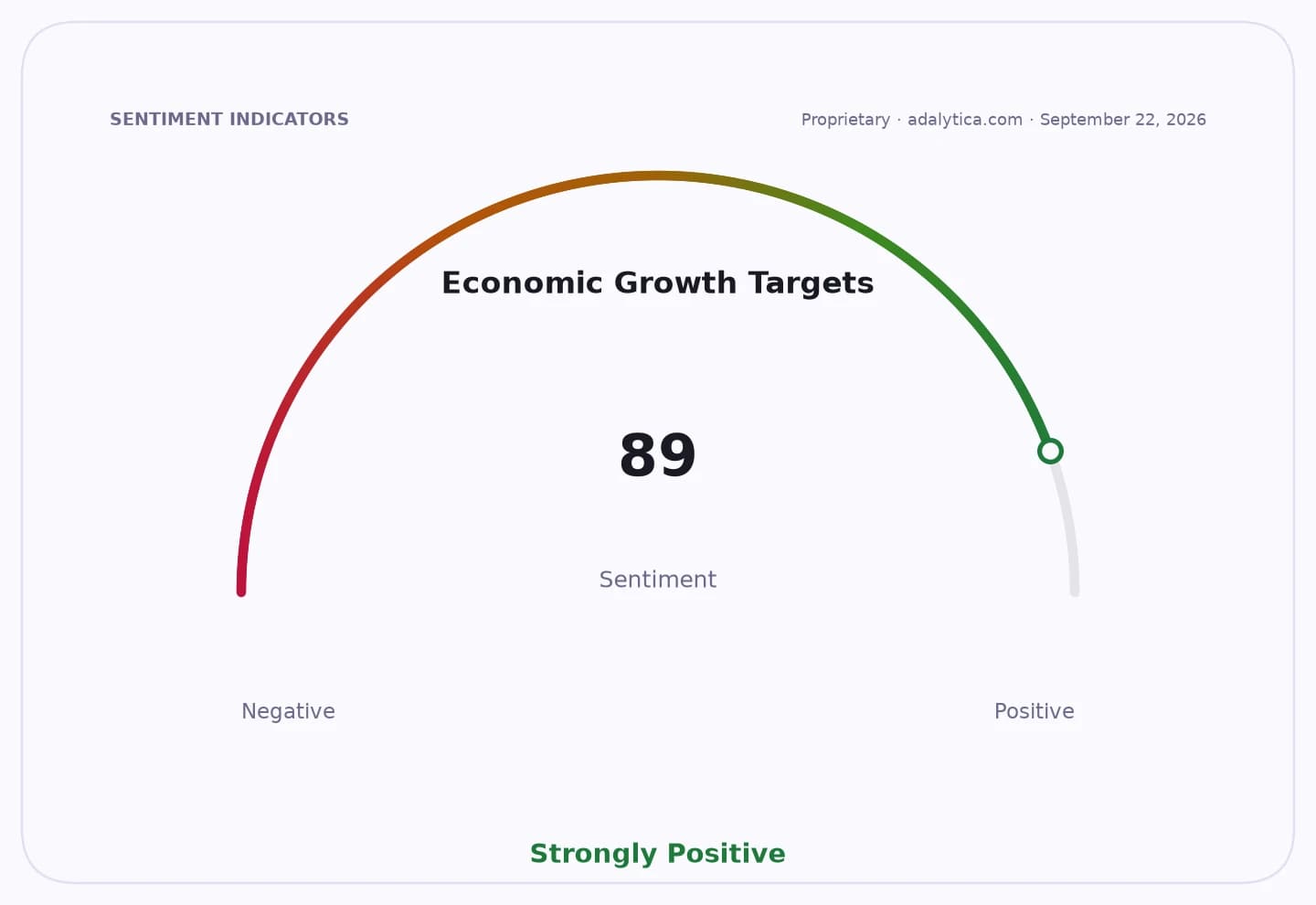
Guangxi has moved to build a large-scale financing platform for artificial intelligence, unveiling a five-year financial plan that calls for an AI fund cluster of at least 50 billion yuan, a step that could channel policy money into one of China’s most closely watched growth areas.
The measure matters because it turns AI from a technology slogan into a provincial financing priority. By pledging a fund cluster of no less than 500 billion yuan, Guangxi is signaling that local governments are prepared to use credit, insurance, guarantees and equity tools to support AI firms across their life cycle, from early-stage development to listing onshore. That can lower funding costs for smaller developers and infrastructure providers while strengthening the policy backdrop for companies tied to computing power, industrial AI and cross-border digital services.
The plan also explicitly calls for new products such as “AI loans” and “computing-power loans,” a sign that lenders are being pushed to underwrite a sector that is still cash-intensive and often asset-light. For banks, that creates a potential new lending theme but also a higher-risk one, since many AI businesses remain unproven and may not yet have stable cash flow or hard collateral. For insurers and guarantees providers, the opportunity is to package financing around a sector that officials clearly want to scale.
Investor relevance is broader than Guangxi. The region’s push fits Beijing’s wider effort to accelerate AI industrialization while building domestic capital support for strategic sectors. That has implications for listed Chinese AI names, cloud infrastructure providers, data center operators and companies with exposure to Southeast Asia, where Guangxi is also seeking to build overseas financial services for China’s firms. The plan’s emphasis on export credit insurance for AI companies expanding abroad suggests policymakers want local firms to monetize AI beyond the domestic market, especially in ASEAN-linked supply chains and digital trade.
For equity investors, the immediate read-through is not a guaranteed earnings boost but a stronger policy floor. State-backed financing can improve sentiment toward AI-related names and help smaller firms survive longer development cycles. The bear case is that local fund commitments can be slow to deploy and may eventually favor politically supported projects over commercially attractive ones. The difference will matter: if the money is matched by viable demand and real deployment, it could support a regional AI ecosystem; if not, it risks becoming another policy headline with limited market impact.
The key catalyst now is execution. Investors will watch how much of the announced capital is actually raised, which institutions join the fund cluster, and whether Guangxi can use its position near Southeast Asia to turn AI finance into a cross-border business rather than a purely domestic subsidy program.
| Entity | Gains | Losses |
|---|---|---|
| Guangxi AI firms | ▲More funding access | ▼Higher policy scrutiny |
| Banks and insurers | ▲New lending products | ▼Greater credit risk |
| AI exporters to ASEAN | ▲Support for overseas expansion | ▼Slower policy execution |
| Private capital | ▲Co-investment opportunities | ▼Less room if state funds dominate |