HAGL coffee expansion as durian prices ease
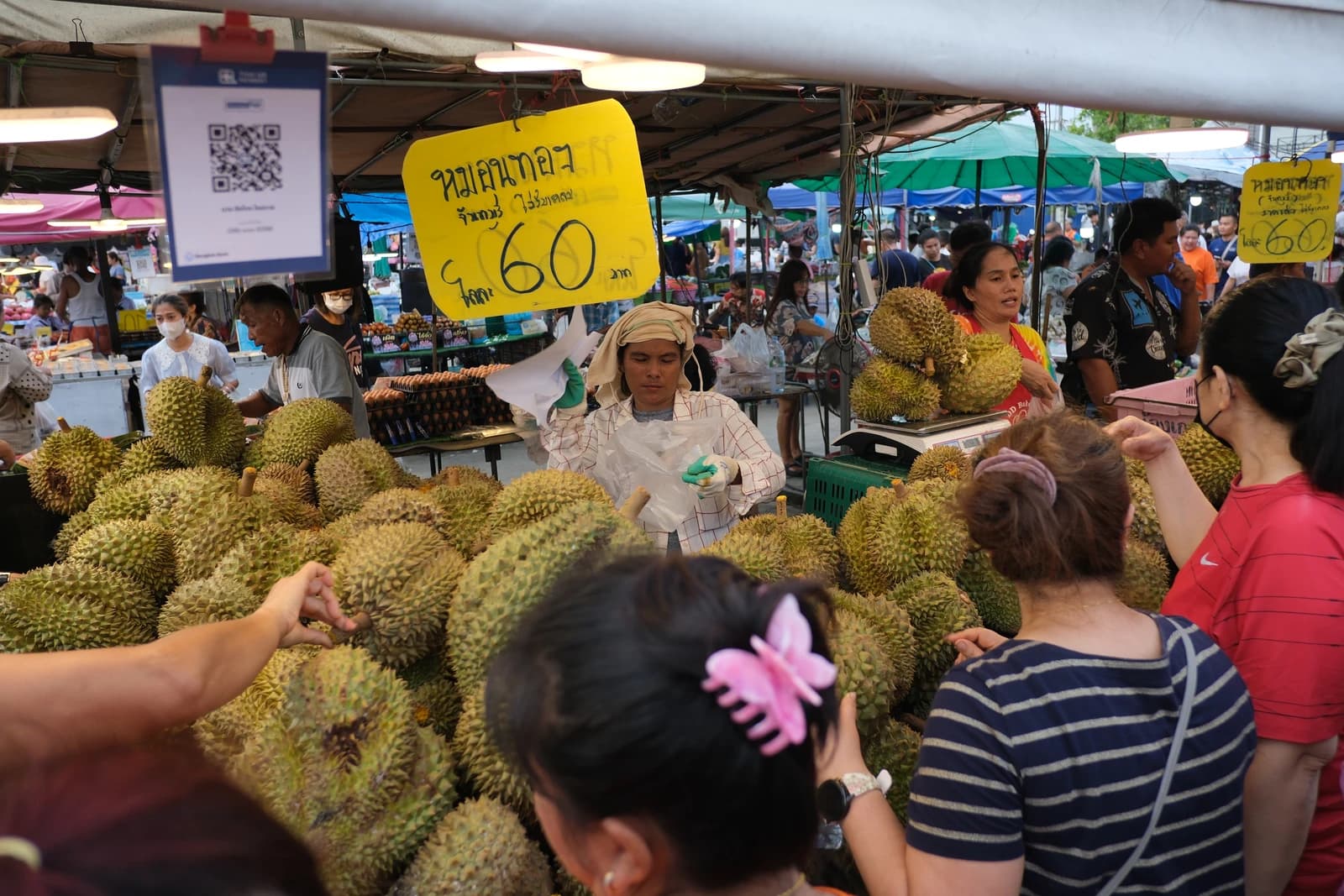
Durian prices are easing after a sharp run-up, while Hoang Anh Gia Lai is pushing ahead with a large coffee expansion that could reshape its agricultural earnings over the next few years.
The immediate market move matters because both crops are tied to cash flow for growers and exporters in Vietnam, one of the region’s most important farm suppliers. Softer durian prices can quickly squeeze margins for growers after recent gains, while a bigger coffee footprint points to longer-term supply growth in a market where prices have been volatile.

In Vietnam’s domestic coffee market, buying prices slipped 500-600 dong a kilogram to an average 93,700 dong, or about $3.70, with Dak Lak and Gia Lai at 93,600 dong and Lam Dong at 93,000 dong. On the global market, robusta coffee for September delivery in London edged up $5 to $3,366 a ton, while December arabica in New York rose 4 cents to 280.5 cents a pound.
The bigger corporate story is Hoang Anh Gia Lai’s expansion of coffee acreage in Vietnam, Laos and Cambodia. Technical inspectors said they had surveyed plantations in Gia Lai, Champasak, Attapeu and Stung Treng, with arabica already planted in Laos’ Bolaven Plateau since April 2025 at elevations of about 1,000 to 1,350 meters.
In Gia Lai, the company began planting arabica in May 2025, largely by intercropping inside rubber plantations. Based on current growth indicators, the institute said those areas could yield about 7.2 kilograms of fruit per tree in the 2027 crop.
HAGL plans to develop about 20,000 hectares of coffee by 2028, with roughly 3,000 hectares completed in 2025, another 7,000 hectares underway this year and an additional 5,000 hectares a year targeted in 2027 and 2028. For investors, that creates a potential multi-year production ramp, but also leaves execution risk around agronomy, weather and pricing.
Durian is moving in the opposite direction. In the Mekong Delta, Thai durian grade A fell to 60,000-70,000 dong a kilogram from 73,000-78,000 dong, while grade B in Dak Lak dropped to 60,000-68,000 dong from 72,000-75,000 dong. In Lam Dong, Thai durian of top quality slipped to 85,000-86,000 dong from 92,000 dong, while grade B fell to 65,000-66,000 dong from 72,000 dong.
Not all durian varieties weakened. Ri6 grade A in the Mekong Delta climbed to 55,000 dong from 40,000 dong, and grade B rose to 40,000 dong from 25,000 dong, showing how quickly the market can separate by quality and origin.
The more important investment backdrop is that Vietnamese durian production is still expected to surge, from 1.533 million tons in 2024 to 1.8 million tons in 2025 and as much as 2.1 million tons in 2026. Export earnings were estimated at about $1.95 billion in the first eight months of this year, up 28% from a year earlier, making quality control and traceability increasingly important for growers and cooperatives.
| Entity | Gains | Losses |
|---|---|---|
| HAGL | ▲Larger coffee output base | ▼Near-term capex pressure |
| Coffee growers | ▲Higher future supply | ▼Current farm-gate softness |
| Durian buyers/exporters | ▲Lower input costs | ▼Grower margins |
| High-quality durian producers | ▲Ri6 price strength | ▼Thai durian grades A/B |