Hong Kong’s benchmark opened modestly lower, underscoring how quickly geopolitical shocks are feeding into already fragile risk sentiment and leaving the Hang Seng Index vulnerable after a sharp rebound from June’s lows.
Hang Seng Slips as Risk-Off Tone Returns
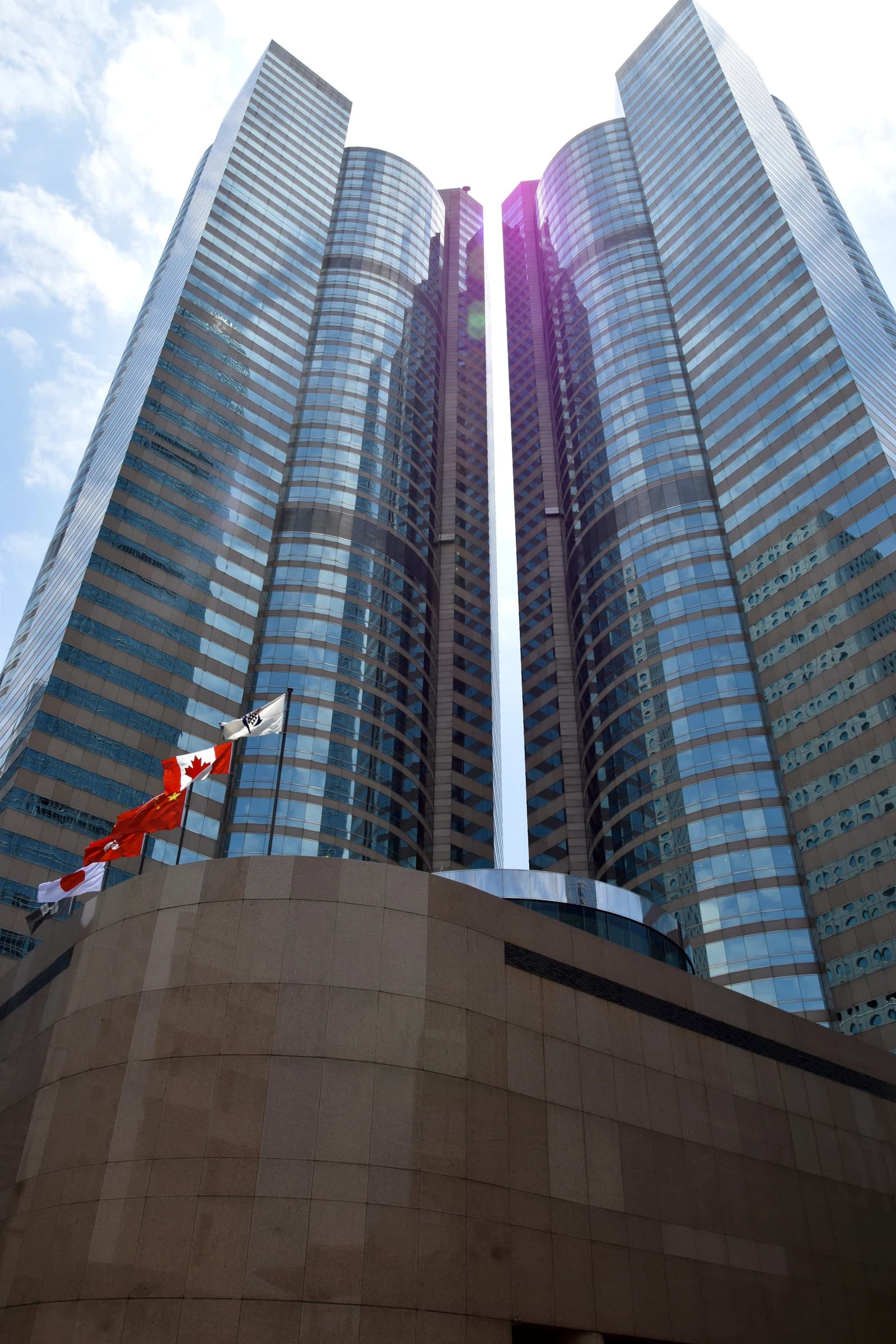
The Hang Seng Index slipped 0.13% at the open to 24,099.89, a move that by itself was small but came against a backdrop of rising caution across global markets. The latest leg of weakness is less about Hong Kong-specific fundamentals than about the market’s sensitivity to external risk, with investors watching the intensifying Middle East tensions and the broader deterioration in global stability sentiment.
Sentiment IndicatorsⓘProprietary · adalytica.com · July 14, 2026
This is a snapshot — live sentiment, awareness and momentum for 130+ markets update continuously in the dashboard.Open AlphaPulse

That matters economically because the Hong Kong market is highly exposed to shifts in global capital flows, China demand expectations and cross-border risk appetite. When geopolitics worsens, investors typically demand a higher risk premium for cyclical, trade-linked and China-sensitive assets. The Hang Seng’s recent price action suggests that even after recovering from a June trough near 22,672, the index has not yet regained the kind of momentum that would signal a durable rerating. It is still trading below its 200-day moving average around 25,825, a sign the broader trend remains technically weak despite the rebound from oversold levels.
Technical readings reinforce that caution. The index’s 14-day RSI has climbed to 61.4 from deeply oversold territory in late June, indicating the selloff has eased, but the MACD remains below its signal line, a common sign that downside pressure has not fully cleared. In other words, Hong Kong equities have bounced, but they have not yet broken convincingly into a new uptrend.
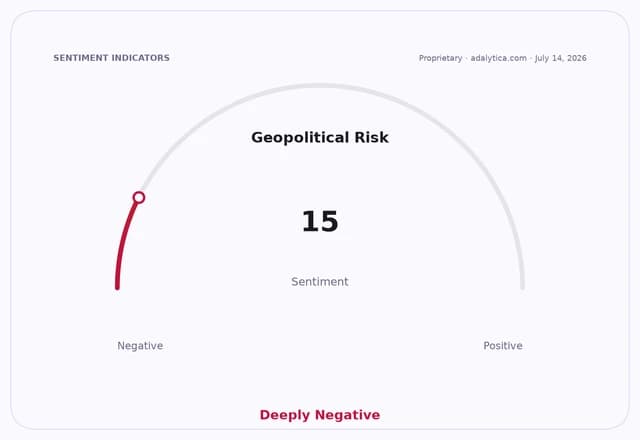
The risk-off tone is not confined to Hong Kong. Adalytica’s Global Stability Sentiment gauge shows “Extreme Fear” at 15, down sharply over the past month, while U.S. trade signals have also softened. That combination points to a market environment where investors are likely to favour defensive positioning and liquidity over beta exposure, even if day-to-day moves in the Hang Seng remain contained.
For investors, the immediate implication is that index direction may continue to be driven more by macro headlines than by local earnings revisions. That is a mixed backdrop for Hong Kong-listed financials, property names and mainland China proxies, which tend to outperform when external conditions improve and liquidity returns. A sustained move back above the 50-day average near 24,832 would help repair the chart and could attract momentum buying. Failure to hold current levels, by contrast, would leave the index exposed to another test of support around the mid-23,000s.
The broader narrative is that Hong Kong equities are trying to stabilize, but geopolitical uncertainty is still suppressing conviction. Until the market gets clearer evidence of de-escalation in the Middle East and steadier global risk appetite, the Hang Seng is likely to remain trapped between a technical rebound and a macro-driven ceiling.
| Entity | Gains | Losses |
|---|---|---|
| Risk-off investors | ▲Lower entry levels | ▼Fewer growth trades |
| Defensive sectors | ▲Relative demand | ▼Cyclical upside |
| Hong Kong exporters/importers | ▲Stable funding costs | ▼Volatile risk appetite |
| Hang Seng bulls | ▲Oversold rebound potential | ▼Breakout conviction |