Hawaii Summit Could Lift Travel Stocks
Hawaii is set to host a China-U.S. Tourism Leadership Summit, putting travel ties between the world’s two largest economies back on the diplomatic and commercial agenda at a time when relations remain fragile.
The summit matters because tourism is one of the clearest channels through which softer diplomacy can still produce hard economic gains. For Hawaii, which relies heavily on visitor spending, any rebound in Chinese arrivals would support hotel occupancy, airline demand and retail sales across the state’s tourism economy.
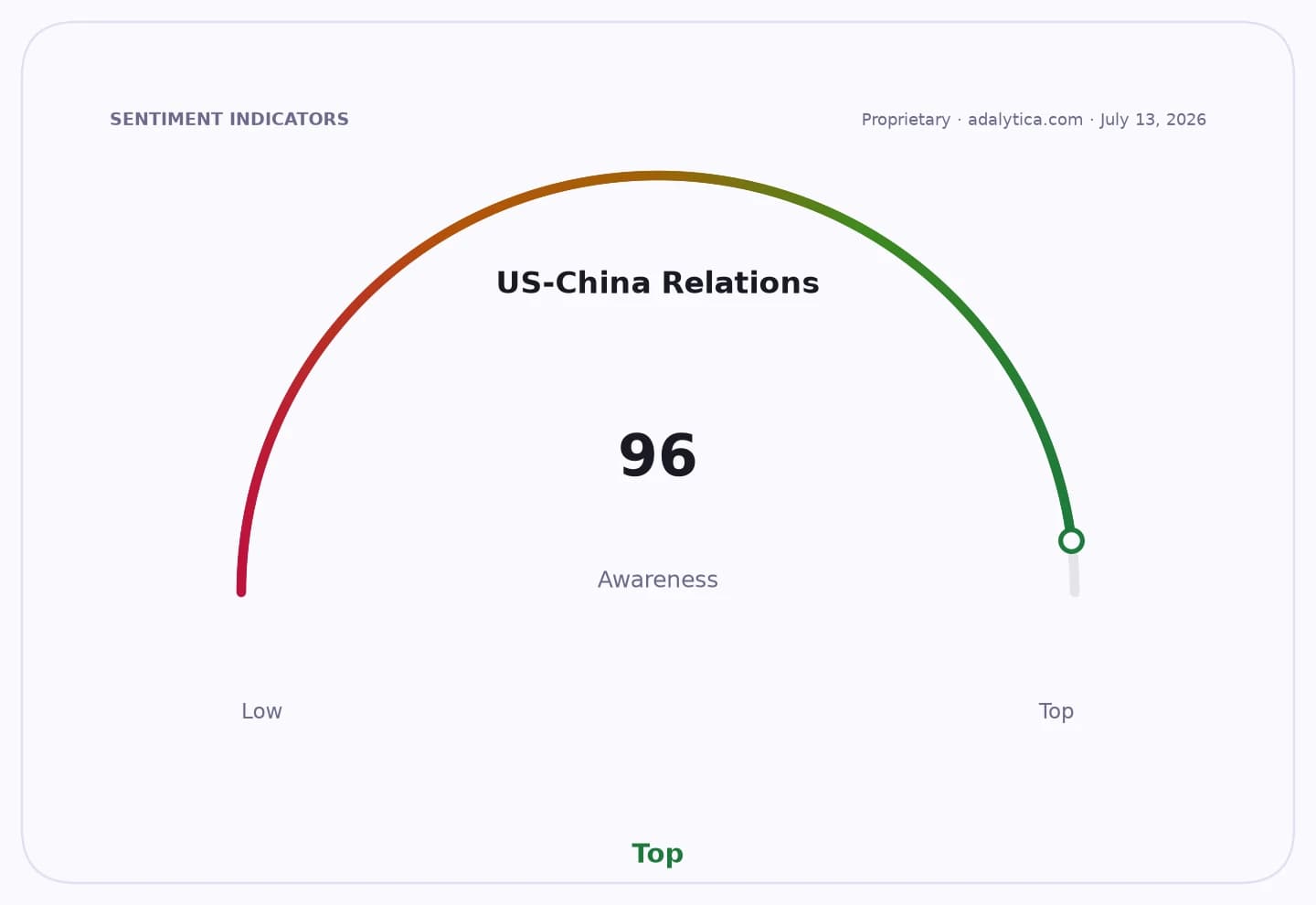
The timing is notable as US-China relations remain under heavy strain. Adalytica’s US–China Relations Sentiment gauge shows “Extreme Fear” at 4, even as awareness stays elevated, underscoring how much room there is for symbolic cooperation to move markets and sentiment.
For investors, the event is relevant to airlines, hotel operators and travel-related names exposed to trans-Pacific traffic. Hilton, Marriott and Booking Holdings all sit inside a broader tourism recovery trade, while Hawaiian travel demand can also feed into airport, leisure and consumer spending on the islands.
China’s outbound tourism has regained momentum as digital platforms and regional reopening make international trips easier to plan and book, and that trend could eventually translate into more spending in the US if policy frictions ease. Hawaii’s role as host gives the summit added visibility because the state sits at the intersection of US leisure travel and Asia-Pacific connectivity.
Technically, shares of Hilton have climbed to $191.14 from $142.26 in October, while Marriott is near $376.11 after a move from $272.11 and Booking Holdings has rebounded to $178.39 from $154.09. The moves suggest investors are already pricing in a healthier travel backdrop, even though Booking still trades below its 200-day moving average.
The immediate focus now is whether the summit produces any concrete follow-up on visas, flight capacity or group travel promotion. Any incremental progress would likely support travel stocks tied to Asian inbound demand, while another breakdown in US-China dialogue would keep the sector exposed to policy risk.
| Entity | Gains | Losses |
|---|