HCA, Tenet and UHS Trade on Hospital Budget Opacity
Hospital budget secrecy is drawing fresh attention to rising healthcare costs at a time when major U.S. operators are already managing higher expenses, heavy capital needs and sensitivity to government funding.
The immediate issue is not a market-moving disclosure but the economics behind it: governments can hold back spending figures for politically sensitive hospital projects, yet investors in health systems watch those decisions closely because hospital build-outs, staffing and reimbursement shifts all feed into margins, debt loads and long-term capacity.
That backdrop matters for HCA Healthcare, Tenet Healthcare and Universal Health Services, which have all navigated a volatile year for hospital equities. HCA shares recently traded at $421.83, down from a 2026 high above $543 but still above its 50-day moving average of $403.68, while Tenet closed at $269.08 and UHS at $175.78, each recovering from deeper spring lows.
The technical picture shows a sector still trying to stabilize after a sharp reset. HCA’s relative strength index has rebounded to 58.7 from deeply oversold levels in April and June, while Tenet’s RSI stood at 50.5 and UHS at 56.1, suggesting investors have stopped selling aggressively but have not yet committed to a full rerating.
For investors, the key question is whether public-sector hospital spending stays opaque or becomes a broader pressure point for funding, reimbursement and construction demand. That matters because healthcare operators are still absorbing elevated labor, malpractice and medical fee costs, and even small changes in payer mix or state funding can ripple through cash flow and capital plans.
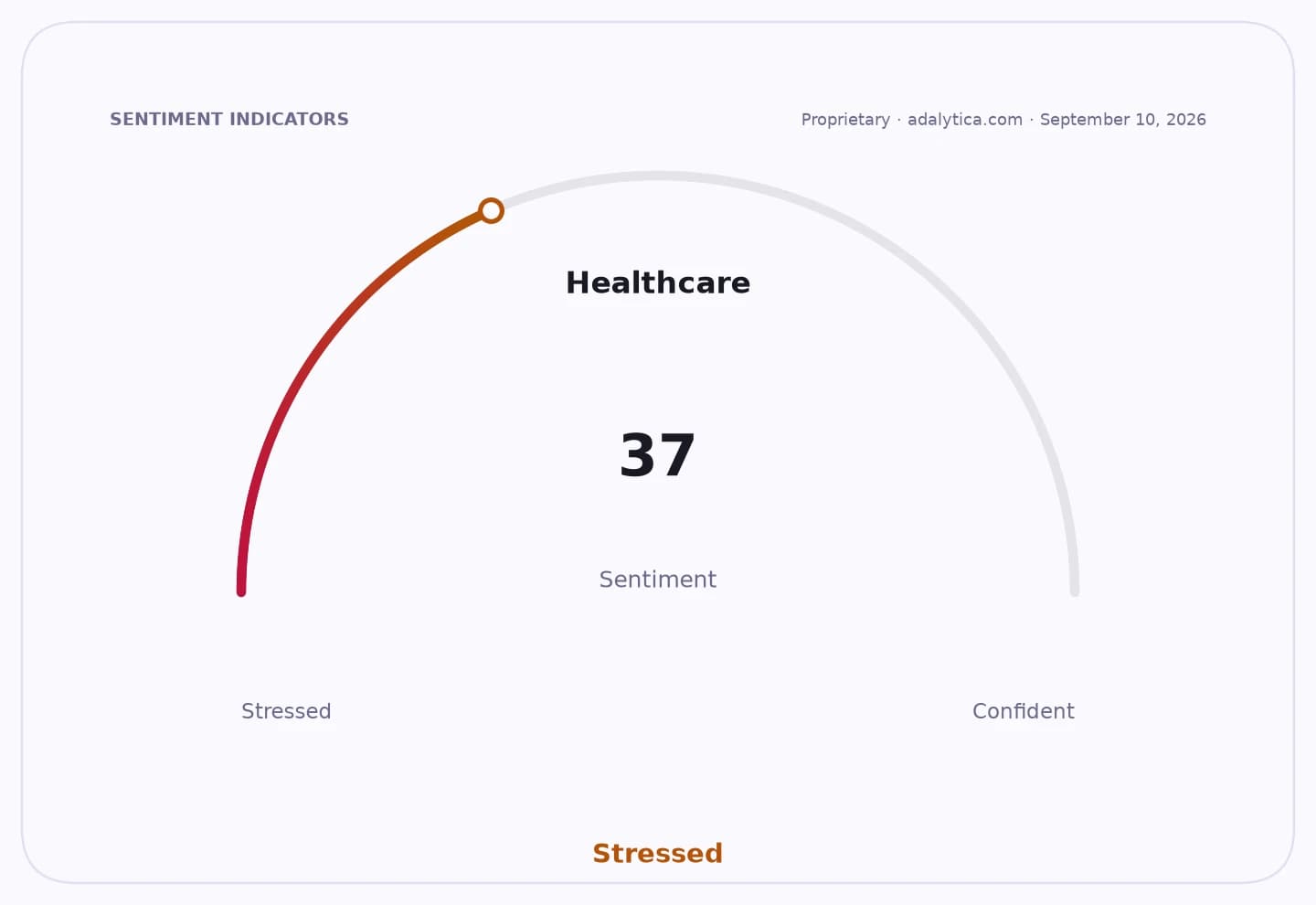
Adalytica’s Healthcare Spending Sentiment gauge remained neutral at 37, down 63 points over 30 days, underscoring a cautious backdrop for the group even as consumer-spending sentiment stays elevated. The divergence suggests investors are willing to buy broad consumption themes, but remain more selective on healthcare until budget visibility improves.
The next catalyst is likely to be further policy detail, capital-expenditure guidance or budget disclosure from state authorities, any of which could reset expectations for hospital contractors, operators and suppliers.
| Entity | Gains | Losses |
|---|---|---|
| Public hospital planners | ▲Budget flexibility | ▼Transparency |
| Taxpayers | ▲Potential spending control | ▼Clear cost disclosure |
| HCA, THC, UHS investors | ▲Sector stabilization | ▼Funding uncertainty |
| Healthcare suppliers | ▲Possible project flow | ▼Delayed contract visibility |