HCA, UnitedHealth, Pediatrix Face Malpractice Disclosure Risk
A proposal to make physicians’ malpractice records public is drawing fierce resistance from doctors’ groups because it could raise the cost of doing business across already strained U.S. health care, from staffing to hospital recruiting to liability coverage.
The core economic issue is simple: if more malpractice data becomes easier for patients, employers and payers to see, the downside risk for physicians and the institutions that hire them goes up. That can mean higher insurance premiums, tougher contract negotiations, slower hiring and more pressure on margins in a sector where labor is already the biggest expense.
That is why the pushback matters to investors. Doctors’ groups are not just defending professional privacy; they are warning that disclosure could deter physicians from taking higher-risk cases or working in underserved areas. In practical terms, that would tighten supply in a system already short of clinicians and could further advantage large, well-capitalized operators that can absorb legal and compliance costs.
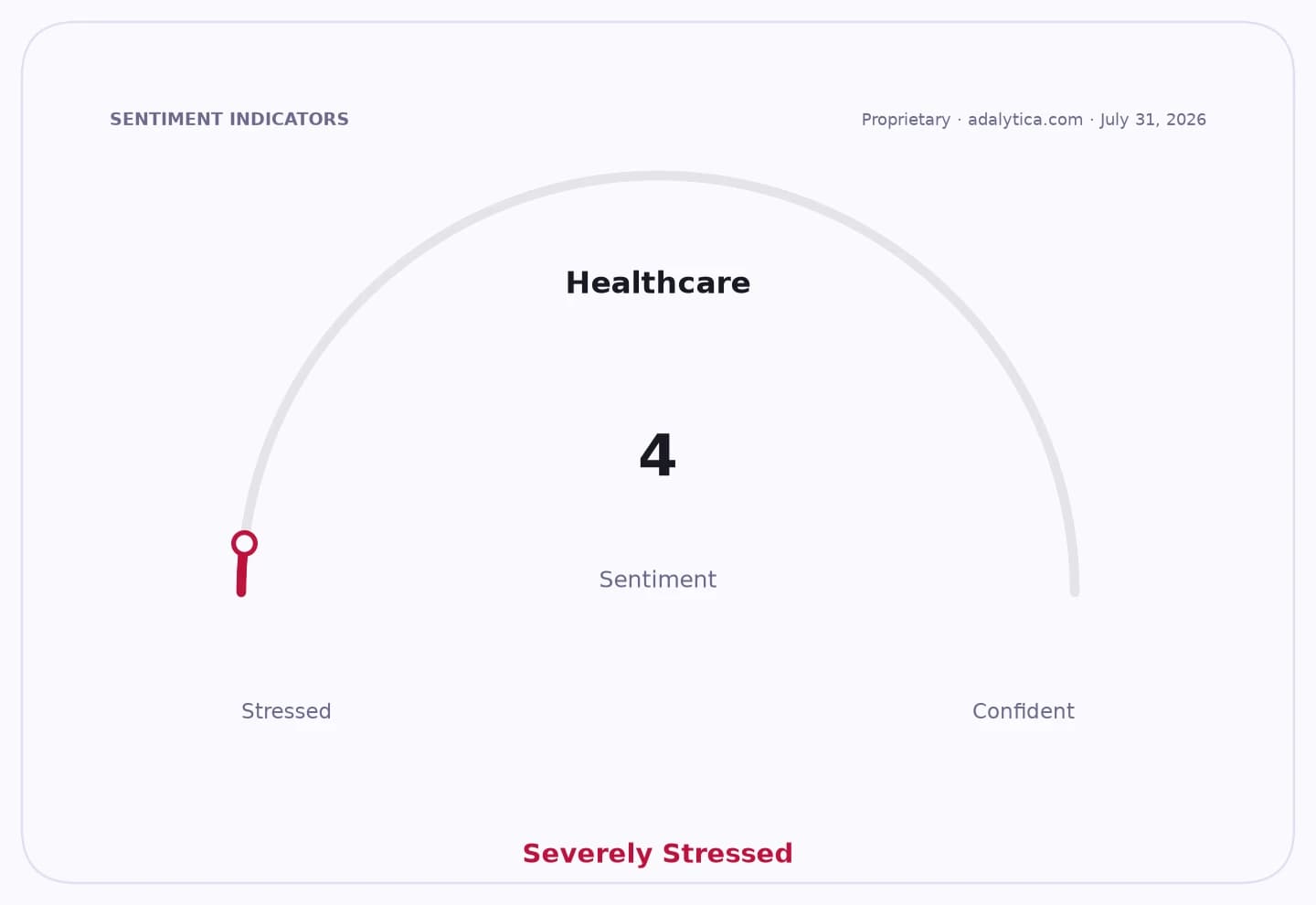
The stock market is already telling a story about where the pressure and opportunity lie. Health care sentiment tracked by Adalytica.com has collapsed into “Extreme Fear,” while consumer spending sentiment sits at “Extreme Greed,” a split that suggests investors are looking past near-term disruption in care delivery and toward businesses that can still monetize demand. Among the public names, Pediatrix Medical Group has rallied to about $26.51 from below $19 in late February, while HCA Healthcare has rebounded to roughly $402.59 after a deep spring selloff and UnitedHealth is holding above $414, underscoring how quickly the market can reprice quality balance sheets and scale when policy risk rises.
For Pediatrix, which depends on physician networks and hospital relationships, any regime that makes doctor risk more visible could sharpen recruiting competition and squeeze already thin operating leverage. HCA, with its massive hospital footprint, may be better positioned to absorb compliance and insurance costs, but it is not immune if disclosure pushes malpractice premiums higher across the system. UnitedHealth sits one step removed, but as one of the largest payers and care managers in the country, it would still face the ripple effects in reimbursement talks, provider networks and utilization patterns.
The bigger narrative is that transparency reforms in health care rarely stay confined to the public-interest argument. They cascade into pricing, labor and coverage decisions, and that is where the investment case gets interesting. If disclosure becomes law or policy, it could widen the gap between national platforms that can spread legal risk and smaller physician-led groups that cannot. That makes the current selloff in health care sentiment a potential entry point for investors focused on the toll-collectors of the system, not just the clinicians inside it.
The market is underestimating how much a seemingly narrow disclosure fight can alter bargaining power. Watch for renewed volatility in physician services, hospital staffing and managed-care names, but also for a second-order bid in the large insurers and scaled operators best able to turn transparency into pricing discipline. For long-term investors, this is the kind of policy shock that rewards balance-sheet strength and punishes fragility.
| Entity | Gains | Losses |
|---|---|---|
| Large hospital chains | ▲Scale shields margins | ▼Higher compliance and liability costs |
| Physician groups | ▲None | ▼Recruitment pressure and premium risk |
| Insurers / managed care | ▲Pricing power on risk | ▼More costly provider contracts |
| Patients / employers | ▲More transparency | ▼Possible narrower physician supply |