Ho Chi Minh City targets 10% growth on public investment
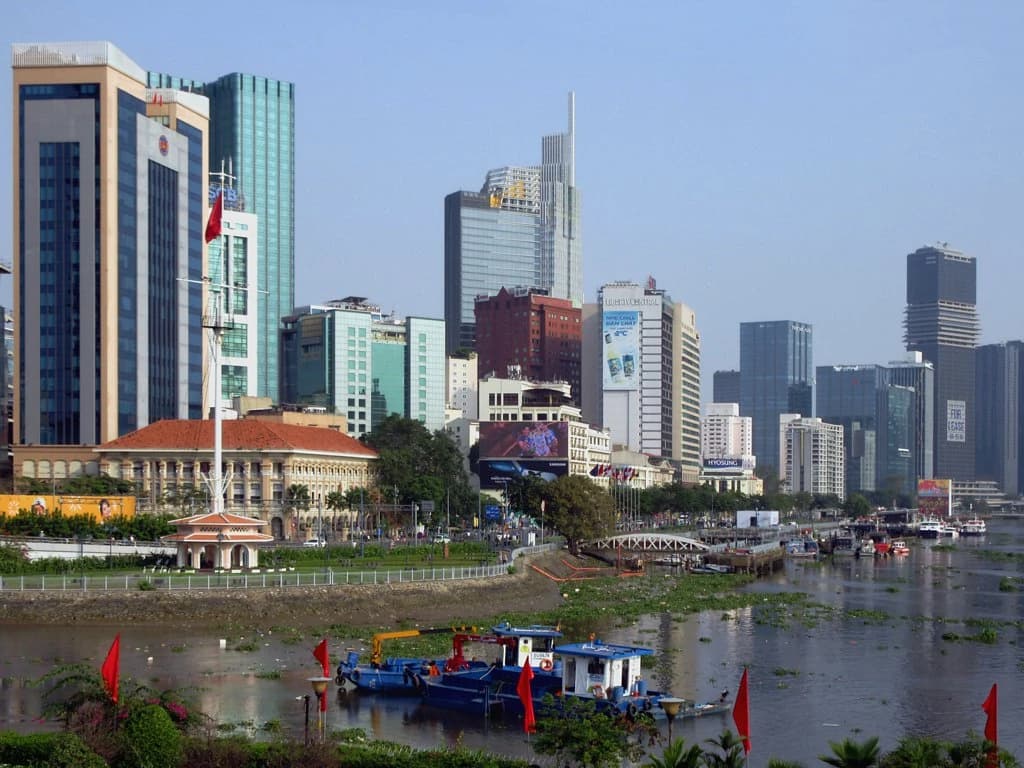
Ho Chi Minh City is leaning on a sharp acceleration in public investment, private capital and administrative reform to keep its 2026 growth plan alive, setting a Q3 expansion target of at least 11.07% as it tries to deliver full-year GRDP growth of 10% or more.
The target matters because the city is Vietnam’s largest economic engine and a barometer for whether the country can sustain its aggressive national growth ambitions. With only four months left in the year, chairman Nguyen Van Duoc is pressing agencies to move from planning to execution, particularly on capital disbursement, where delays have long constrained infrastructure spending and, by extension, construction, logistics and industrial activity.
Ho Chi Minh City said it wants growth of at least 9.43% in the first nine months and 12.3% in the fourth quarter to reach the annual goal. That is a demanding back-end-loaded profile, but the city has some momentum: retail sales and consumer service revenue rose 13.7% in the first eight months to more than VND1.3 quadrillion, while state budget revenue climbed 19.2% to VND624.757 trillion, equal to 62.4% of the annual target.
Public investment remains the clearest lever. By end-August, the city had disbursed VND85.141 trillion, or 57.7% of its annual public investment plan. That is respectable, but still leaves a large sum to be deployed if the city is to hit the pace needed for its year-end growth objective. Duoc said site clearance is critical, along with faster handling of planning, land, compensation, materials and investment procedures. The city is also looking to mobilize more than VND1.2 quadrillion for development investment and attract at least $11 billion in foreign direct investment this year.
For investors, the story is less about the headline target than about the policy mix behind it. Faster spending on roads, railways and expressways would support construction firms, materials suppliers, industrial real estate and logistics names, while stronger consumer demand would help retailers and domestic demand plays. But the city also has a credibility risk: 921 stalled or long-delayed projects remain on the books, underscoring how much output is still trapped by execution bottlenecks rather than a lack of ambition.
The city’s approach — shifting capital away from projects that cannot disburse toward those that can, and using “yellow card” and “red card” warnings to monitor performance — suggests authorities are trying to force a more selective and disciplined allocation of resources. That may improve near-term growth if implemented well, but it also raises the stakes for local bureaucracies already under pressure to simplify procedures and move faster.
If Ho Chi Minh City succeeds, it would reinforce the broader Vietnam narrative: growth is still being driven by domestic consumption, investment and reform rather than by one-off external demand. If it falls short, the gap would likely expose how dependent the 10% target is on rapid execution in the final months of the year.
| Entity | Gains | Losses |
|---|---|---|
| Ho Chi Minh City authorities | ▲Growth momentum | ▼Missed 10% target |
| Contractors and materials suppliers | ▲Faster disbursement | ▼Delayed project pipeline |
| Retailers and consumer services | ▲Stronger domestic demand | ▼Slower spending growth |
| Stalled project owners | ▲Capital reallocation pressure | ▼Continued delays |