House Republicans Split on Iran War Resolution
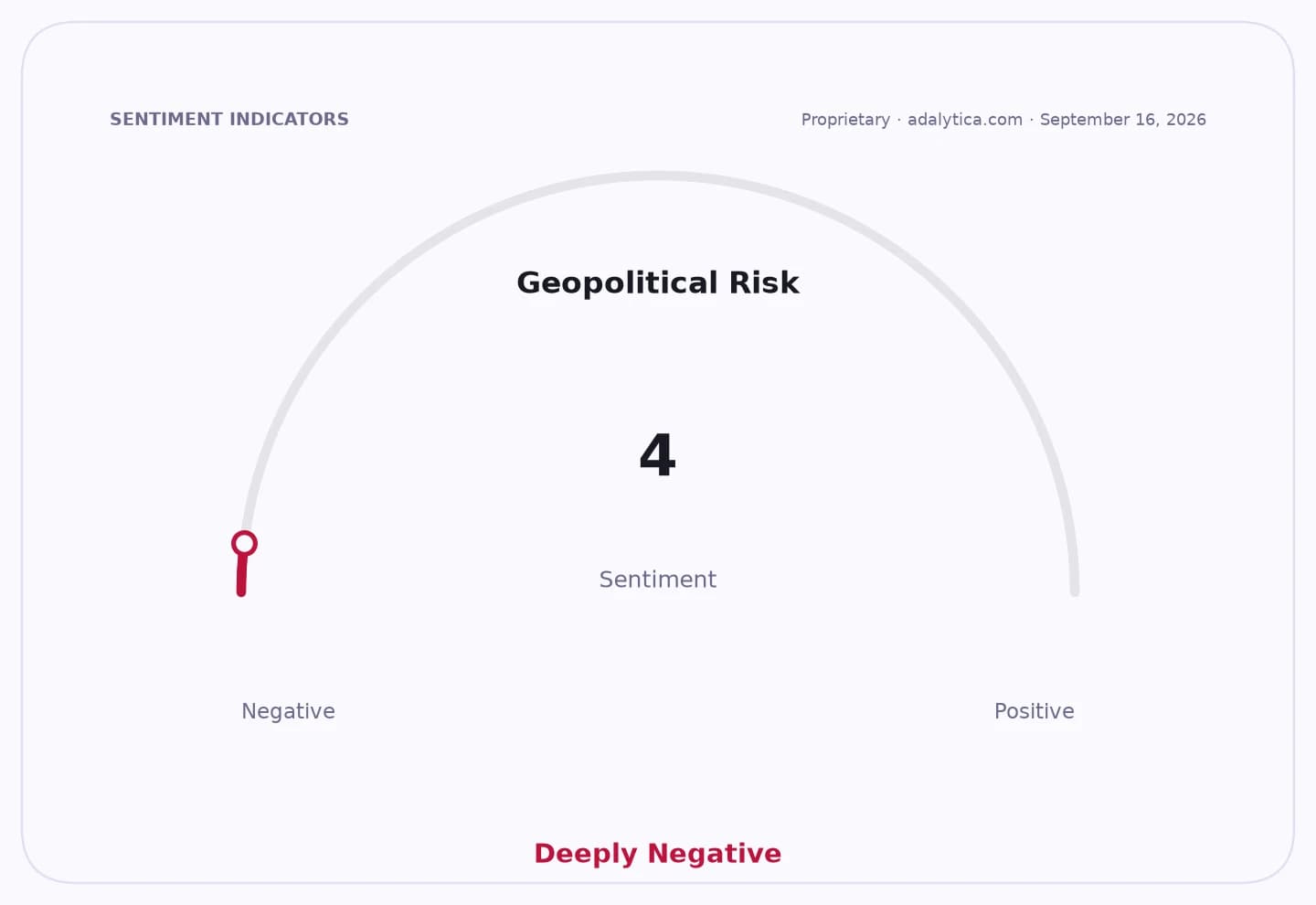
Seven House Republicans voting with Democrats to demand an end to the war with Iran is the clearest sign yet that the conflict is starting to fracture Donald Trump’s political coalition at the same time it is straining U.S. military readiness and raising the bill for investors watching defense, energy and geopolitical risk.
The significance is bigger than a symbolic rebuke. This was the third time the House has passed a resolution seeking to force the White House to wind down the war, and it drew more Republican support than the previous two attempts, when only four members of the party crossed over. That matters because once a war stops looking like a short, controllable deployment and starts resembling a prolonged, costly campaign, the political center of gravity shifts fast.
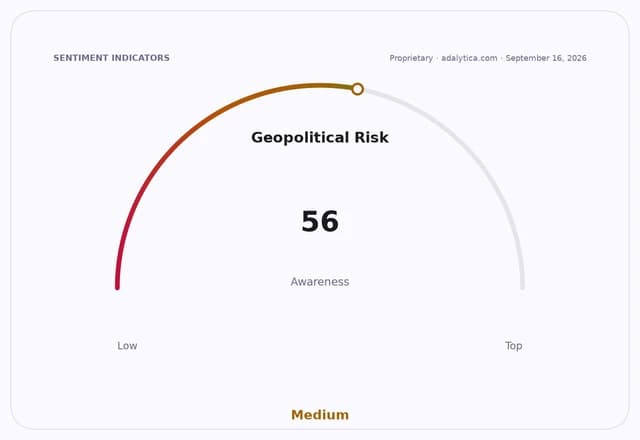
The economic cost is already visible. News context tied to the conflict puts the price tag at roughly $33 billion, while Pentagon officials have acknowledged significant ammunition shortages as the fighting consumes U.S. stocks. That is not just a budget line. It is a signal that sustained combat is competing with replenishment, modernization and readiness, exactly the kind of trade-off that can force Washington to accelerate munitions procurement and favor contractors with deep exposure to air defense, rockets and guided weapons.
For investors, the split inside the Republican Party matters because it broadens the base of opposition to escalation and raises the odds of policy volatility. If Congress keeps leaning toward restraint while the White House pushes forward, markets will have to price a wider range of outcomes for defense spending, crude oil supply routes and regional stability. The Adalytica Global Stability Sentiment gauge is sitting at “Extreme Fear,” while U.S. White House policy sentiment has fallen sharply, underscoring how quickly geopolitical stress is feeding into broader risk appetite.
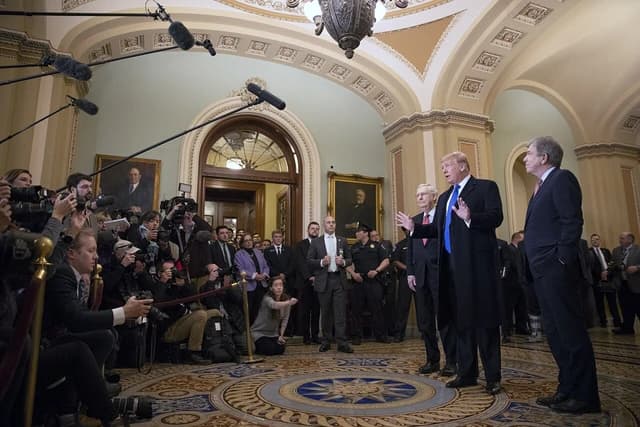
The market’s first-order beneficiaries are the obvious ones: defense suppliers tied to replenishment demand, especially missile, interceptor and ammunition makers. Lockheed Martin and GE Aerospace both stand to benefit from any rush to rebuild inventories and sustain air and missile defense systems, while the broader aerospace and defense complex, tracked by the XAR ETF, remains the cleanest way to play a longer procurement cycle even after recent weakness. The losers are clearer too: any prolonged war raises the risk of higher energy prices, tighter margins for importers and a heavier political overhang on the administration.
Technically, the defense trade is not a straight line. Lockheed Martin and GE Aerospace have both pulled back from recent highs, with their shares now trading below their 50-day moving averages, which can reset entry points if Congress forces a shift from combat spending toward replenishment and deterrence. XAR has also cooled sharply from earlier strength. That is exactly when the market often underestimates the next leg of capital spending.
The real story is not just that seven Republicans defected. It is that the war is moving from a foreign-policy event to a domestic fiscal and industrial one. If the conflict persists, Washington will have to pay up for munitions, air defense and logistics. If it eases, the political cost to Trump rises. Either way, investors should be positioning around the rerating of defense supply chains and the renewed sensitivity of energy and risk assets to every headline from the Middle East.
| Entity | Gains | Losses |
|---|---|---|
| Defense contractors | ▲Replenishment orders | ▼Political backlash |
| Lockheed Martin (LMT) | ▲Missile demand | ▼War fatigue headlines |
| GE Aerospace (GE) | ▲Military engine/support demand | ▼Readiness pressure |
| Trump White House | ▲None | ▼GOP defections |