House Votes to Press Trump on Iran War
The House of Representatives voted to ask President Donald Trump to end the war with Iran, sharpening a political fight over war powers at a moment when oil markets, bond yields and broader risk sentiment are already being buffeted by the conflict.
The measure passed with support from seven Republicans, more than the four GOP votes seen on earlier attempts, underscoring how the war is becoming harder for Trump to keep inside party lines. That matters economically because the conflict has already fed through to higher fuel costs, with diesel prices reported above $6 a gallon, adding pressure to transport, manufacturing and household budgets just as voters grow more wary of prolonged military engagement.
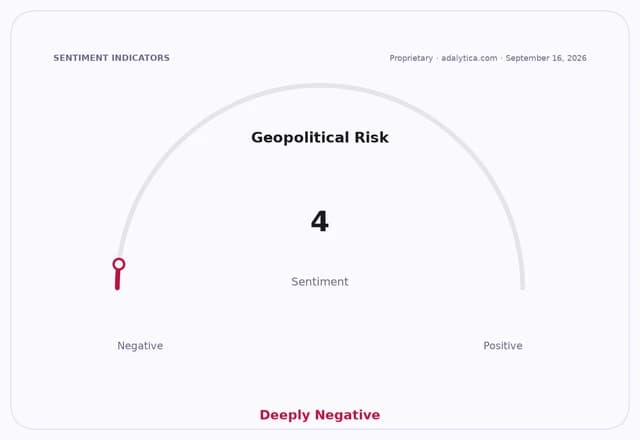
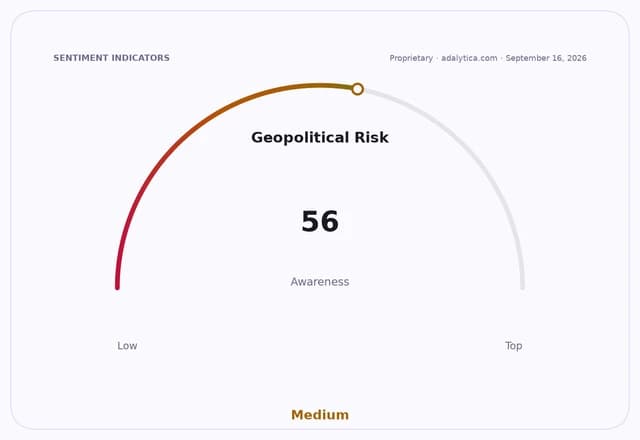
For investors, the vote is another sign that the policy path is far from settled. If Congress gains traction in trying to curb the administration’s military latitude, markets could start pricing a lower probability of further escalation, which would ease some of the bid for havens and reduce the geopolitical premium embedded in energy. But the opposite risk remains: if Trump treats Republican defections as a loyalty test and doubles down, the conflict could intensify and keep crude-linked assets volatile.
That tension has already shown up across asset classes. U.S. oil fund USO has surged to 161.86, more than doubling from early-July levels and sitting well above its 50-day and 200-day moving averages, while its RSI reading of 91.0 points to a technically overheated move. Gold ETF GLD remains elevated near 394.15, even after a pullback from this year’s highs, suggesting investors are still paying for protection. Treasury ETF TLT, by contrast, has drifted lower to 80.71, reflecting the market’s preference for inflation and geopolitics hedges over duration.
The vote also lands in a fraught political setting. Democrats are using one of the last big House votes before November’s midterms to force Republicans to take a public position on a war that many voters dislike. A CNN poll cited in the source showed 67% of respondents saying Trump’s decisions on military action in Iran have hurt U.S. interests, a warning sign for a president who has framed the conflict as a test of party discipline.
The Senate remains the key hurdle. A previous effort to restrain the administration fell apart after White House pressure flipped a Republican senator, and Democrats are set to try again this week. If the upper chamber cannot muster enough support, the House vote may be politically potent but legally toothless. Still, it increases the odds that the Iran war becomes not just a foreign-policy issue but a market variable tied to energy prices, inflation expectations and risk appetite into the election season.
| Entity | Gains | Losses |
|---|---|---|
| Oil producers / USO longs | ▲Higher crude prices | ▼Energy consumers |
| Gold holders / GLD longs | ▲Geopolitical hedge demand | ▼Risk-on traders |
| TLT holders / duration bulls | ▲Safe-haven bid if escalation eases | ▼Inflation-sensitive bond sellers |
| Trump / war hardliners | ▲Leverage if party holds | ▼Political unity and voter support |