Household Debt Stress Pressures Mortgage Lenders
Household debt stress is flashing a serious warning for mortgage lenders, and LoanDepot investors are paying the price.
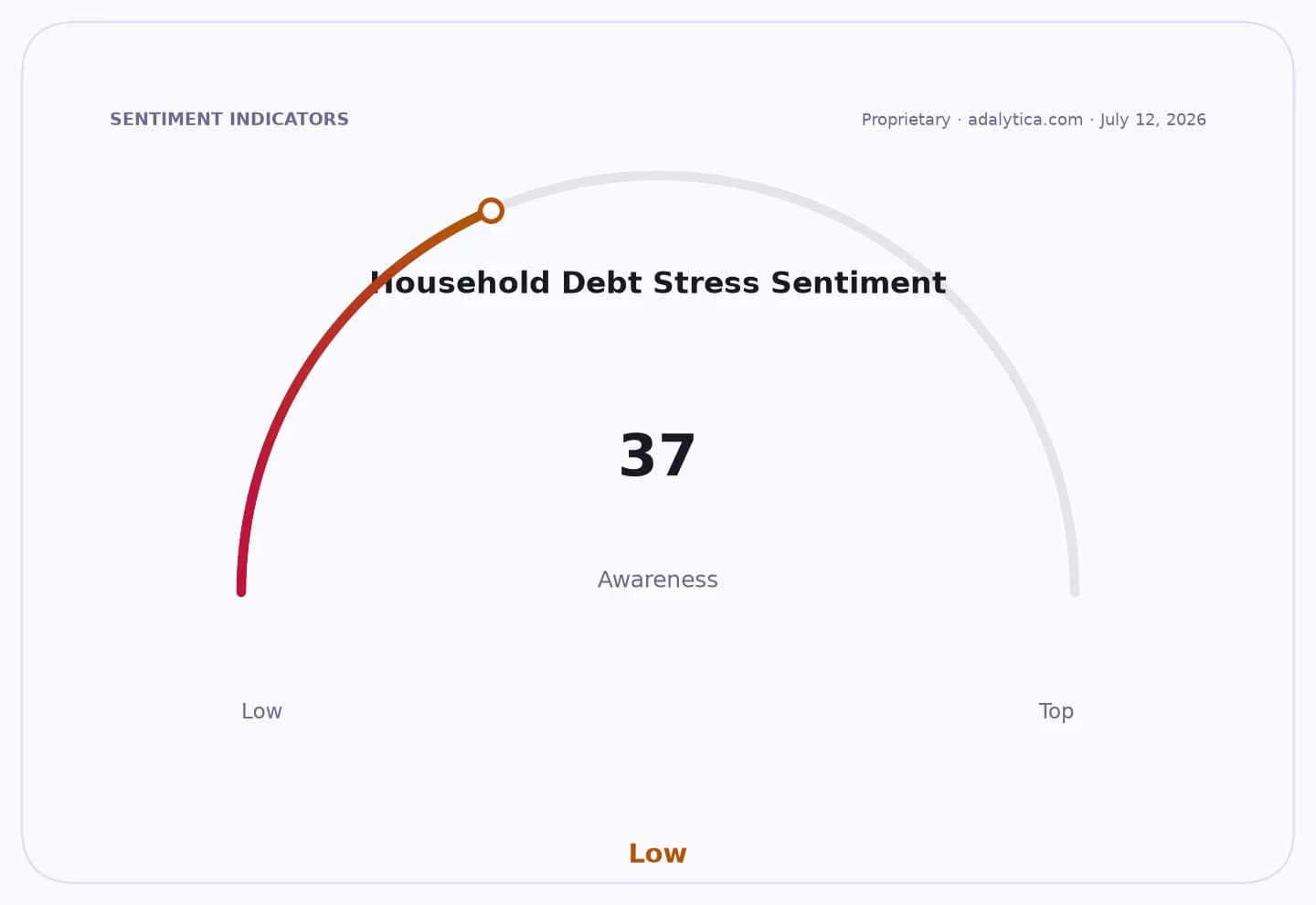
The most important development is not a single day of trading but the growing strain on American consumers, which can choke off mortgage demand, pressure loan quality and squeeze companies that depend on steady credit flow. Adalytica’s Household Debt Stress Sentiment has surged to “Extreme Greed,” a signal that debt concerns are moving sharply higher, while Credit Card Usage Sentiment sits in “Fear,” underscoring that consumers are leaning harder on revolving credit even as financial pressure builds. For lenders, that combination is a bad mix: more borrowing at the wrong end of the balance sheet, and less room for homebuyers to qualify for mortgages.
That matters economically because housing finance sits at the center of the consumer economy. When households are stretched, they refinance less, buy fewer homes and become more vulnerable to delinquencies. The U.S. unemployment rate, while still low by historical standards at 4.2% in June and forecast at 4.18% for July, is no longer the only metric investors can watch. The broader issue is whether rising debt service burdens are starting to limit spending and borrowing behavior before the labor market meaningfully cracks. If that happens, mortgage originators, servicers and credit investors can all feel it quickly.
LoanDepot has already shown how unforgiving that backdrop can be. The stock has fallen to around $1.12 from more than $4 in September 2025, even after brief technical rebounds along the way. Its shares now trade below the 200-day moving average and have struggled to hold momentum, a sign that investors are not willing to pay for a recovery story until the underlying credit and housing backdrop improves. The company’s own filings warn that rising delinquencies can hurt the value of loans and mortgage servicing rights, while also increasing the cash it must advance to investors tied to servicing. That is exactly the kind of hidden pressure that can turn a cyclical slowdown into a real earnings problem.
Carlyle Secured Lending, another credit-sensitive name, looks steadier on the surface. CGBD shares have held near $10.53, roughly in line with recent trading ranges, but the stock still sits below its 200-day moving average. Business development companies can benefit from higher yields, but they are also exposed when borrowers weaken and covenant pressure rises. In other words, the same debt stress that hurts consumers can eventually work its way into middle-market credit too.
For investors, the lesson is straightforward: rising household debt stress is not just a consumer headline, it is an earnings risk for lenders, servicers and credit providers. The companies with strong underwriting, diversified funding and the ability to stay profitable through cycles are the ones worth owning for years, not quarters. The weaker models may look cheap after a selloff, but cheap is rarely cheap if credit losses and shrinking volumes keep rising.
If you are thinking like a long-term investor, this is a moment to watch balance sheets, not just stock charts. Mortgage lenders and specialty credit names can be volatile, but volatility is often where the market prices in the next chapter early. The question now is whether consumer debt stress stays contained or begins to feed a broader lending slowdown — and that is a development worth keeping on your watchlist.
| Entity | Gains | Losses |
|---|---|---|
| Strong lenders with tight underwriting | ▲Better relative credit quality | ▼Less upside from booming demand |
| LoanDepot | ▲None obvious | ▼Lower mortgage demand, weaker margins |
| Credit-sensitive borrowers | ▲Short-term access to debt | ▼Higher repayment strain |
| Patient long-term investors | ▲Potentially lower entry prices | ▼Near-term volatility and uncertainty |