Households Pay Down Debt as SPY Nears 773
A surprising but important shift is underway in household finance: Americans are increasingly trying to wipe out debt faster, and that discipline is showing up against a backdrop of elevated market prices, sticky borrowing costs, and a still-cautious consumer.
That matters because debt paydown is not just a personal finance story. When families direct extra cash toward credit cards, personal loans and mortgages, it changes how much they can spend, save and invest. For long-term investors, that can shape everything from retail sales to bank lending to the quality of household balance sheets that ultimately support the economy.
The backdrop is a market that has been generous to patient investors and unforgiving to debt-heavy balance sheets. The SPDR S&P 500 ETF Trust has climbed to about $773, while the iShares 20+ Year Treasury Bond ETF sits near $82, far below its own recent highs and still struggling beneath its 50-day and 200-day moving averages. In plain English, stocks have been rewarding compounding, while long-duration bonds remain a reminder that higher-for-longer interest rates still have bite.
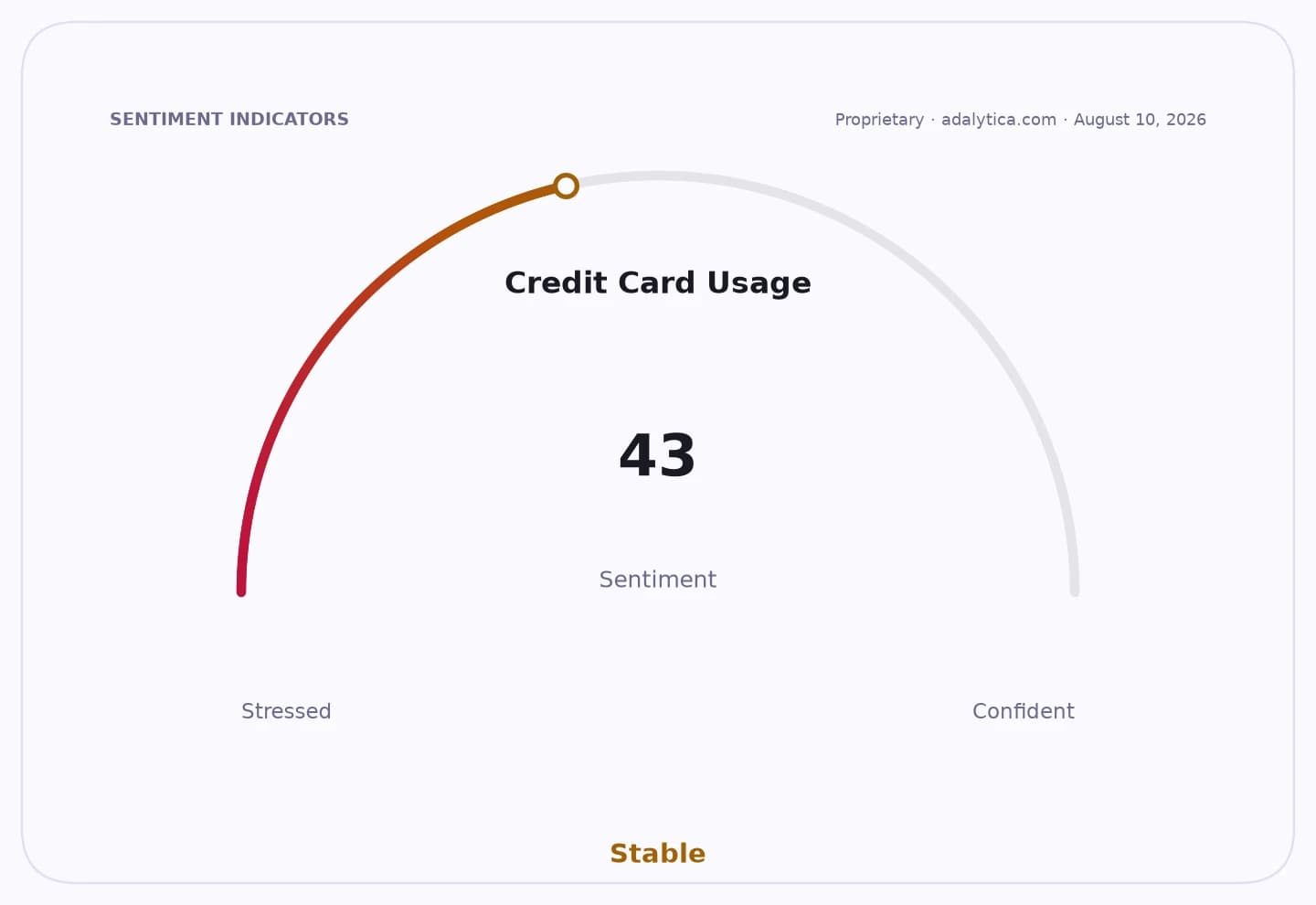
That split matters for households. A family carrying high-interest credit card debt is effectively fighting the market with a guaranteed negative return. Paying it down is often the best risk-free “investment” available, especially when card rates remain punishing. Adalytica’s Credit Card Usage Sentiment gauge shows awareness around credit card use at an extreme-greed reading of 93, even as sentiment has cooled to neutral at 43, suggesting consumers remain highly focused on card use and repayment behavior.
Investors should care because the consumer is still the engine of the U.S. economy. If more households are tightening up and accelerating debt repayment, that can eventually restrain discretionary spending but also reduce default risk and strengthen balance sheets. For banks and card issuers, that can mean lower revolving balances and slower interest income growth. For retailers, it can mean a more selective shopper. For investors in consumer-facing stocks, the question is not just whether spending holds up this quarter, but whether households can sustain it without leaning on debt.
The market signals also reinforce a simple lesson that long-term investors often forget in the heat of a rally: leverage cuts both ways. The S&P 500’s strong run shows why staying invested matters, but it also highlights the opportunity cost of carrying expensive debt while assets compound elsewhere. A household that channels extra income into eliminating debt can free up cash flow for future investing, emergency savings and retirement contributions.
None of this means consumers are suddenly in distress. It means they are becoming more deliberate, and that shift is healthy over time. The best investor mindset is the same one that helps a family pay off debt: focus on the years ahead, not the next headline. In markets as in household finance, resilience usually wins.
For investors, the takeaway is straightforward. Favor businesses and funds that can thrive even if consumers become more selective, and remember that debt discipline at the household level is usually a sign of a sturdier economy, not a weaker one. That makes this a trend worth watching, especially if you are building wealth for the long term.
| Entity | Gains | Losses |
|---|---|---|
| Debt-free households | ▲More cash flow | ▼Less leverage risk |
| Credit card issuers | ▲Higher balances near term | ▼Slower revolving growth later |
| Consumer stocks | ▲Healthier customers over time | ▼Softer discretionary spending |
| Long-term investors | ▲Better household balance sheets | ▼Fewer short-term spending bursts |