Housing Policy Focus Aids Entry-Level Homebuilders
The government’s renewed focus on housing for low- and middle-income households is the most important development for the sector because it shifts the debate from broad real-estate sentiment to a more specific policy target: affordability. That matters economically because housing is one of the largest household expenses, and any meaningful supply-side push could ease rent and price pressure, support construction activity and reshape where capital flows in the property market.
The backdrop is a housing market that remains expensive even after some cooling at the margin. The Case-Shiller national home-price index was at 336.663 in June, up 0.37% from May and near record territory, while the broader housing starts gauge, HOUST, was forecast at 1,184.9 in August, down 4.37% from July and still well below levels needed to materially close the supply gap. In other words, the market is not in a crisis of demand so much as a structural shortage of affordable supply.
That is why the policy emphasis matters. If the state can direct land, permits, infrastructure or financing toward lower-cost units, it could unlock activity in the part of the market with the most political and economic sensitivity. Affordable housing typically has a faster policy transmission channel than luxury or speculative development because it is tied to wage growth, rent inflation and public welfare outcomes rather than wealth effects alone.
For investors, the immediate implication is uneven. Builders with exposure to entry-level buyers, affordable subdivisions and subsidy-linked projects could benefit if the policy translates into approvals and demand support. Homebuilders and suppliers tied to the middle of the market — including ETFs such as ITB and XHB — may see a modest lift in volumes, but margins are likely to stay under pressure if incentives, land costs and compliance burdens remain high. Lennar and other large builders have already been using sales incentives to clear inventory, according to recent filings, underscoring that affordability is being bought partly through pricing rather than through lower cost structures.
The technical picture in housing equities also suggests caution rather than euphoria. ITB was last at 89.89, below both its 50-day moving average of 96.49 and its 200-day average of 98.17, with RSI at 26.2, a level that typically indicates an oversold market. XHB was at 98.12, also below its 50-day and 200-day averages, with RSI at 26.0. Those readings point to a sector that has already been punished and could bounce if policy support becomes concrete, but they do not yet confirm a durable trend change.
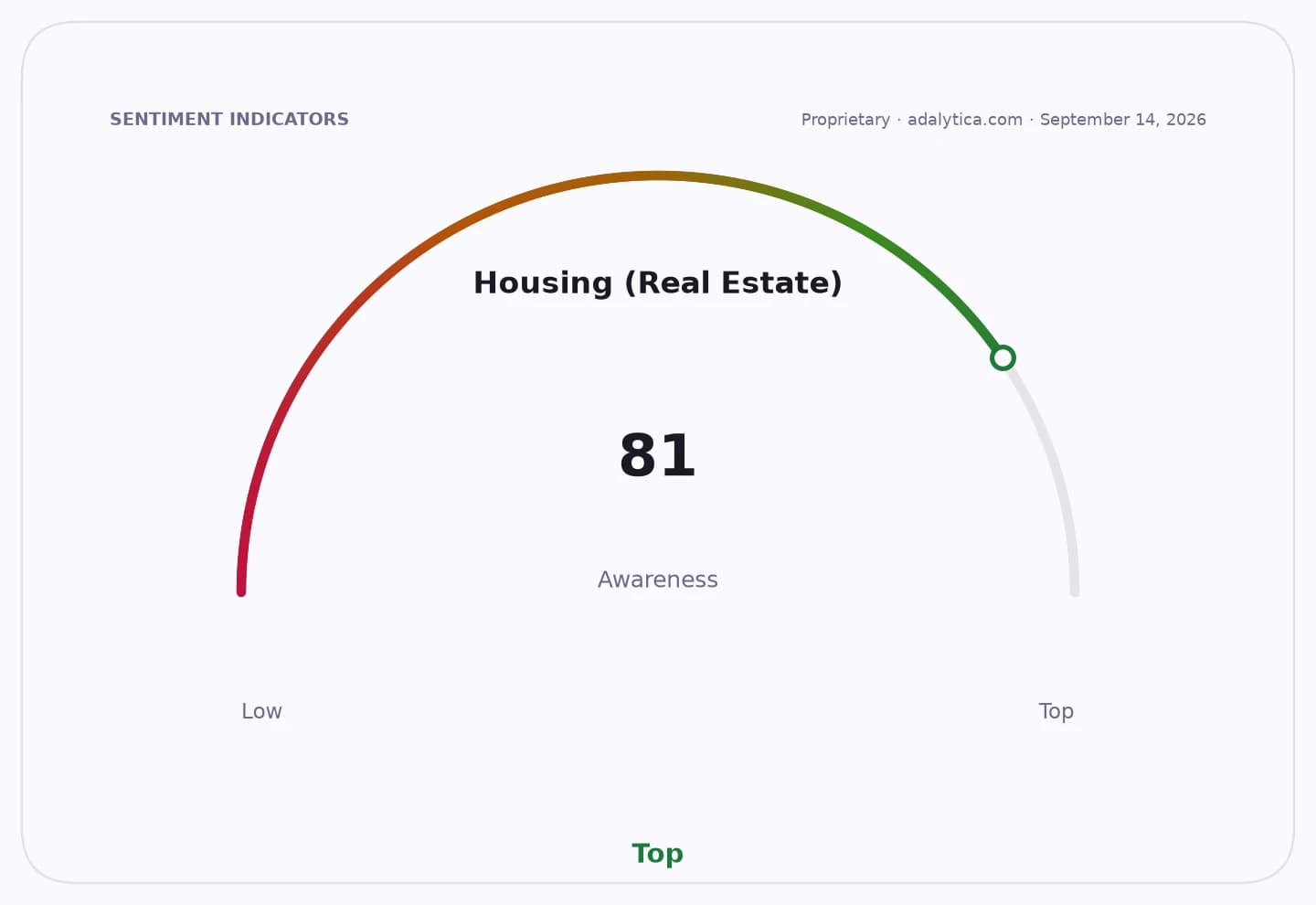
Adalytica’s Housing Fear & Greed Index for XHB showed sentiment at 37, labeled Neutral, while awareness stayed elevated at 81. That combination suggests investors are paying attention, but conviction remains limited. By contrast, the S&P 500’s own trade-signal gauge showed extreme fear, highlighting that broader risk aversion is still dominating market behavior and could blunt any sector rerating unless the housing plan is backed by real budgetary or regulatory action.
The bull case is straightforward: a credible housing program could relieve affordability pressure, stimulate starts and create a more predictable pipeline for developers, suppliers and lenders. The bear case is that announcements outpace execution, land remains scarce and expensive, and builders are forced to choose between volume and margin. For now, the market is pricing the hope of support more than the certainty of delivery.
What investors should watch next is whether the government turns the housing priority into measurable pipeline additions — land releases, faster approvals, public-private partnerships or financing programs aimed at low- and middle-income buyers. Until then, the story is less about a sector breakout than about whether policy can finally catch up with a housing market that still prices too many households out.
| Entity | Gains | Losses |
|---|---|---|
| Low- and middle-income buyers | ▲Better access to housing | ▼Slower relief if execution lags |
| Homebuilders focused on entry-level units | ▲Higher volumes, policy support | ▼Margin pressure from incentives and land costs |
| Housing ETFs (ITB, XHB) | ▲Potential rebound on policy clarity | ▼Continued weakness if plans stay vague |
| Luxury/upper-end property | ▲Less policy focus | ▼Relative demand and capital attention |