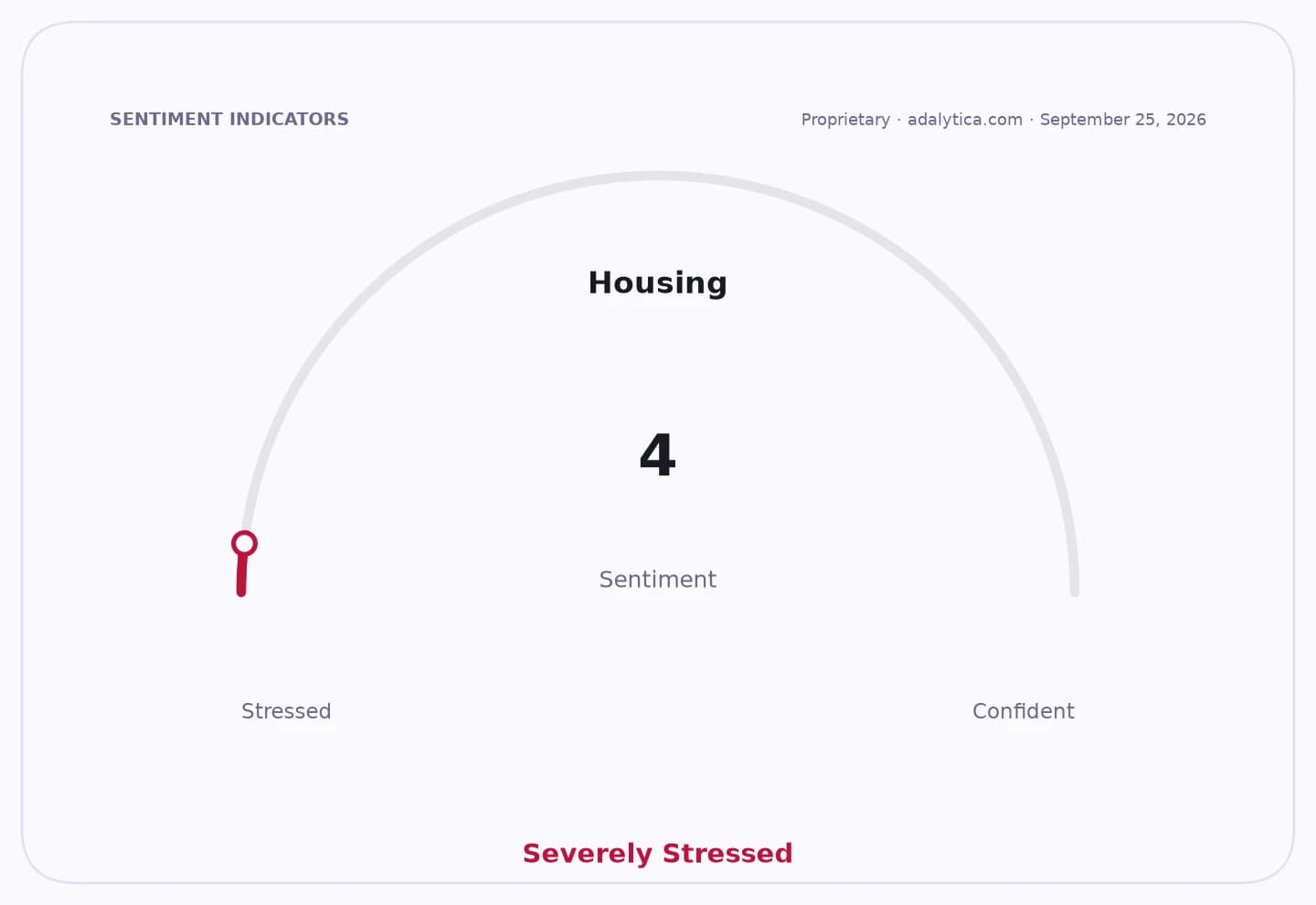
Mortgage reforms that President Ali says have saved families $43.8 billion are easing one of the most painful pressures on households, but they also underscore how far governments are being forced to go to keep housing affordable as borrowing costs stay elevated and demand remains fragile.
Housing Relief Supports Demand, But Rates Stay Restrictive
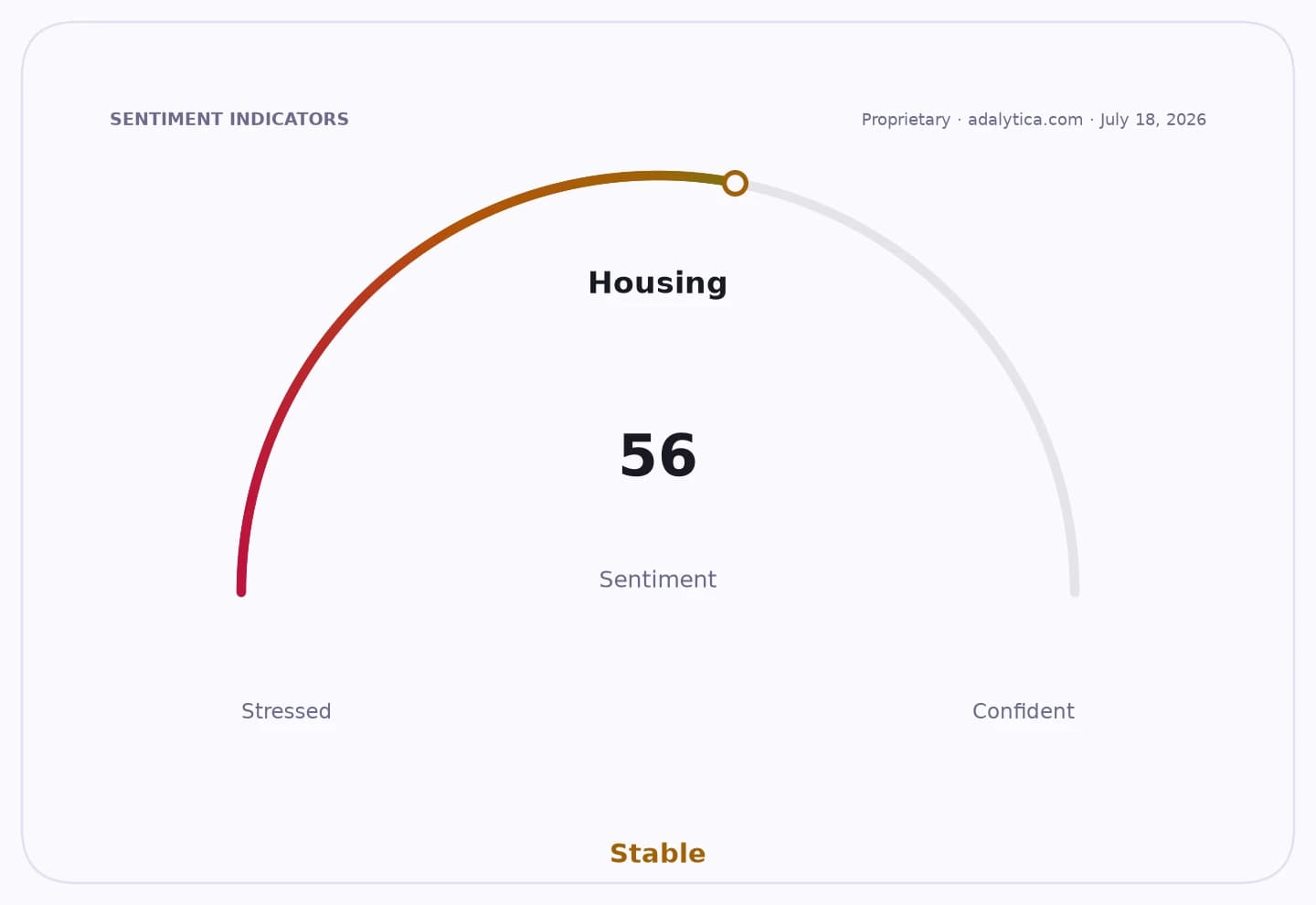
The stakes are economic as much as political. Housing is one of the clearest transmission channels from monetary policy to consumers: when mortgage payments fall, disposable income rises, but when rates remain high, transaction volumes, construction activity and household mobility all weaken. Ali’s claim that nearly $240 billion has been invested in the housing sector since 2020 suggests policymakers are trying to offset that drag with direct support and capital formation, hoping to prevent an affordability crisis from becoming a broader brake on growth.
Sentiment IndicatorsⓘProprietary · adalytica.com · July 18, 2026
This is a snapshot — live sentiment, awareness and momentum for 130+ markets update continuously in the dashboard.Open AlphaPulse
The data point to a market still under strain. U.S. 10-year Treasury yields have been hovering around 4.56%, a level that keeps mortgage financing expensive by historical standards and limits how quickly relief can flow through to homebuyers. That backdrop helps explain why U.S. homebuilder ETFs such as XHB and ITB have been choppy, despite recent rebounds: both funds remain below their 200-day moving averages, while their RSI readings have eased from overbought levels into more neutral territory, indicating a market that is no longer pricing in a straight-line recovery. Vanguard’s real estate ETF VNQ has held up better, reflecting the relative resilience of rental income streams versus for-sale housing, but it too is trading in a range that suggests investors remain cautious about the interest-rate outlook.
For households, cheaper mortgages can be a lifeline. For banks and lenders, however, policy-driven rate relief can compress margins if it is not matched by cheaper funding. For builders, the benefit is more indirect: lower monthly payments can support demand, but if reforms are limited to refinancings or subsidies, they may not be enough to restart a broader housing cycle. The sector’s recent filings from U.S. builders show that affordability remains a binding constraint, with mortgage rate buydowns, incentives and softer margins still necessary to move inventory.
HOUST vs CSUSHPINSA — macro contextadalytica.com
Explore this data interactively — full history, time series and cross-market comparisons.Open AlphaPulse
The broader narrative is that housing policy is becoming a substitute for monetary easing in markets where rates cannot fall fast enough. That may stabilize consumer balance sheets and support construction over time, but it also raises the question of who ultimately pays for the relief — taxpayers, lenders or developers. Investors will be watching whether the reforms translate into higher transaction volumes and steadier demand, or whether they merely cushion the impact of a still-unfriendly rate environment.
| Entity | Gains | Losses |
|---|---|---|
| Homeowners and borrowers | ▲Lower debt service | ▼Less relief if rates stay high |
| Homebuilders | ▲Better affordability demand | ▼Margin pressure from incentives |
| Banks and lenders | ▲More loan volumes | ▼Squeezed lending spreads |
| Government | ▲Political credit | ▼Fiscal burden and execution risk |