Houthi attack hits Saudi Aramco site in Najran
Yemen’s Houthi movement said it attacked an airport and a Saudi Aramco facility in Najran, reviving concern that the kingdom’s southern energy infrastructure remains a live target even as crude prices were already trading near multi-month highs.
The attack matters because Saudi Arabia is the swing producer of the oil market and any hint of disruption to its refining or export network can quickly alter risk premiums across crude, fuel and shipping. Brent and WTI have been firm around the mid-$80s a barrel, levels that already reflect a tighter balance than earlier in the summer, and another strike on an Aramco asset reinforces the idea that geopolitics, not just supply fundamentals, can drive the next leg higher.
The latest flare-up comes against a backdrop of repeated Houthi attacks on Saudi oil infrastructure, including earlier damage to the Jazan refinery that delayed its restart after a tank fire. Even when such strikes do not cause prolonged outages, they force producers and traders to price in the possibility of interruptions, higher security costs and rerouted crude liftings. That can filter through to margins for refiners, freight rates and the cost of hedging for airlines and industrial buyers.
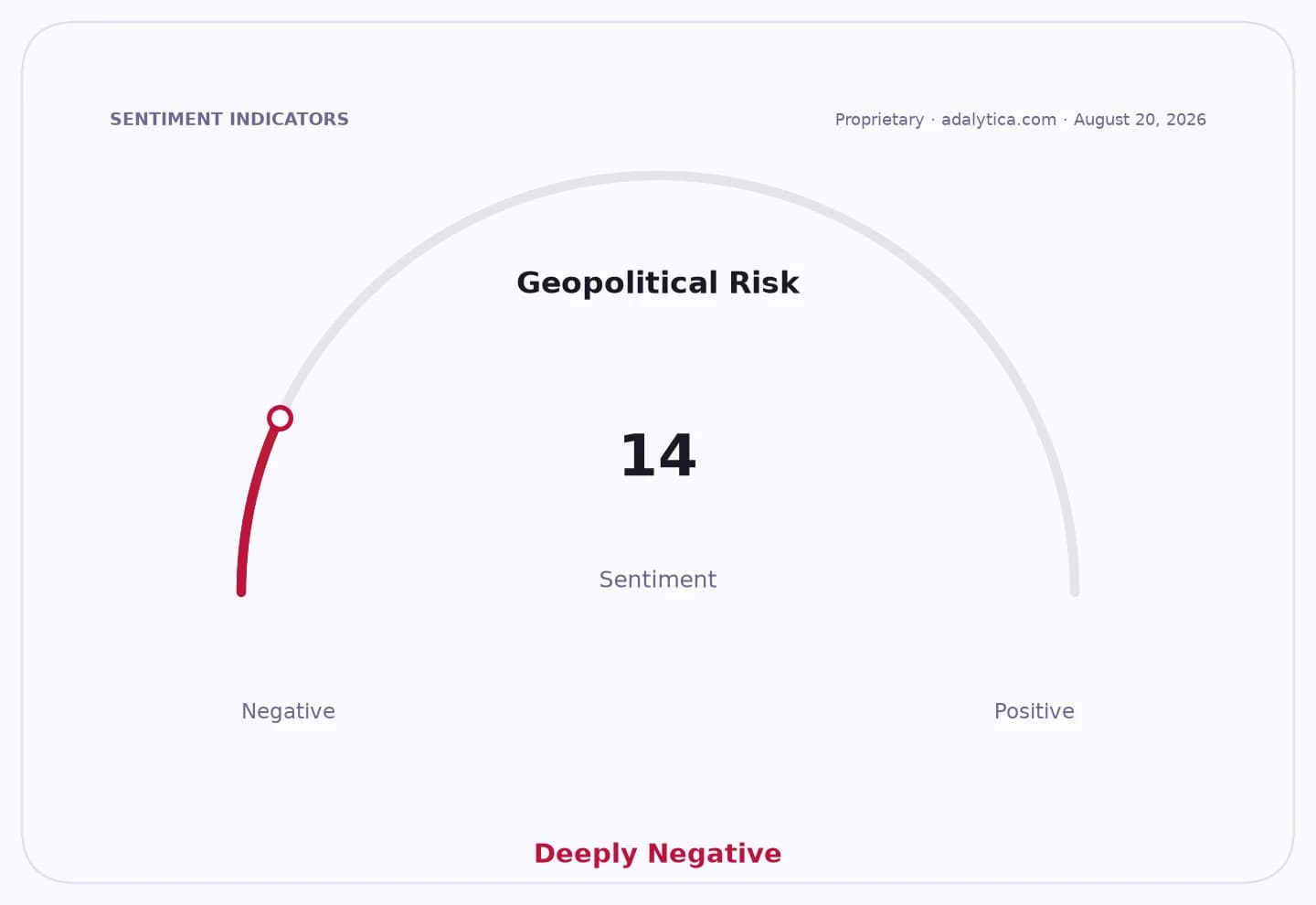
For investors, the immediate significance is not only in the physical damage, which was not yet fully clear, but in the market psychology. Oil-linked equities such as Exxon Mobil have stayed strong with crude above historical averages, while country and sector risk gauges have leaned toward fear rather than complacency. Adalytica’s USO snapshot shows oil trade sentiment in “Greed,” but its global stability gauge sits in “Extreme Fear,” underscoring how quickly traders are marking up geopolitical risk even when outright supply losses are limited.
The broader narrative is that the Middle East energy corridor remains vulnerable at a time when the market has little buffer against shocks. Asian refiners have already been looking for alternative crude pickup points to reduce exposure to the Red Sea and nearby chokepoints, which suggests even isolated attacks can have second-order effects on trade flows. If strikes persist, the likely winners are producers with spare capacity and firms with pricing power; the losers are refiners, import-dependent economies and any market participant short volatility.
What happens next will depend on whether Saudi authorities report operational damage and whether the Houthis continue targeting energy assets. If attacks remain sporadic and contained, oil may only hold a modest geopolitical premium. But if the campaign broadens or causes sustained disruption, traders may have to reassess how much supply risk is already embedded in prices.
| Entity | Gains | Losses |
|---|---|---|
| Oil producers | ▲Higher risk premium | ▼— |
| Saudi Arabia / Aramco | ▲— | ▼Infrastructure security costs |
| Refiners and importers | ▲— | ▼Higher crude and freight costs |
| Oil bulls / long volatility | ▲Premium from disruption risk | ▼Short positions exposed |