Bill Gates’ view that India can show how artificial intelligence is deployed for social and developmental gain lands at a moment when investors are still pricing AI as a pure growth story, not yet as a broad productivity revolution with political and economic constraints.
India AI Adoption Could Boost Microsoft and Nvidia
That matters because the next phase of AI is no longer just about model performance or chip demand. It is about who can absorb the technology fastest, turn it into public benefit, and do so before the social shock of labor disruption, regulatory pushback and infrastructure bottlenecks slows adoption. Gates’ warning that AI may be “fundamentally different” from the personal computer and the internet underscores the market’s biggest blind spot: this cycle may reward the infrastructure builders first, but the winners over the longer run will be the countries and companies that convert compute into real-world output.
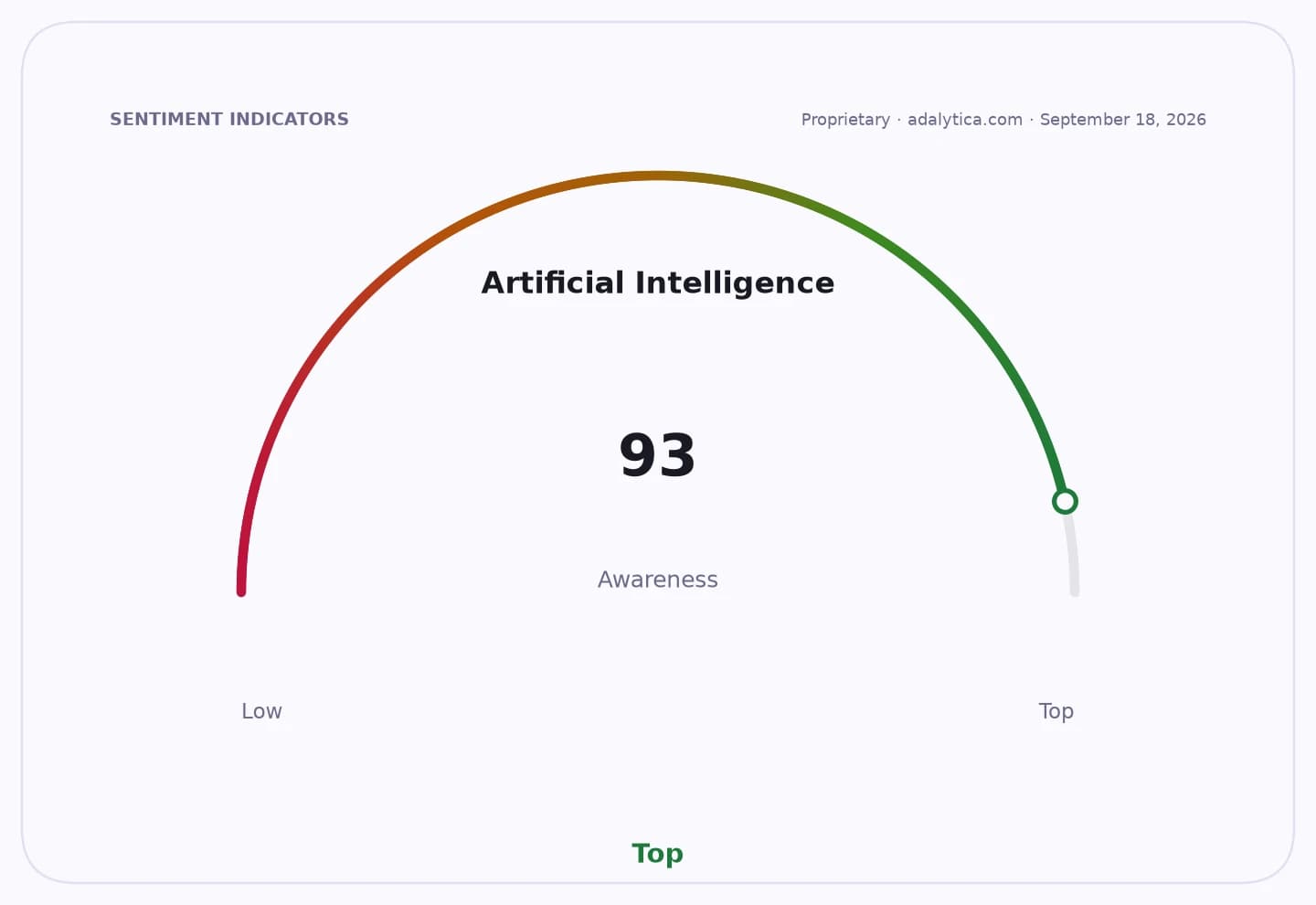
Sentiment IndicatorsⓘProprietary · adalytica.com · September 18, 2026
This is a snapshot — live sentiment, awareness and momentum for 130+ markets update continuously in the dashboard.Open AlphaPulse
India is emerging as one of the clearest examples of that shift. With its vast data pools, large population and sprawling public-service needs, the country offers a live test case for AI in health care, education, agriculture and government delivery. That is why Gates’ comments matter beyond philanthropy. If India can use AI to improve service provision at scale, it strengthens the argument for a second, more durable wave of AI spending: not just enterprise automation, but national digital infrastructure and applied AI tools tailored to local languages and workflows.
For investors, the message is equally important. The market has already rewarded the obvious picks and shovels — from Nvidia to Microsoft — but this story points to a broader opportunity set. Microsoft stands to benefit from AI adoption in emerging markets through cloud, copilots and enterprise software, even as the stock’s recent action shows how quickly enthusiasm can cool. Microsoft shares closed at $493.67, above the 200-day moving average around $430, but below the 50-day average near $464, a sign the market is consolidating after a huge run. Nvidia, meanwhile, closed at $219.36, still well above its 200-day average near $198, reflecting that investors continue to treat AI compute as the core trade even as momentum moderates.
The deeper thesis is that India could become the kind of demand multiplier the market underestimates. AI infrastructure does not scale evenly across the world; it concentrates where demographics, digital payments, data access and low-cost deployment create the highest return on every dollar of compute. That is why local champions, cloud providers, telecom infrastructure players and AI application vendors tied to India’s public and private sectors could become the next leg of the trade. Bill Gates is effectively pointing to a new frontier: not just who builds the AI stack, but who turns it into national productivity.
There is also a warning embedded in his comments. If the technology is moving faster than society can adapt, then AI capex may keep rising while political scrutiny intensifies. That could periodically hit sentiment in high-beta AI names, especially when technical momentum weakens. Aurora Innovation, trading at $11.04, remains a speculative AI-linked name with a far more fragile setup, even if sentiment in Adalytica’s snapshot has improved sharply from recent lows. The broader pattern is clear: the market is still split between extreme fear and extreme greed, and that kind of volatility often precedes the next leadership rotation.
Our view is straightforward: investors should not treat India as a side story in AI. It may be one of the most important catalysts for the next phase of adoption, because it links technological progress to economic inclusion, public-sector efficiency and multi-year infrastructure demand. The smart way to position is to stay long the compute layer, but also look for the companies best placed to monetize AI deployment in India and other emerging markets where the productivity upside is biggest and the penetration is still early.
| Entity | Gains | Losses |
|---|---|---|
| India | ▲Faster AI-driven service delivery | ▼Slow-moving legacy systems |
| Microsoft | ▲Cloud and Copilot adoption | ▼Narrative risk from AI backlash |
| Nvidia | ▲Ongoing compute demand | ▼Any AI capex pause |
| Labor-intensive service models | ▲Productivity pressure | ▼AI-enabled automation |