India Supreme Court Presses Arbitration Council Rule

India’s Supreme Court has pressed the central government to respond on creating the Arbitration Council of India, a long-delayed reform that could make contract enforcement faster, cheaper and more credible for businesses and investors.
That matters because the country’s legal bottlenecks are no small administrative nuisance. With more than 50 million cases pending in the system and district courts taking an average 30.56 months to dispose of matters, India’s dispute resolution machinery remains too slow for an economy trying to attract manufacturing, infrastructure capital and cross-border deals. Arbitration was supposed to help. Instead, ad-hoc proceedings, uneven rules and inconsistent oversight have kept many companies relying on foreign institutions in places such as London and Singapore.
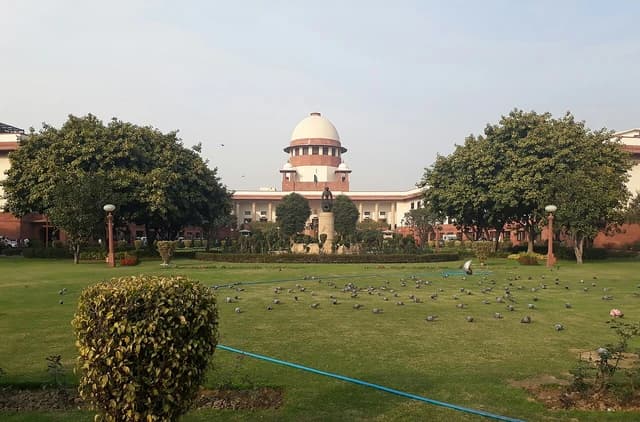
The proposed council, written into the 2019 amendment to the Arbitration and Conciliation Act but still not implemented six years later, is meant to fix that credibility gap. It would grade arbitral institutions, accredit arbitrators, set model rules and maintain an electronic repository of awards. In plain English, it is designed to bring discipline to a market that has too often depended on trust in individual players rather than trust in the system itself.
For investors, that is a bigger deal than it may first appear. Faster and more predictable arbitration can reduce the cost of doing business, lower legal risk and improve the economics of long-duration investments in India’s infrastructure, commodities, industrials and financial services. It can also help domestic institutions compete for high-value commercial disputes now drifting overseas, which would keep fees, expertise and legal jobs onshore.
The backdrop is a judiciary that is already signaling impatience. The petition before the Supreme Court challenges arbitrary arbitration clauses used by trade associations, including the Cotton Association of India, underscoring how uneven practices can pressure smaller participants such as farmers and other market users. That kind of opacity is exactly what tends to raise the cost of capital over time.
The best argument for the Arbitration Council is not symbolism but compounding: every improvement in neutrality, transparency and case management makes India a more investable place for the next contract, the next project and the next wave of foreign capital. But the key word is implementation. Statutes alone do not build credibility — consistent rules, restrained intervention and institutional trust do.
If New Delhi follows through, the payoff could be gradual but durable. Investors should treat this as a structural reform worth watching, because in a market as large as India, better dispute resolution can become a real competitive advantage over the next decade.
| Entity | Gains | Losses |
|---|---|---|
| India’s businesses | ▲Faster dispute resolution | ▼Lower tolerance for ad-hoc practices |
| Domestic arbitration institutions | ▲More credibility and volume | ▼Informal operators and weak peers |
| Foreign arbitration centers | ▲Less India-related business | ▼Fee flows from Indian disputes |
| Investors in India | ▲Lower legal risk, better capital allocation | ▼Those relying on opaque contract enforcement |