India and China open new border talks

India and China have opened fresh corps commander-level talks along the disputed Himalayan border, a tentative thaw that could reduce the risk of another military flare-up between Asia’s two biggest powers and ease a persistent overhang for regional markets.
The dialogue matters economically because the India-China frontier has been one of Asia’s most durable sources of geopolitical risk, periodically disrupting trade, investment and supply chains. Even a modest de-escalation can improve confidence around cross-border commerce, lower the odds of fresh sanctions or import curbs and support a steadier backdrop for Asian equities and currencies.
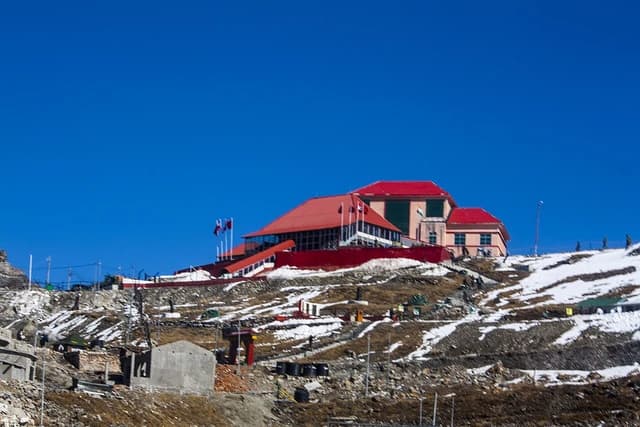
That is why investors are watching closely even though the rapprochement remains fragile. The two countries have fought a war in 1962 and have since cycled through standoffs, including deadly clashes in 2020, leaving a deep trust deficit that limits how far the thaw can go without concrete border steps.
Market reaction has been measured rather than euphoric. The iShares China Large-Cap ETF, FXI, was last at $34.49, below its 200-day moving average of $36.40 and still trading under its 50-day moving average of $34.99 after a recent slide, while its RSI reading of 31.4 points to a heavily sold condition. The iShares MSCI India ETF, INDA, closed at $48.57, also below both its 50-day moving average of $49.38 and 200-day average of $50.32, suggesting investors have not yet priced in a durable geopolitical reset.
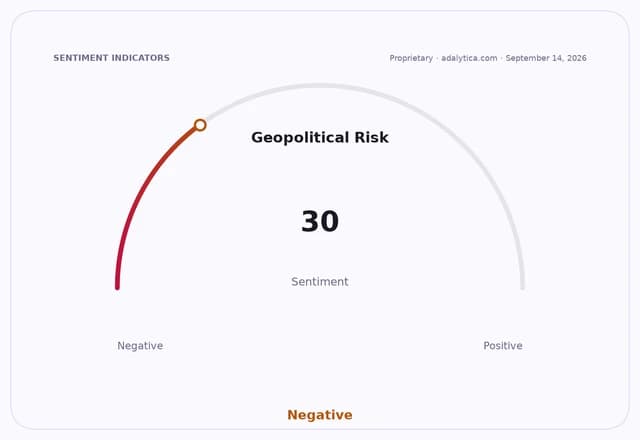
Broader emerging-market sentiment has improved more decisively. The iShares MSCI Emerging Markets ETF, EEM, finished at $67.84, above its 50-day and 200-day moving averages, with RSI at 54.4, indicating firmer momentum even as the India-China story remains unresolved. Adalytica’s Global Stability Sentiment gauge sits in “Fear” at 30, underscoring how quickly geopolitical stress can still bleed into markets.
For investors, the key question is whether the talks lead to a genuine stabilization of the Line of Actual Control or just another temporary pause. If the thaw holds, it could support risk assets in India and China, soften supply-chain concerns for multinationals and reduce a tail risk that has repeatedly unsettled Asia markets; if it stalls, the region is likely to remain vulnerable to sudden spikes in volatility.
| Entity | Gains | Losses |
|---|---|---|
| India | ▲Lower border risk | ▼Less leverage in talks |
| China | ▲Easier regional stability | ▼Fewer pressure points on New Delhi |
| FXI investors | ▲Better China risk premium | ▼Limited upside if thaw stalls |
| INDA investors | ▲Reduced geopolitical discount | ▼Policy uncertainty lingers |