India-China Tensions Weigh on Trade and ETFs
India and China are trying to steady a relationship that still looks fragile beneath the diplomatic smiles, and that matters well beyond South Asia because the two countries sit at the center of global supply chains, manufacturing, and geopolitical risk.
Former Indian ambassador Ashok Sajjanhar’s key point is simple: trust remains thin even as both governments talk up stability. India has already rejected a proposed Alipay tie-up on national security grounds and is examining allegations around Xiaomi, while China has reportedly told its companies not to sell India critical technology and industrial equipment, including port gear, solar panels and mobile manufacturing tools.
That is economically important because this is no longer just a border-story. It is a trade, technology and industrial-policy story. If Beijing limits exports of key equipment, it can slow India’s push to build more of its own manufacturing base. If New Delhi hardens scrutiny of Chinese digital and hardware firms, it raises the cost of doing business for Chinese companies and may push India to accelerate diversification toward Japan, Taiwan, South Korea and the West.
For investors, the message is that India’s long-term growth case remains intact, but the China discount is not going away. India-focused funds such as INDA may continue to benefit from the country’s domestic growth story, yet any prolonged friction could keep a lid on sentiment around sectors that rely on imported machinery, electronics components and renewable-energy inputs. Chinese equities, tracked by funds such as FXI and MCHI, face a different problem: policy risk and slower external demand can keep valuations under pressure even when domestic stimulus headlines improve the mood.
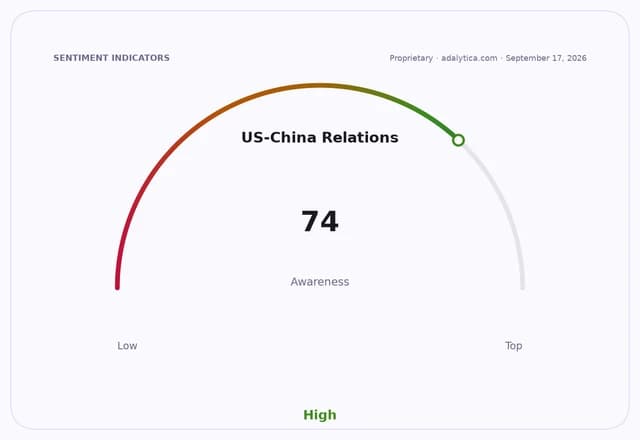
The recent market tone reflects that caution. India’s ETF has been more resilient than Chinese benchmarks, while Adalytica’s US-China relations sentiment gauge still shows a neutral reading even after a sharp one-day rebound, suggesting investors are not pricing in a clean thaw. In other words, the market is still treating the relationship as a managed rivalry, not a durable reset.
That is why Xi Jinping’s political and economic calculus matters. If Beijing wants better ties, it may need to ease commercial pressure and prove it is willing to treat India as a genuine partner, not just a market. If not, India will keep building around China rather than with it. For long-term investors, that makes diversification essential and suggests keeping India exposure on the watchlist while treating Chinese assets as a higher-risk, policy-sensitive allocation.
| Entity | Gains | Losses |
|---|---|---|
| India-focused investors | ▲Domestic growth story | ▼Trade and tech friction |
| Chinese exporters | ▲Access to Indian demand | ▼Equipment sales restrictions |
| Indian manufacturers | ▲More incentive to localize | ▼Higher input costs near term |
| Chinese equities | ▲Any diplomatic thaw | ▼Persistent policy overhang |