India-China ties stay open despite border dispute

India’s ties with China cannot be left “hostage” to the unresolved border dispute, even as the two sides keep pushing talks on the Line of Actual Control, former chief of defence staff Anil Chauhan said, underscoring New Delhi’s effort to manage rivalry without shutting the door on economic and diplomatic engagement.
The message matters because India’s relationship with China now sits at the intersection of security, trade and regional diplomacy. Chauhan’s comments came just days after National Security Adviser Ajit Doval met Chinese Foreign Minister Wang Yi in Beijing, where border demarcation and cross-border cooperation were discussed, showing both governments still want a channel open despite the lack of a settled frontier.
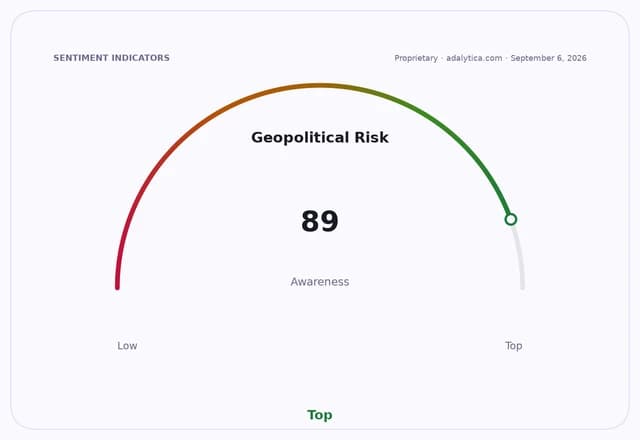
Chauhan said the border remains unresolved and the LAC has no mutually agreed definition, leaving room for differing perceptions, infrastructure buildout and forward deployments to trigger fresh friction. That is a core risk for investors because any deterioration in India-China tensions can ripple through trade policy, supply chains, defense spending and sentiment toward Indian assets.
He also argued the relationship should not be reduced to the border alone because India and China are two major Asian powers and large economies that both cooperate and compete. That framing points to the balancing act now shaping policy in New Delhi: keep diplomatic contact alive through forums such as the SCO and BRICS while maintaining military readiness along the frontier.
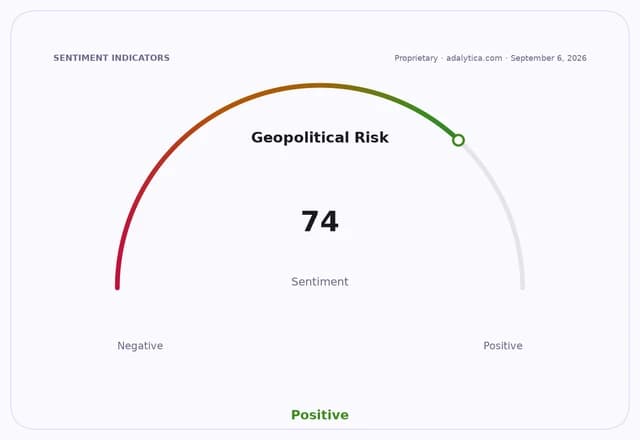
The remarks also touched Pakistan, which Chauhan said would remain a major security concern for India, and warned that a joint defense arrangement involving Pakistan, Saudi Arabia and Turkiye could encourage overconfidence in Islamabad. For markets, the bigger takeaway is that India’s defense posture is likely to stay elevated even as it seeks a more workable line with Beijing.
Indian markets showed no immediate alarm. The iShares MSCI India ETF, INDA, rose to $49.91 on Sept. 4 after touching a 200-day moving average near $50.44, while the FTSE China 50 ETF, FXI, climbed to $35.88 and the MSCI Emerging Markets ETF, EEM, advanced to $68.70, suggesting investors are still positioning for broader Asia exposure despite the geopolitical noise.
Adalytica’s US–China Relations Sentiment gauge is at 100, or “Extreme Greed,” but its awareness reading is only 26, a split that points to high market optimism alongside limited conviction. That makes border headlines between Asian powers especially relevant for traders looking for the next catalyst in India, China and emerging-markets assets.
The next market test will come from whether the Beijing dialogue produces any concrete easing along the border or whether another military or diplomatic flare-up reverses the tentative opening.
| Entity | Gains | Losses |
|---|---|---|
| India | ▲Keeps China channel open | ▼Border risk remains unresolved |
| China | ▲Preserves diplomatic contact | ▼Faces continued Indian vigilance |
| Indian equities | ▲Support from engagement narrative | ▼Geopolitical premium on valuations |
| Pakistan | ▲Security relevance rises | ▼More scrutiny over defense ties |