India GDP Growth Debate After 7.8% Q1 Print
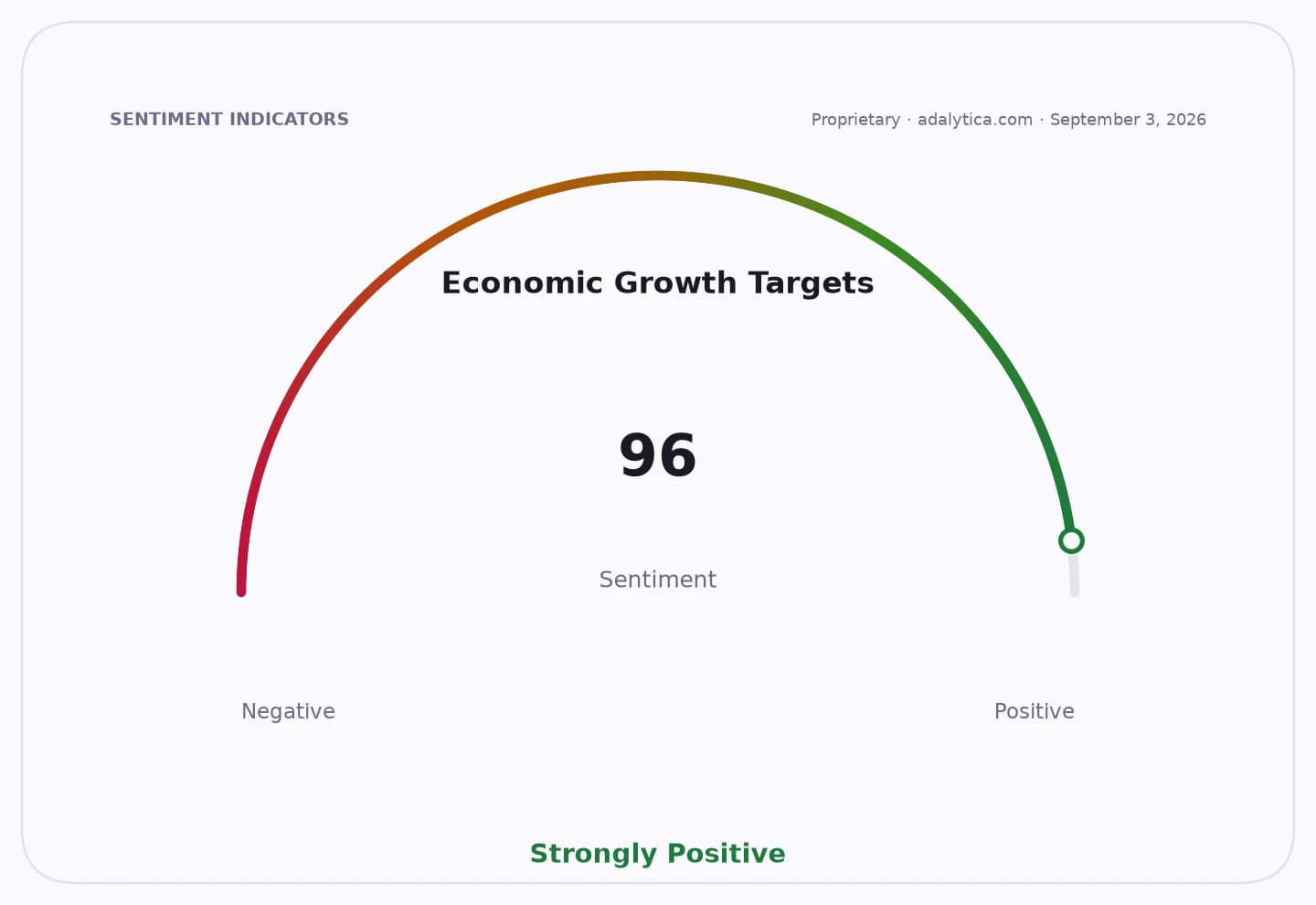
India’s 7.8% first-quarter growth has quickly become less a story about speed than about confidence, as the government’s strongest quarterly print in more than a year collided with accusations that the headline overstates the underlying economy.
Commerce Minister Piyush Goyal’s sharp attack on critics underlines how politically important the number has become. The dispute is not just about one quarter’s growth rate, but about whether India’s official statistics can fully capture the economy’s pace after a methodological overhaul and base-year reset. For investors, that matters because GDP is the anchor for earnings expectations, fiscal assumptions, monetary policy and the premium global funds are willing to pay for Indian assets.
Subhash Chandra Garg, the former finance secretary, argued the revised series makes growth look stronger by lowering the comparison base. The Ministry of Statistics and Programme Implementation rejected that interpretation, saying the move to a 2022-23 base year, better data sources and updated methodology were standard statistical revisions rather than an effort to flatter the current print. Under the new series, Q1 FY26 GDP was revised to ₹80.32 lakh crore from ₹86.05 lakh crore in the earlier 2011-12 base-year series, a change that mechanically boosts year-on-year comparisons even if underlying activity is unchanged.
That explanation is important because India’s growth narrative is now a central pillar of domestic policy and foreign capital flows. A faster-growing economy supports tax revenues, keeps the debt ratio more manageable and helps justify public investment, while also cushioning corporate earnings in sectors tied to consumption, infrastructure and services. It also strengthens New Delhi’s argument that India remains the fastest-growing major economy, even as other large economies struggle with weaker demand and policy constraints.
Yet the controversy also exposes a risk investors cannot ignore: official growth can look robust while parts of the economy remain uneven. If the revision has made the comparison base easier, the headline may overstate the economy’s momentum at the margin, especially if employment generation remains thin or private investment does not broaden out. That is why critics have focused on the gap between the headline and lived reality, rather than disputing that growth remains strong.
Markets are likely to read the episode in two ways. Bulls will see confirmation that India’s macro story remains intact and that domestic demand is resilient enough to absorb external shocks. Bears will focus on whether the stronger figure reflects genuine acceleration or statistical optics, especially if subsequent data on jobs, consumption and capital expenditure fail to keep pace. The policy response will matter as much as the print itself: if the government continues to defend the number while the statistical revision remains opaque to many investors, the debate over data quality could linger.
For now, the quarter gives India another argument in favor of resilience, but it also raises the bar for the next set of indicators. Investors will be watching whether growth is matched by employment, corporate revenue expansion and private capex, because that is what will determine whether the 7.8% headline becomes a durable trend or a one-off point of political contention.
| Entity | Gains | Losses |
|---|---|---|
| Indian government | ▲Strong growth narrative | ▼Credibility if revisions are seen as cosmetic |
| Investors in India | ▲Supportive macro backdrop | ▼Risk of overstated momentum |
| Critics/Opposition | ▲Public attention on data quality | ▼Less traction if growth remains strong |
| Domestic equities | ▲Earnings optimism | ▼Valuation risk if growth proves uneven |