Gold prices fell again in India on Oct. 16 as a stronger rupee, softer spot demand and a wobble in global bullion kept the metal under pressure, giving home buyers temporary relief but leaving investors to watch whether the pullback is a buying opportunity or the start of a broader consolidation.
India Gold Prices Fall as Rupee Strengthens
In Delhi, 24-carat gold was quoted at 1,47,580 rupees per 10 grams and 22-carat at 1,35,290 rupees, while silver fell to 2,29,900 rupees a kilogram. The move matters because India is one of the world’s biggest gold consumers, and local prices are shaped not just by jewelry demand but by the rupee, import costs and the international bullion market. When the rupee strengthens, imported gold becomes cheaper in local terms, easing pressure on retail prices and trimming margins for importers and jewellers.
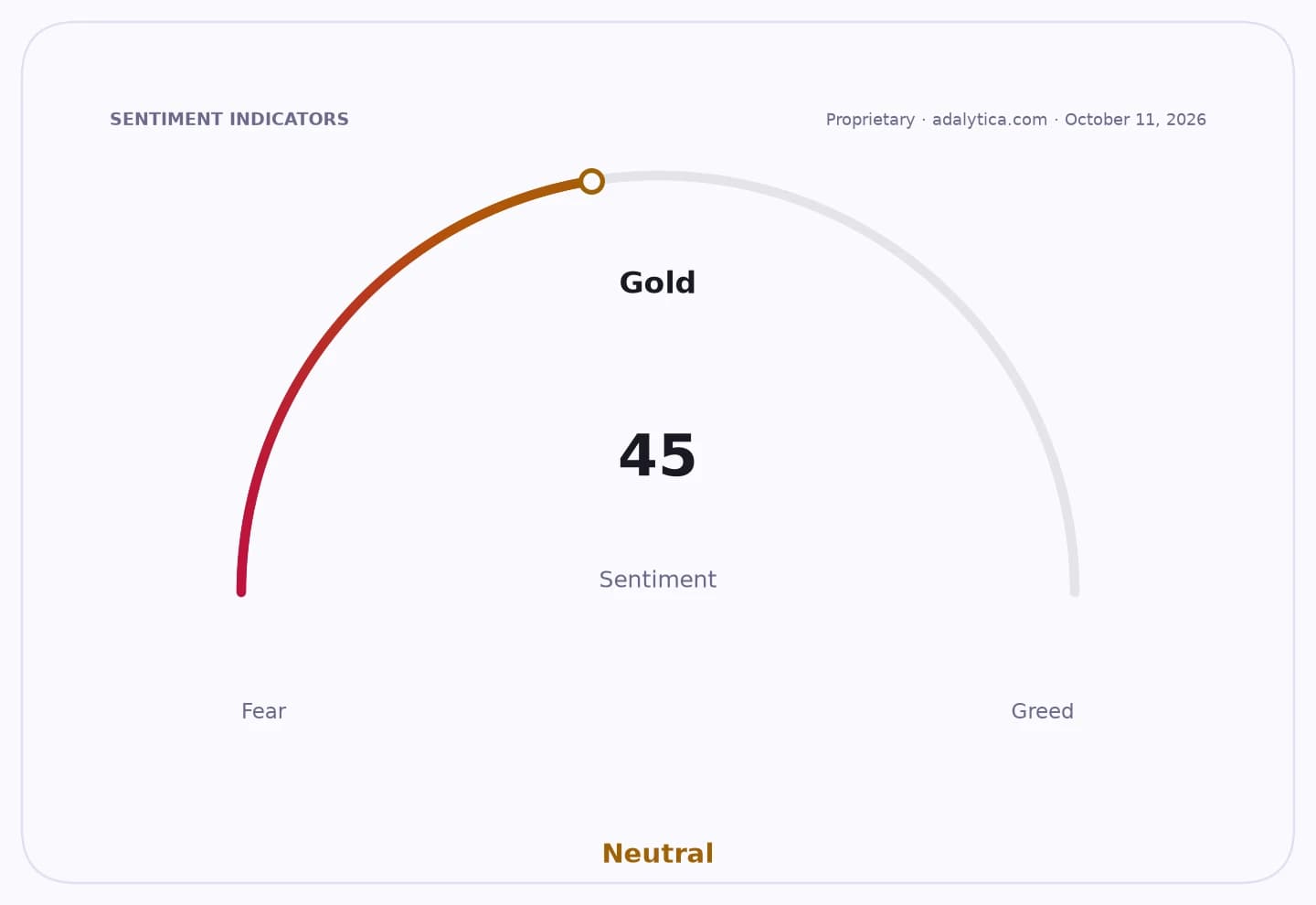
Sentiment IndicatorsⓘProprietary · adalytica.com · October 18, 2026
This is a snapshot — live sentiment, awareness and momentum for 130+ markets update continuously in the dashboard.Open AlphaPulse
The currency backdrop is doing part of the heavy lifting. The rupee rose for a fifth straight session and closed at 94.99 per dollar, helping cap import costs just as spot demand weakened. In the global market, gold traded at 4,152.99 dollars an ounce and silver at 57.09 dollars, underscoring that India’s retail pricing is still tethered to volatile offshore moves even when domestic demand cools.
For investors, the message is less about today’s price tag and more about positioning. Gold has been one of the strongest trades of the year, but recent swings show how quickly momentum can stall when the dollar, rates expectations and currency trends shift. Gold futures on Comex closed at 4,181.1 dollars on Oct. 16, recovering from 4,107.9 dollars a day earlier, but the metal remains below its 50-day moving average and well under the 200-day average, a sign the market is still digesting the latest correction. Silver, meanwhile, has been more volatile and is still trading far below its longer-term trend measures.
That creates an asymmetric setup. A stronger rupee and softer Indian retail demand can keep a lid on near-term prices, but any fresh turn in Federal Reserve policy, a weaker dollar or renewed safe-haven buying could quickly reprice bullion again. For households, that means checking city-specific rates before buying jewelry. For investors, it means the best entry may be during these pullbacks, not after the next breakout.
| Entity | Gains | Losses |
|---|---|---|
| Indian jewelry buyers | ▲Lower purchase prices | ▼Those who waited for deeper declines |
| Jewellers/importers | ▲More retail footfall potential | ▼Margin pressure from volatile pricing |
| Gold bulls | ▲Potential entry point | ▼Near-term price momentum |
| Silver holders | ▲None | ▼Steeper pullback risk |