India housing subsidy offers workers up to Rs 1.60 lakh
A proposed housing subsidy for construction workers could give eligible laborers up to Rs 1.60 lakh to help buy a home, a move that would directly lower the upfront cost of ownership for one of India’s most vulnerable urban workforces.
The Real Estate Nanaji Deshmukh Awas Yojana is designed to widen access to housing by backing workers who are often shut out of formal mortgage markets and priced out by rising land and building costs. For cash-constrained households, even a modest grant can be decisive because the biggest barrier is usually the down payment, not the monthly payment alone.
The policy matters economically because construction workers sit at the center of the housing supply chain and also among the people least likely to benefit from it. By nudging more workers into homeownership, the program could support demand for low-cost housing, stabilize labor housing conditions around project sites and reduce turnover in a sector already facing affordability strain.
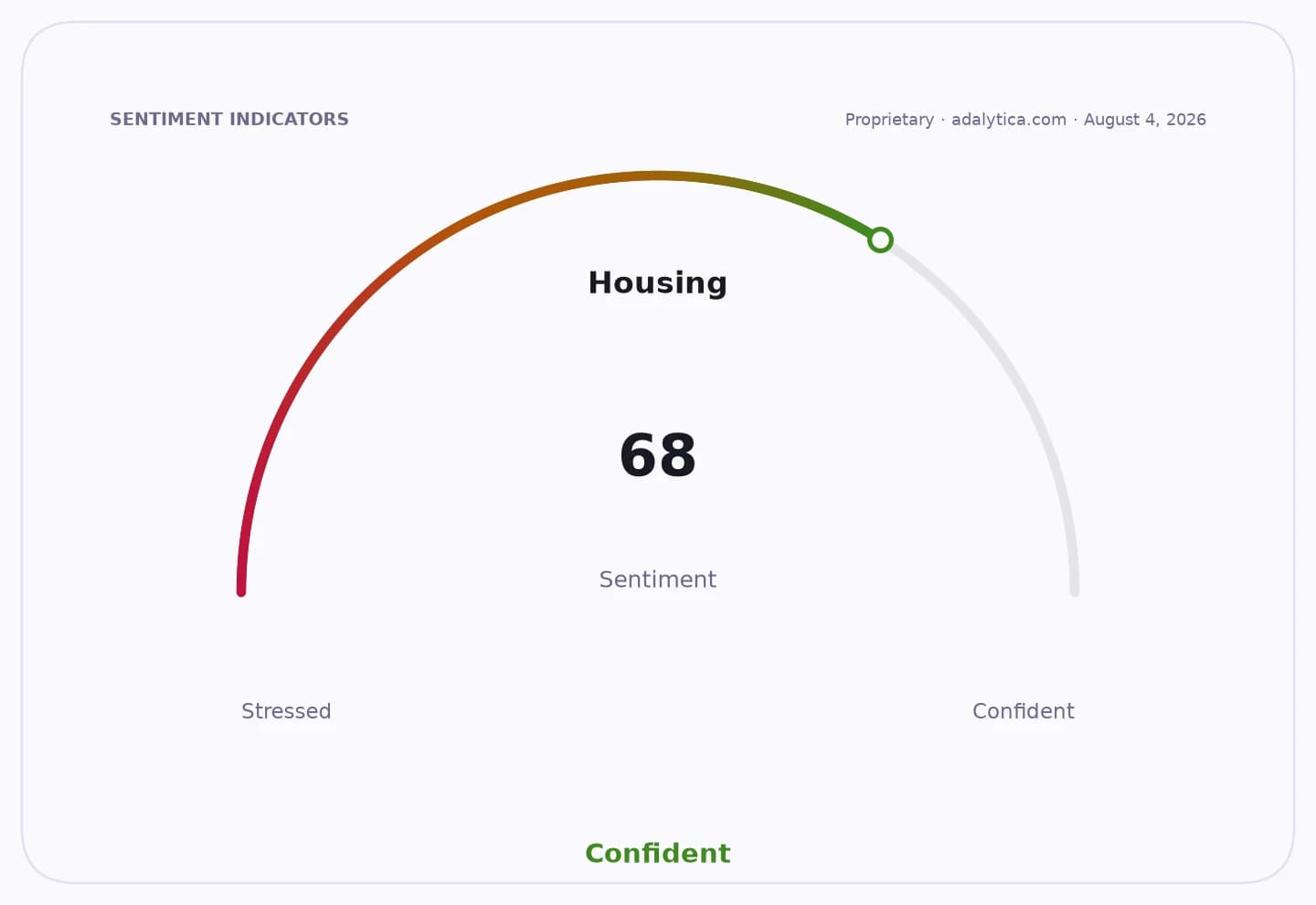
That affordability pressure is visible in broader housing markets too. The U.S. homebuilder ETF XHB has swung sharply in recent months, and Adalytica’s Housing Fear & Greed Index is at 93, labeled “Extreme Greed,” after jumping 29 points in a day and 46 points in a week, underscoring how quickly housing sentiment can change when policy support or rate expectations shift.
For investors, the immediate relevance is to developers, affordable-housing builders and materials suppliers that stand to benefit if subsidies translate into more unit absorption. The biggest beneficiaries are likely to be firms with exposure to entry-level housing, while households without access to the program and builders focused on higher-priced inventory may see less direct lift.
In the U.S. housing trade, technicals also point to a sector trying to stabilize: XHB closed at 109.61, above its 50-day moving average of 107.62 and near its 200-day average of 106.57, while Meritage Homes finished at 74.53, just above its 50-day average of 73.40. But homebuilders are still operating against a backdrop of affordability stress, a reminder that policy aid can help demand at the margin without solving the broader cost problem.
The next catalyst is whether the subsidy becomes a formal, enforceable benefit and which income and employment rules decide eligibility. If the rollout is broad, it could become a meaningful demand support for affordable housing; if it is narrow, the impact will be more symbolic than market-moving.
| Entity | Gains | Losses |
|---|---|---|
| Construction workers | ▲Lower home-buying cost | ▼Still face affordability gaps |
| Affordable housing builders | ▲More buyer demand | ▼Limited if rollout is narrow |
| Materials suppliers | ▲Higher project activity | ▼Demand lag if policy delays |
| Higher-end homebuilders | ▲Little direct benefit | ▼Less policy-driven demand lift |