India’s hotter June inflation print is tightening the Reserve Bank of India’s policy room and making the next rate decision the key macro event for markets, households and borrowers.
India Inflation Puts RBI Back on Hawkish Watch
Consumer prices rose 4.38% in June, above the RBI’s mid-point target and enough to keep pressure on policymakers even as they try to avoid choking a still-recovering economy. The latest reading matters because it shifts the balance away from growth support and toward credibility on inflation, especially after months in which markets had expected the central bank to stay cautious. Bank of America’s call for a rate increase underscores how quickly the policy debate is moving if price pressures prove persistent rather than temporary.
Sentiment IndicatorsⓘProprietary · adalytica.com · July 14, 2026
This is a snapshot — live sentiment, awareness and momentum for 130+ markets update continuously in the dashboard.Open AlphaPulse
For investors, the immediate implications run through rates, credit and the currency. Higher borrowing costs would hit interest-rate-sensitive sectors first, from banks to real estate and consumer durables, while potentially supporting the rupee if the RBI signals a firmer anti-inflation stance. The central bank is also under pressure from rising household debt, which makes any policy tightening more consequential for consumption-led growth. That trade-off is what investors are watching: whether the RBI prioritises anchoring inflation expectations or protecting momentum in the broader economy.
The RBI’s new rural and urban consumer confidence and inflation expectation surveys are part of that recalibration. They suggest the central bank wants a better read on whether the recent price spike is feeding into broader sentiment and wage-price behaviour. That is important because inflation that starts to reshape expectations becomes much harder to contain, forcing a more prolonged tightening cycle and raising the risk of slower nominal growth.
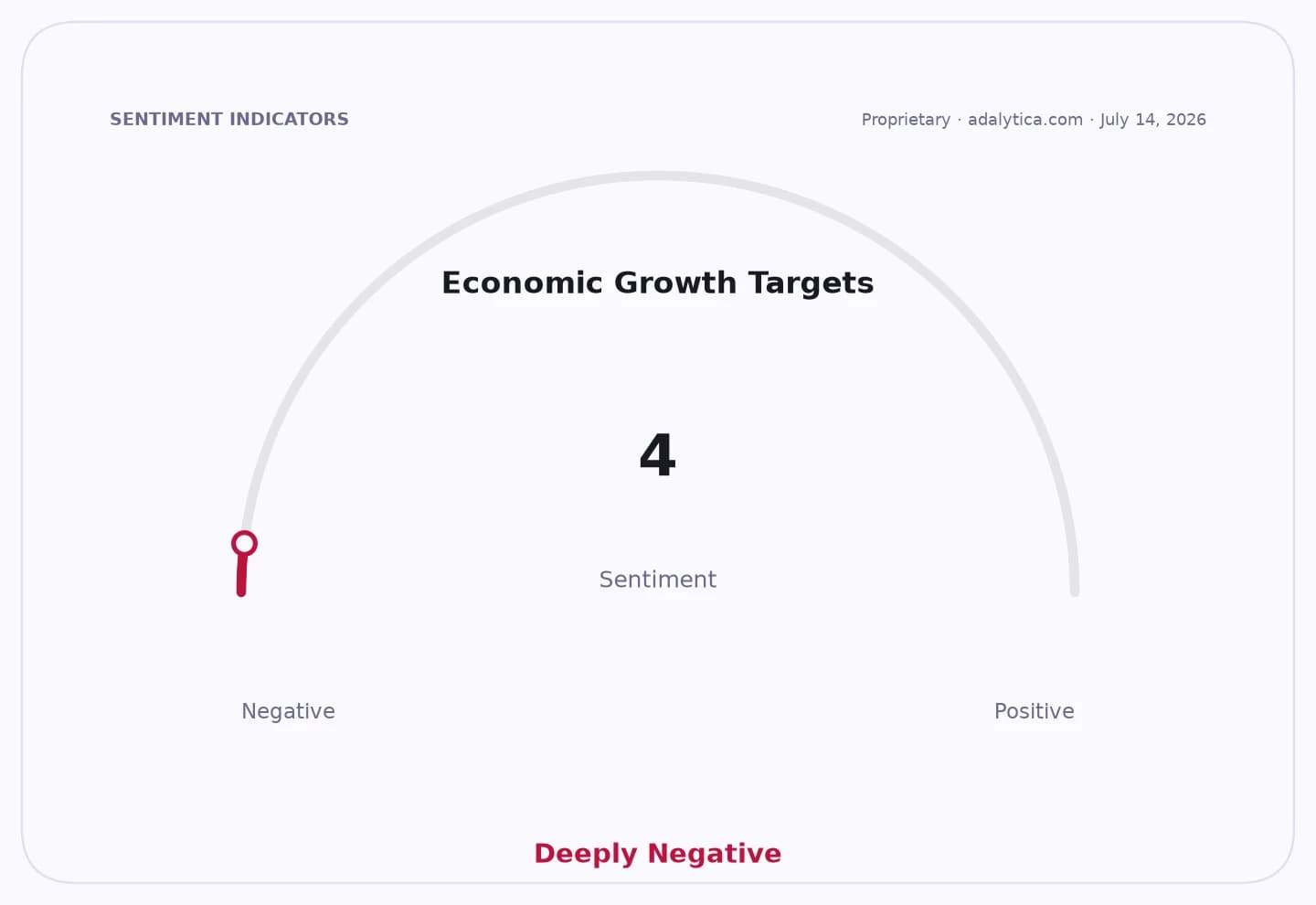
The market backdrop is complicated by global conditions as well. China’s growth-target sentiment is in extreme fear territory, industrial production sentiment has surged, and broader risk appetite in US equities remains fragile. For India, that means domestic inflation is arriving at a time when external volatility is already making capital flows and exchange rates less predictable. The RBI’s challenge is to keep the economy on a stable path without inviting another inflation scare or weakening confidence in its policy framework.
The base case now is that the RBI will remain data-dependent but less tolerant of upside inflation surprises. A decisive policy response would support long-term credibility, but it also raises the cost of capital for borrowers and could delay a broader private-sector recovery. If inflation eases in the coming prints, the central bank may still avoid an aggressive tightening cycle. If not, the June figure may prove to be the point at which the RBI’s neutral stance turns more clearly hawkish.
| Entity | Gains | Losses |
|---|---|---|
| RBI | ▲Policy credibility | ▼Room for easing |
| Savers | ▲Higher yields | ▼— |
| Borrowers | ▲— | ▼Higher debt costs |
| Banks | ▲Wider lending spreads | ▼Slower loan growth |