India Presses Japan for 10 Trillion Yen Investment
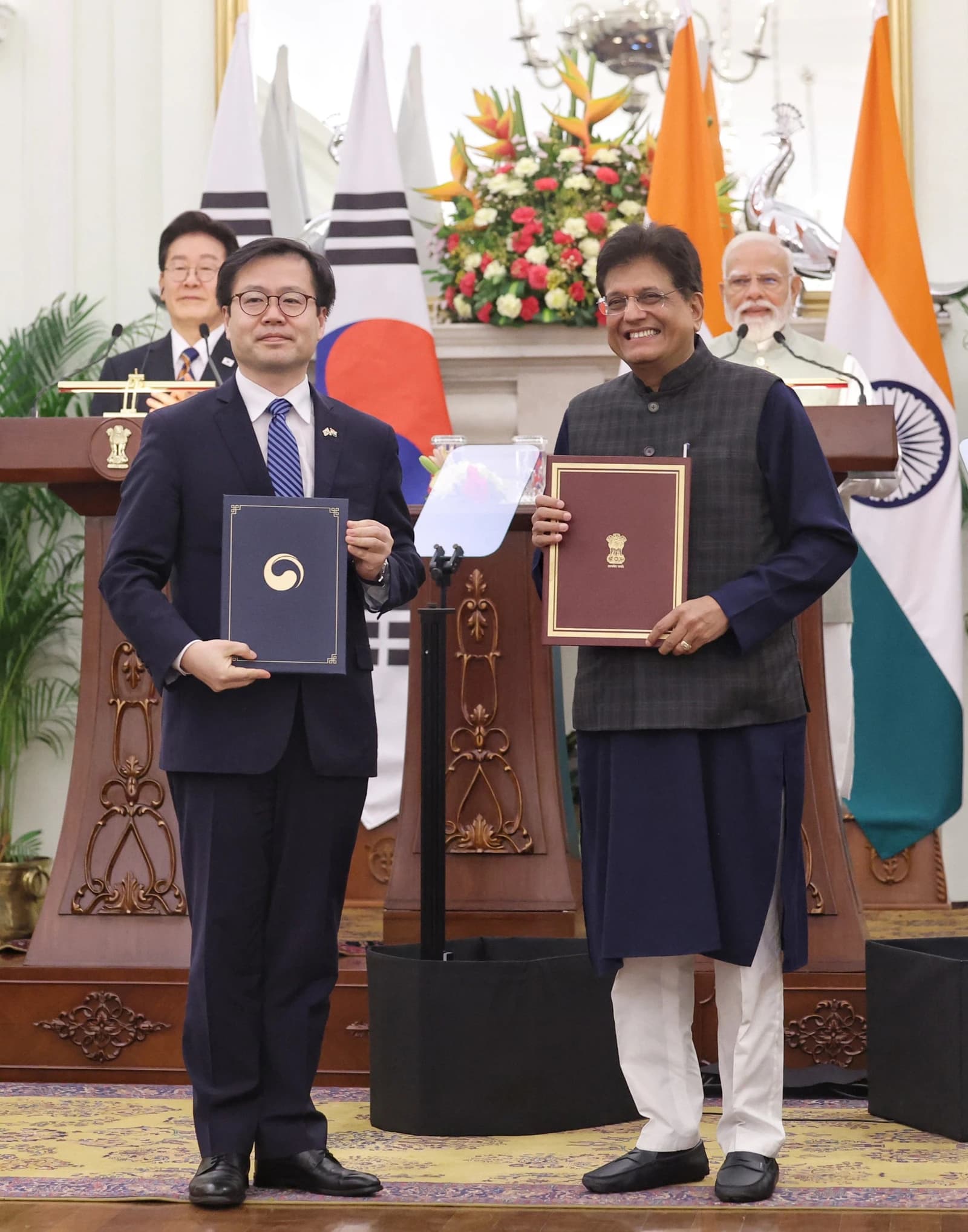
India is pressing Japan to lift investment to 10 trillion yen, a target that would deepen one of Asia’s most strategically important capital flows and give New Delhi a fresh source of factory spending, technology transfer and long-term financing.
The push matters because India needs durable foreign capital to fund manufacturing, infrastructure and advanced technology as it tries to narrow its reliance on China-linked supply chains and accelerate industrialisation. For Japan, the pitch offers access to a large and fast-growing market at a time when many of its companies are seeking to diversify production, secure new demand and position themselves in sectors ranging from semiconductors to defense.
Commerce Minister Piyush Goyal’s demand fits a broader effort by both countries to turn diplomacy into investment. Officials have been talking up more Japanese companies in India, with collaboration expected across semiconductors, artificial intelligence and defense. That reflects a bilateral relationship that is no longer just about trade, but about strategic economic alignment in the Indo-Pacific.
The market significance is less about a single headline allocation than the possible multiplier effect. A 10 trillion yen commitment — roughly $64 billion at current exchange rates — would be large enough to support new joint ventures, plant expansions and supply-chain buildouts. It could also strengthen confidence in India’s manufacturing push if Japanese corporates, which tend to invest with long horizons, follow through rather than merely announce plans.
Japan has already shown appetite for selective industrial partnerships in the region. Toyota Motor and other large Japanese groups have spent years building operations in India, and recent corporate filings underscore how Japanese capital continues to seek exposure to technology-intensive ventures. But the opportunity comes with familiar constraints: Japan’s companies move cautiously, and India still has to persuade them that regulatory friction, execution risk and policy consistency will not erode returns.
For investors, the key question is whether this becomes a pipeline of real projects or another diplomatic target. If the former, beneficiaries would include Indian industrials, infrastructure builders, lenders and listed consumer and mobility suppliers tied to Japanese supply chains. Japanese manufacturers could gain growth optionality outside a slowing home market. If the latter, the story would remain important geopolitically but have limited near-term impact on earnings.
The backdrop is still supportive for risk assets linked to the India-Japan corridor. Japan’s 10-year government bond yield has been hovering around 4.7%, while the yen has been trading near 159 to the dollar, a mix that can encourage Japanese firms to look abroad for growth. Indian equities have also recovered from earlier weakness, with the INDA exchange-traded fund stabilising after a sharp spring selloff.
The bigger narrative is that India is trying to convert strategic alignment into capital formation. Whether the 10 trillion yen goal becomes a binding investment arc will depend on how quickly both governments can translate political intent into bankable projects, especially in sectors where Japan brings technology and India offers scale.
| Entity | Gains | Losses |
|---|---|---|
| India | ▲Manufacturing capital inflows | ▼Pressure to improve execution |
| Japanese companies | ▲Access to fast-growing market | ▼Higher regulatory and project risk |
| Indian industrials | ▲New joint ventures and orders | ▼Greater competition from global peers |
| China-linked supply chains | ▲Weaker regional dominance | ▼Loss of production share |