India weighs oil and shipping risks from Ukraine, West Asia
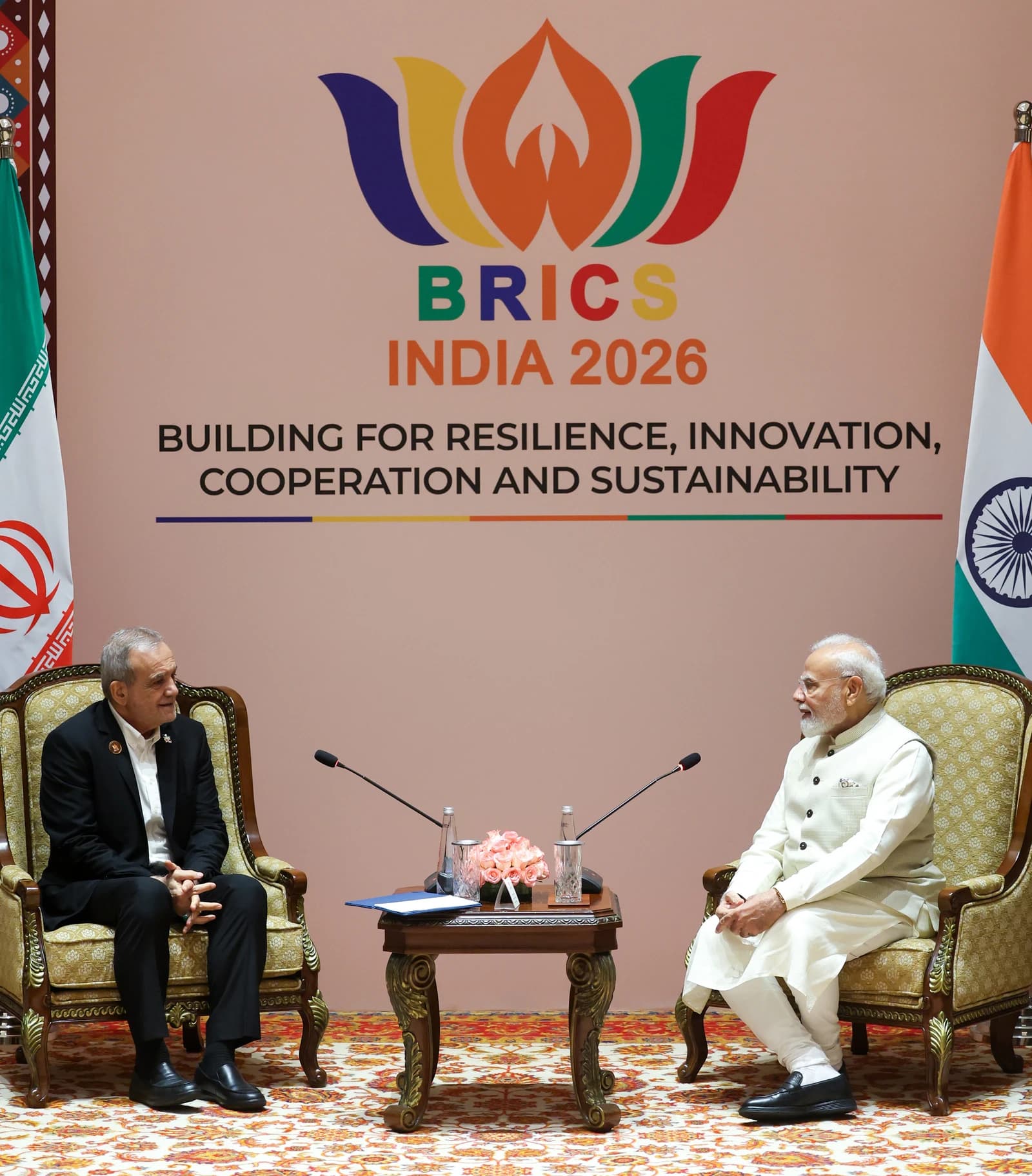
India’s talks with Russian President Vladimir Putin and Iranian President Masoud Pezeshkian underscore how wars in Ukraine and West Asia are increasingly shaping New Delhi’s energy bill, trade routes and maritime risk.
Prime Minister Narendra Modi used the BRICS sidelines to press for “dialogue and diplomacy” and to stress that freedom of navigation and commerce must not be disrupted, a message that carries immediate economic weight for a country that relies on imported crude, global shipping and open sea lanes to keep growth and inflation in check. India is one of the world’s largest oil importers, and disruptions around the Strait of Hormuz and the Black Sea feed directly into freight costs, insurance premiums and energy security.
The timing matters because the two conflicts are no longer abstract geopolitical issues for India. As tensions in the Middle East threatened transit through Hormuz, New Delhi leaned on Moscow to help meet crude demand. That dependence on alternative suppliers shows how geopolitical shocks are already being rerouted into India’s commodity trade rather than absorbed by it. A prolonged risk premium in oil would widen India’s import bill, pressure the current account and complicate the Reserve Bank of India’s inflation management.
The human cost is also feeding into policy. Government figures show more than 300,000 Indian seafarers work on ships in international waters, making India the third-largest supplier of maritime labour. With Indian sailors reported killed or stranded in separate incidents near Hormuz and the Black Sea, the issue is no longer just about commerce but also about protecting a major overseas workforce and the remittance-linked households that depend on it. New Delhi’s warning to nationals to assess security risks before sailing through those routes suggests the state now sees shipping security as an economic policy issue.
For markets, the near-term read-through is straightforward: any escalation around Hormuz or the Black Sea tends to support crude and shipping-related costs, while stronger rhetoric on de-escalation can ease some of that pressure. The oil market has already shown how quickly war risk can reprice barrels, and India is especially exposed because it imports most of its fuel needs. That makes steady access to discounted Russian barrels, along with uninterrupted maritime traffic from the Gulf, central to the country’s inflation and growth outlook.
There is also a broader strategic trade-off. India wants to preserve ties with Moscow and Tehran while keeping supply routes open and avoiding direct entanglement in either conflict. That balancing act can help diversify energy sources and preserve diplomatic leverage, but it leaves New Delhi exposed if war risk intensifies faster than diplomacy can de-escalate it. For investors, the key question is whether India can keep importing crude on favorable terms without paying a rising geopolitical premium in freight, insurance and trade disruption.
The next catalyst is whether security conditions around the Middle East and the Black Sea stabilize enough to keep shipping flows intact. If they do not, India’s foreign policy problem becomes a balance-sheet problem as well, with higher energy costs, weaker trade terms and rising pressure on sectors tied to imported fuel and global logistics.
| Entity | Gains | Losses |
|---|---|---|
| India | ▲Oil supply diversification | ▼Higher freight and insurance costs |
| Russian and Iranian exporters | ▲Continued buyers and diplomatic access | ▼Isolation if conflict escalates |
| Indian seafarers | ▲Greater official protection focus | ▼Higher route-related safety risk |
| Oil importers and consumers | ▲Lower risk if tensions ease | ▼Inflation if sea lanes stay disrupted |