India political stability keeps attracting capital
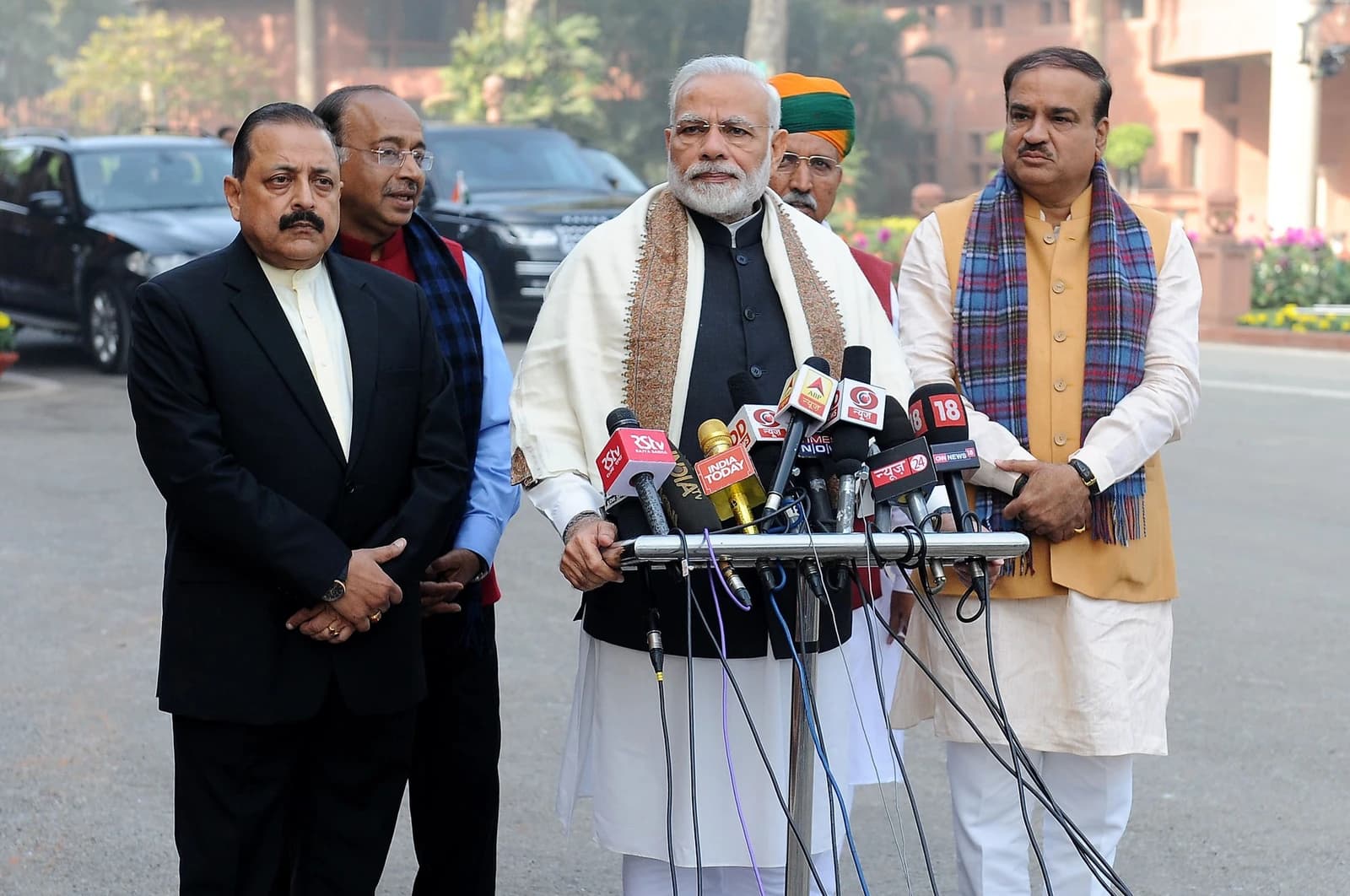
India’s political continuity is emerging as a core economic asset, with Prime Minister Narendra Modi using it to argue that the country can keep attracting capital even as higher-for-longer U.S. rates and trade volatility shake emerging markets.
Modi said India has “political stability” and that reform is “not a compulsion” for his government, a line that underscores how New Delhi is trying to frame policy continuity as a competitive advantage rather than a constraint. The message matters because foreign investors in India are weighing growth against policy risk at a time when global capital is still concentrated in the U.S. and when many emerging markets are struggling to defend currencies and draw in long-term money.
The backdrop is a still-firm U.S. Treasury market, with the 10-year yield near 4.7%, a level that keeps global borrowing costs elevated and raises the hurdle for risk assets. At the same time, Bloomberg-tracked India exposure via the INDA ETF has been rangebound around $49.69, hovering below its 200-day moving average of 50.67, suggesting investors remain constructive on India’s long-term story but are not chasing it aggressively. The ETF’s 50-day average at 49.31 shows the fund has stabilized after a volatile year, but the setup is more one of consolidation than breakout.
That fits with the broader emerging-market picture. China-focused FXI is trading at 35.89, also below its 200-day average of 36.67, reflecting how investors are discriminating among large emerging markets rather than treating them as a single trade. India’s advantage has been its relatively steady political environment, which supports infrastructure spending, tax collection and private investment planning. Modi’s emphasis on stability is also aimed at reassuring companies that need multi-year visibility on regulation, land use, taxation and capex returns.
For investors, the key issue is whether political predictability can translate into a lower risk premium. India has already been benefiting from supply-chain diversification, domestic demand and public investment, but equity valuations still require earnings growth to keep pace. A stable policy regime tends to help financials, industrials, consumer companies and infrastructure names, while also supporting bond-market confidence and the rupee through stronger portfolio flows.
The bear case is that “stability” can be read as a signal of slower or more selective reform, especially if growth eventually needs a fresh productivity push. The bull case is that India does not need constant policy overhauls to remain attractive if it can keep building roads, metros, digital rails and med-tech capacity while preserving tax discipline and investor confidence.
For now, Modi is making a simple market argument: in a world of geopolitical shocks, India’s predictability is itself a growth lever. Investors will be watching whether that narrative is matched by continued capex, steady earnings delivery and durable foreign inflows.
| Entity | Gains | Losses |
|---|---|---|
| India government | ▲Lower risk premium | ▼Pressure for faster reform |
| Foreign investors in India | ▲Policy visibility | ▼Less room for event-driven gains |
| Domestic corporates | ▲Planning certainty | ▼Reform-driven upside |
| Competing emerging markets | ▲— | ▼Relative capital appeal |