Indonesia’s gas names are starting to look like a real energy trade again, and PT Indonesia Natural Gas Tbk has emerged as the key watchlist name as investors look for the next beneficiary of the country’s push to replace LPG with domestic gas.
INDO Rallies on LPG Replacement Thesis
That matters because the market is not just trading a stock chart here — it is trading a structural shift in how Indonesia powers homes and industry. Any credible LPG replacement program would redirect demand toward domestic gas distribution, reduce reliance on imported fuels and create a longer runway for companies positioned in the gas retail and infrastructure chain. In a world where Europe is scrambling to conserve gas ahead of winter and global gas sentiment is heating up, that kind of policy-driven demand visibility is exactly the sort of catalyst investors pay up for.
Sentiment IndicatorsⓘProprietary · adalytica.com · July 14, 2026
This is a snapshot — live sentiment, awareness and momentum for 130+ markets update continuously in the dashboard.Open AlphaPulse
The move in INDO has been violent enough to show that the market has noticed. The stock closed at 3.00 on July 13, up from 2.74 two sessions earlier, with volume jumping to 595,400 shares from 274,500 the prior day. More importantly, the share price has already staged a dramatic re-rating from 2.76 on July 9, even after a much larger spike earlier this year when it briefly touched 6.74. That tells you this is not a sleepy utility trade — it is a momentum-sensitive name where policy headlines and liquidity can trigger big swings.
Technically, the stock is trying to rebuild momentum after a prolonged reset. It remains below its 200-day moving average of 3.34, but it has pushed back above the 50-day average near 2.89. The RSI reading of 68.7 points to strong near-term demand, while the MACD is close to turning positive again. In plain English: the chart says investors are re-engaging before the fundamentals are fully in the price.
Oil WTI vs INDOadalytica.com
Explore this data interactively — full history, time series and cross-market comparisons.Open AlphaPulse
That is where the asymmetric setup gets interesting. If the LPG replacement thesis becomes more than a talking point, the winners are not just consumers of cheaper domestic energy. The real upside could accrue to the companies that own distribution, storage and last-mile access — the toll roads of the gas economy. Indonesia’s gas issuers, especially the one now in the research spotlight, could see their valuation re-rate if policy support translates into volume growth and better utilization.
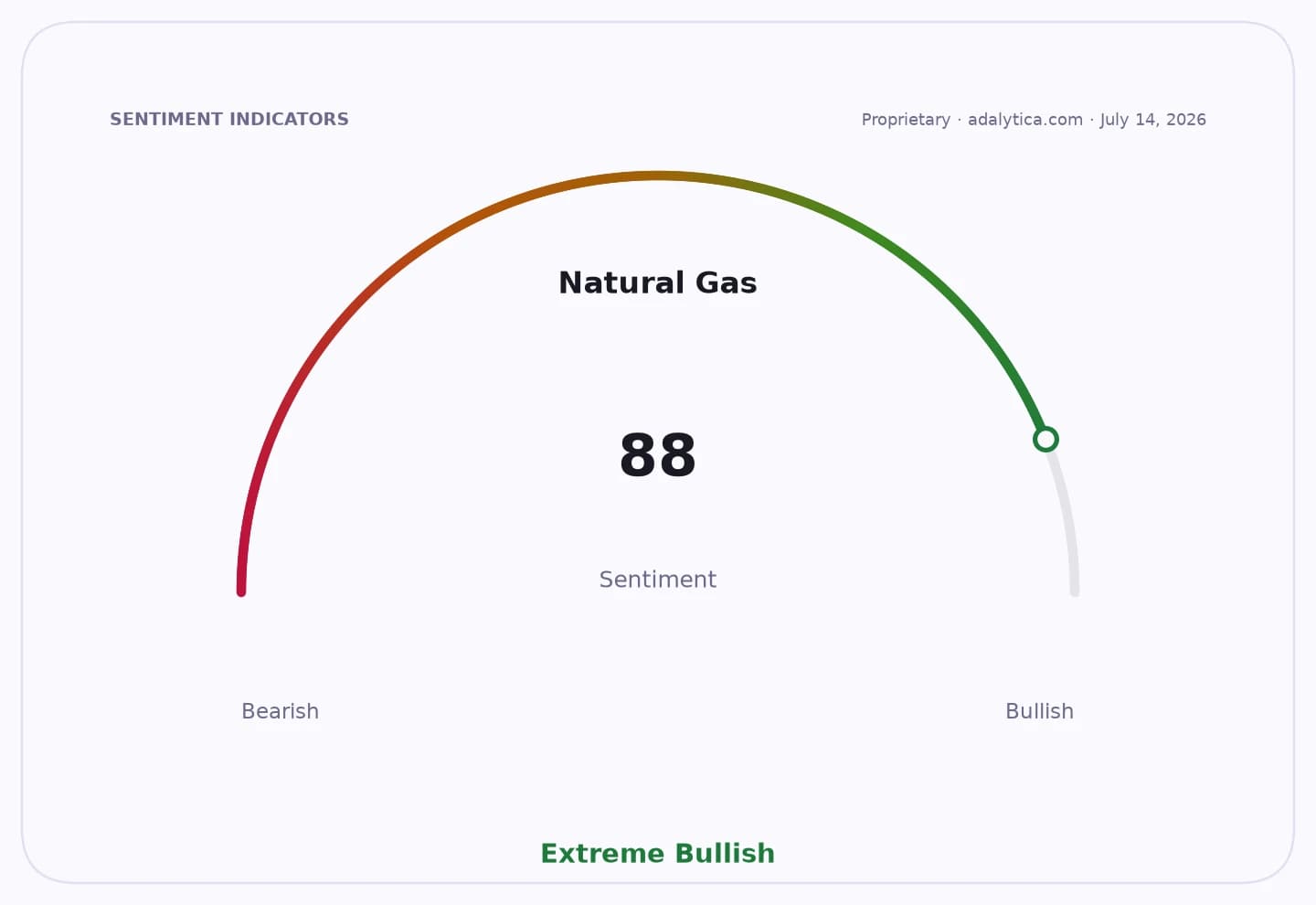
The broader energy backdrop strengthens the case. Adalytica’s trade signals show natural gas sentiment at 88, labeled “Extreme Greed,” with awareness rising sharply over the past week. That does not guarantee higher prices, but it does confirm that gas has become a crowded macro narrative again. For investors, crowded attention often precedes capital flows — and capital flows tend to find the names with direct exposure to policy and infrastructure.
Oil is a weaker support here than gas, with WTI sentiment neutral, which also matters. If the market is moving toward gas as the cleaner, more flexible transition fuel while oil remains directionless, then the relative winners are likely to be the gas distributors, not the broader energy complex. That is why INDO deserves a fresh look now, before the LPG replacement story is fully modeled into earnings.
The key question from here is execution. If Indonesian policymakers back the replacement agenda with incentives, infrastructure spending or procurement support, this could become a multi-quarter rerating story rather than a one-day headline trade. If they do not, the stock will likely remain a trading vehicle. But in markets like this, the biggest gains usually go to investors who position before the policy becomes consensus.
For now, I believe the best way to play the theme is to focus on Indonesia’s gas distribution and infrastructure names rather than trying to forecast commodity prices. The market may still be underestimating how quickly a domestic energy-replacement program can turn into a cash-flow story.
| Entity | Gains | Losses |
|---|---|---|
| PT Indonesia Natural Gas Tbk (INDO) | ▲LPG replacement optionality | ▼Policy disappointment |
| Indonesian gas distributors | ▲Volume growth | ▼Import-fuel incumbents |
| LNG/LPG import dependence | ▲Reduced reliance | ▼Lower demand share |
| Energy traders | ▲Volatility | ▼Predictable spread trades |