Indonesia 2027 Minimum Wage Proposal at 7.5%-9.5%
Said Iqbal has set up an early fight over Indonesia’s 2027 minimum wage by proposing increases of 7.5% to 9.5%, a move that will test whether wage-setting can keep pace with inflation and growth without squeezing employers.
The proposal from the labor confederation KSPI and the Labor Party is economically important because it effectively turns wage talks into a debate over real pay, not just nominal increases. Iqbal said the calculation uses three inputs: average national inflation, average economic growth and an “index tertentu” of 0.9, the upper end of the 0.5-0.9 range allowed under government regulation PP No. 49/2026. Using official BPS data for October 2025 through August 2026, KSPI puts average inflation at 3.20% and growth at 5.43%, producing a formula result of about 7.7%.
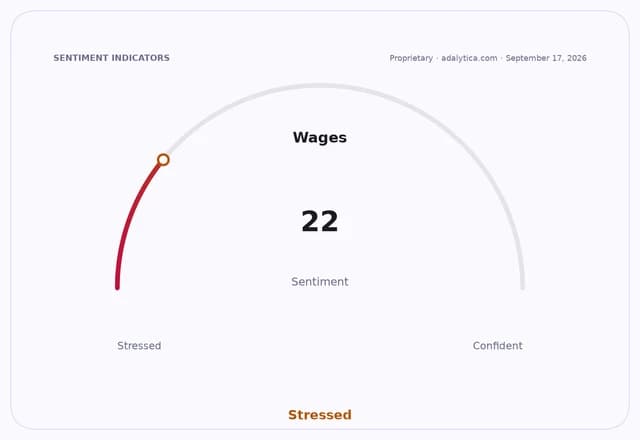
That number matters because it is already being used as the benchmark for a nationwide wage campaign months before the formal setting process begins. Under the timetable cited by KSPI, provincial minimum wages are due to be set on Nov. 1, 2026, and district and city wages, along with sectoral minimum pay, on Nov. 10. By coming out early, labor is trying to anchor expectations before employers and local governments start negotiating from a lower base.
For investors, the stakes go beyond a labor headline. Minimum wage policy feeds directly into payroll costs, margin assumptions and consumer spending power. Higher wages can support household demand, particularly for staples and discretionary spending, if inflation is contained. But if food prices keep rising, the gain in nominal income can be erased quickly, which is why Iqbal emphasized that workers need higher real wages, not just larger pay packets. That argument is likely to resonate in sectors with large labor forces and thin margins, from retail and restaurants to manufacturing and logistics.
The timing also matters for monetary and inflation expectations. KSPI’s framing rests on the idea that wage growth should track recent inflation and output growth, but its own case acknowledges regional dispersion. Java Barat and Maluku Utara, or Bekasi and Gresik, do not face the same cost pressures or productivity profiles, which is why the union is proposing a range rather than a single figure. That flexibility could help the proposal gain political traction, but it also increases the risk of uneven implementation across provinces and cities.
A broader market read is that Indonesia’s wage-setting system is moving toward a more formula-driven model, but the politics remain unresolved. Employers may accept a predictable mechanism more readily than ad hoc increases, especially if the framework provides visibility on labor costs. Workers, meanwhile, will likely push back against any settlement that falls short of inflation-adjusted purchasing power. The result is a policy debate that could shape not only income distribution but also consumption, hiring and investment decisions in labor-intensive industries heading into 2027.
The key catalyst now is not the proposal itself, but whether government, employers and local wage councils converge on a number that protects purchasing power without triggering a broader margin squeeze.
| Entity | Gains | Losses |
|---|---|---|
| Workers | ▲Higher real pay | ▼Wage erosion from inflation |
| Employers | ▲Predictable wage formula | ▼Higher labor costs |
| Consumers | ▲Stronger household demand | ▼Higher pass-through prices |
| Government | ▲More orderly wage process | ▼Pressure to balance growth and welfare |