Indonesia’s pitch that it can narrow the gap with China on artificial intelligence highlights a bigger economic question: whether Southeast Asia’s largest economy can turn political aspiration into the compute, power and supply-chain depth needed to compete in a capital-intensive industry.
Indonesia AI Ambitions Face Infrastructure Reality

Economically, the challenge is less about rhetoric than infrastructure. AI leadership is increasingly shaped by access to advanced semiconductors, data centers, reliable electricity and skilled engineers, all of which require sustained investment and a dense industrial ecosystem. That is why Airlangga Hartarto’s belief that Indonesia can “catch up” with China matters beyond national pride: it speaks to whether Jakarta can move from being a consumer of imported AI tools to a participant in the value chain.
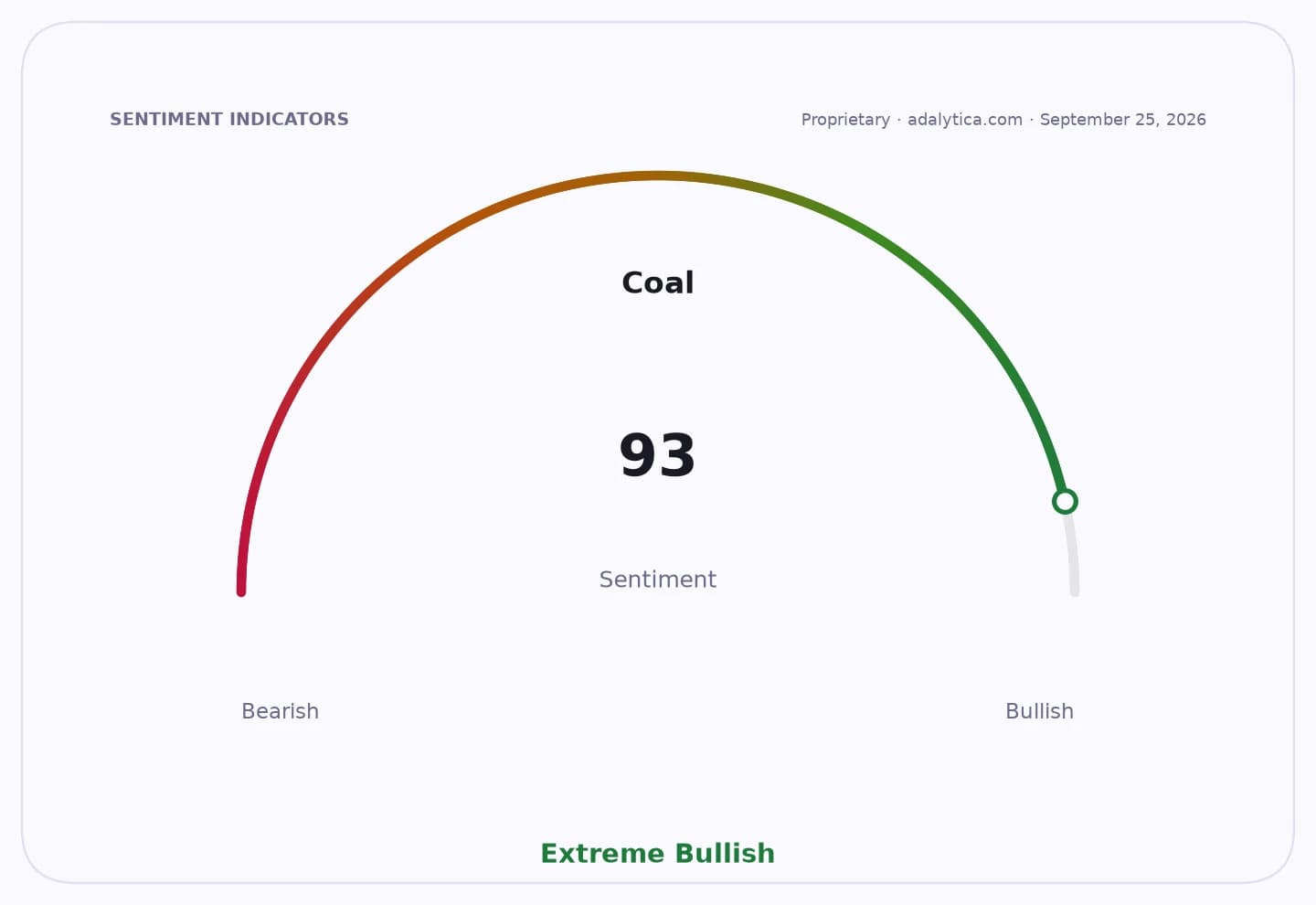
Sentiment IndicatorsⓘProprietary · adalytica.com · July 18, 2026
This is a snapshot — live sentiment, awareness and momentum for 130+ markets update continuously in the dashboard.Open AlphaPulse

The market backdrop underscores how concentrated the AI race remains. TSMC, the contract chipmaker at the center of global AI hardware supply, has seen its shares climb sharply in recent months and remain above both its 50-day and 200-day moving averages even after a pullback, reflecting continued investor confidence in demand for advanced chips. Nvidia, the dominant supplier of AI accelerators, has also staged an enormous run over the past year, though recent trading shows the stock cooling from earlier highs. Microsoft, one of the biggest beneficiaries of AI software adoption, has been far more volatile, underscoring that even the strongest AI franchises face pressure when expectations outrun execution.
That matters for Indonesia because catching China is not only a matter of software or model design. China’s advantage comes from scale, state support, domestic chip ecosystems and a growing set of AI labs pursuing cost-efficient, industry-specific systems. Indonesia, by contrast, would need to assemble a broader foundation: cloud capacity, chip access, energy supply, and a regulatory regime that can attract foreign capital without choking off competition. In practical terms, the gap to China is a gap in industrial policy, not just engineering.
The Adalytica China CCP Policy Direction gauge shows extreme fear, suggesting global investors remain sensitive to Beijing’s policy and geopolitical risk even as China’s AI push continues. At the same time, the US-China relations sentiment reading points to renewed market attention on strategic rivalry. For Indonesia, that creates both an opening and a constraint: companies and governments looking to diversify supply chains away from China may welcome alternative AI hubs, but they will also demand credible infrastructure, governance and scale before committing capital.
For investors, the implication is straightforward. The most immediate beneficiaries of any real Indonesian AI buildout would be semiconductor suppliers, cloud infrastructure providers, power developers and data-center operators, not necessarily domestic software names. The bear case is that Indonesia becomes a policy claimant rather than a production base, with limited follow-through because AI requires long-duration capital and imported technology. The bull case is that Jakarta leverages its population scale, domestic demand and strategic location to build a regional AI platform, especially if it can tie policy goals to energy and industrial investment.
The next test is whether Indonesia can convert “catch up” language into bankable projects, procurement, and regulatory clarity. Without that, the country risks remaining on the outside of the AI supply chain while the real gains accrue to the chipmakers and platforms that already dominate it.
| Entity | Gains | Losses |
|---|---|---|
| Indonesia | ▲AI investment story | ▼credibility if plans stall |
| TSMC | ▲chip demand visibility | ▼valuation if AI spending slows |
| Nvidia | ▲accelerator demand | ▼margin if competition rises |
| China AI labs | ▲policy leverage | ▼scrutiny over rivalry and controls |