Police foil an attempt to move 368 tons of illegal coal to Java, underscoring how enforcement pressure, opaque supply chains and weak oversight can distort Indonesia’s coal market even as traders keep betting on demand.
Indonesia Coal Crackdown Could Tighten Formal Supply
The seizure matters economically because illicit cargoes can undercut licensed miners, distort local pricing and complicate efforts by authorities to control coal flows from producing regions to power and industrial buyers. For a commodity as central to Indonesia’s export earnings and domestic power supply as coal, even a single intercepted shipment highlights how much volume can slip outside the formal system.
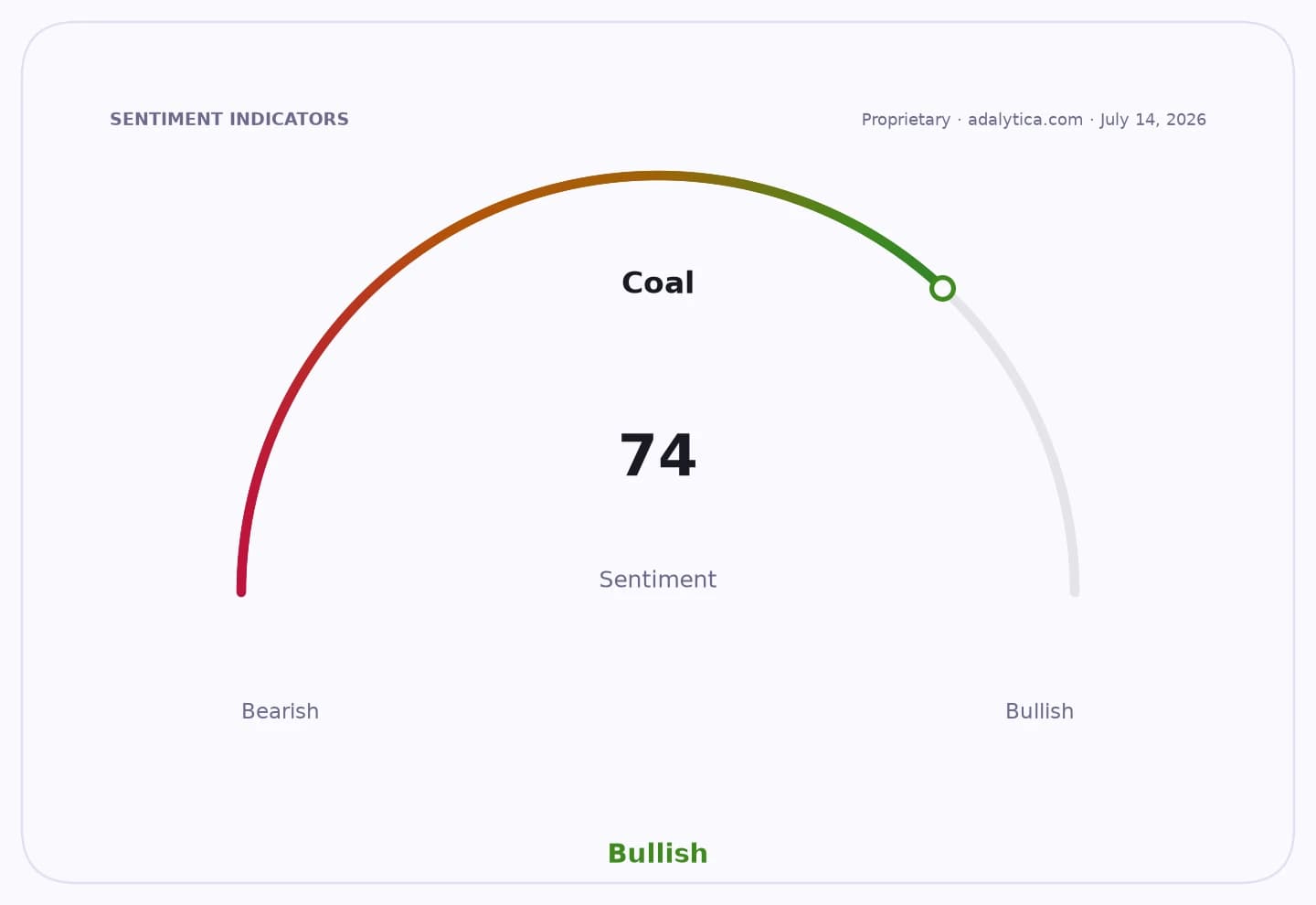
Sentiment IndicatorsⓘProprietary · adalytica.com · July 14, 2026
This is a snapshot — live sentiment, awareness and momentum for 130+ markets update continuously in the dashboard.Open AlphaPulse
Indonesia’s coal sector is already navigating a fragile balance between robust output, shifting policy and tightening scrutiny around permits, transport and royalties. Illegal shipments put pressure on compliant producers by offering cheaper alternatives, while also creating a tax and royalty leak for the state at a time when fiscal authorities are trying to protect revenue.
Investor attention is focused on how hard Jakarta pushes enforcement and whether the crackdown spreads beyond one shipment to ports, trucking routes and small-scale operators. Stricter policing can support the formal market and favor larger, licensed miners with cleaner supply chains, but it can also disrupt near-term logistics and raise compliance costs.
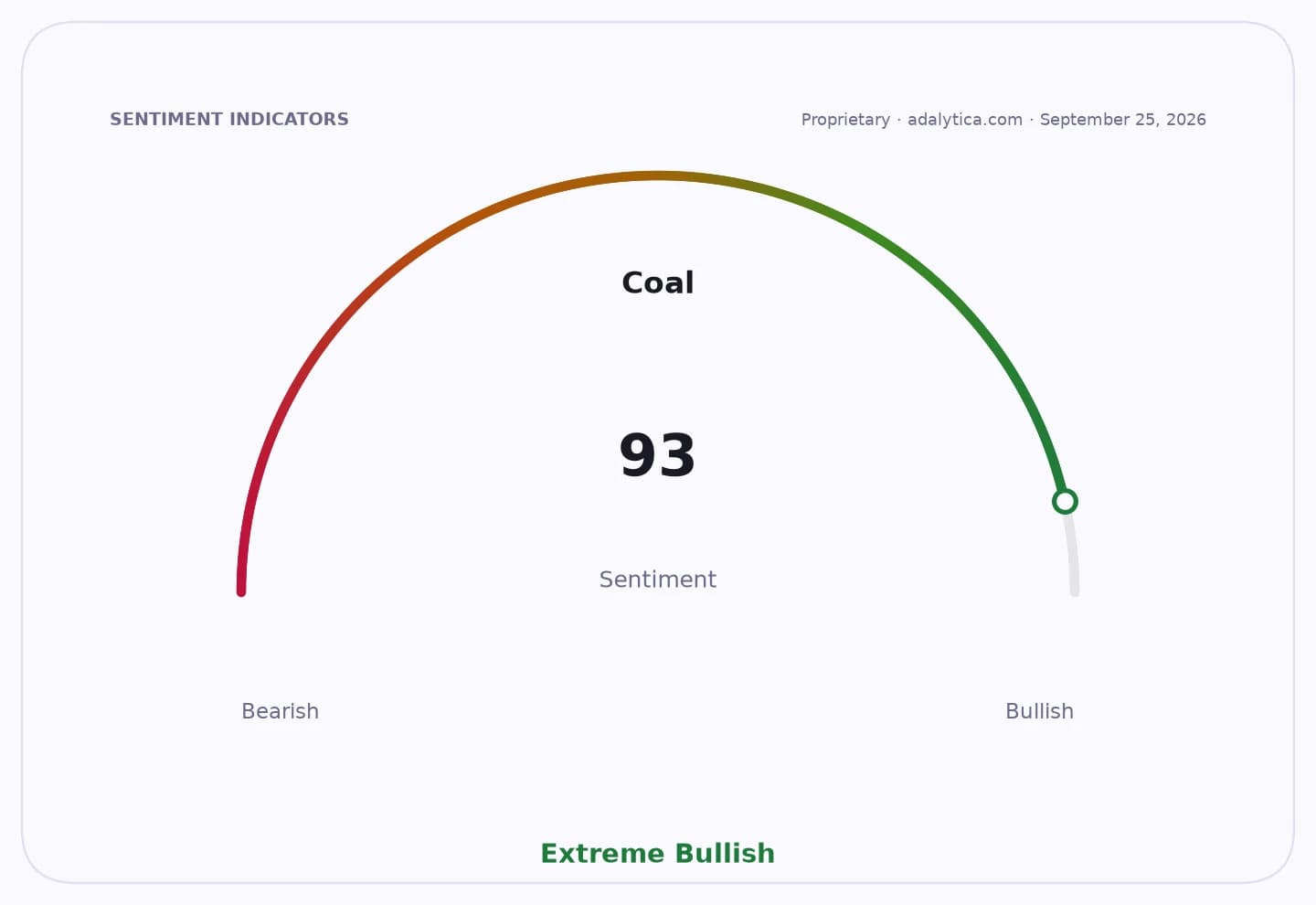
Coal — 30-day sentimentadalytica.com
Explore this data interactively — full history, time series and cross-market comparisons.Open AlphaPulse
That backdrop comes as coal remains a politically sensitive fuel in Indonesia and across Asia, with regulators balancing energy security, exports and environmental commitments. The latest seizure is a reminder that price, policy and enforcement risk can move together, not separately, for coal producers, transport firms and utilities.
The key catalyst now is whether authorities deepen inspections and pursue wider prosecutions, which could tighten supply, lift formal market confidence and reshape regional coal flows into Java and beyond.
| Entity | Gains | Losses |
|---|---|---|
| Licensed coal miners | ▲Fairer pricing | ▼Illegal undercutting |
| Tax authorities | ▲Better royalty capture | ▼Revenue leakage |
| Enforcement agencies | ▲Stronger credibility | ▼More monitoring burden |
| Illegal traders | ▲None | ▼Seizure risk |