Indonesia consumer confidence rises to 118.5 in August

Consumer confidence in Indonesia improved in August, with the BI Consumer Confidence Index rising to 118.5, a sign households remain willing to spend even as global sentiment weakens and investors watch for signs of broader retail resilience.
The reading matters because consumer spending is one of the main supports for Indonesia’s growth outlook and for the rupiah. Stronger confidence can help sustain retail turnover, services activity and corporate revenues, especially for consumer-facing companies that rely on steady traffic and discretionary demand.
The gain also stands out against a softer backdrop elsewhere. U.S. consumer confidence slipped in early September as gasoline prices and inflation worries weighed on households, while Australia also reported a drop in sentiment. That divergence suggests Indonesia is holding up better than some developed markets, giving local policymakers more room to lean on domestic demand.
For investors, firmer confidence is relevant to retail, autos, banking and consumer staples names, which tend to benefit when households feel comfortable spending. It also supports the case for local equities and the currency, particularly if the reading translates into actual purchases rather than just a mood swing.
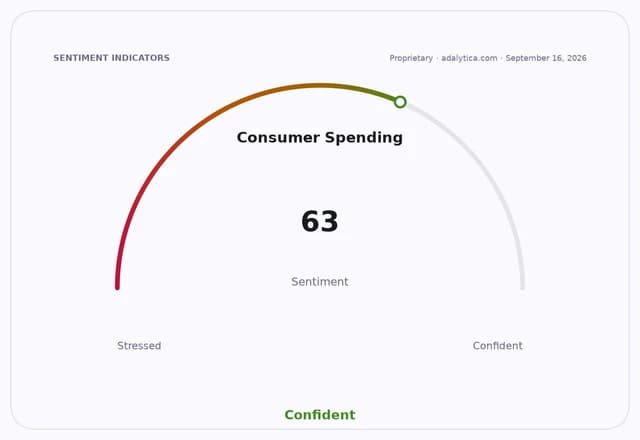
Adalytica’s Consumer Spending Sentiment gauge was still neutral at 63, though it has eased over the past day and week, while Retail Sales Sentiment sat in fear territory at 26, underscoring that confidence and spending signals are not moving in lockstep.
The next test will be whether August confidence shows up in hard retail data and whether inflation, fuel costs or weaker external demand start to erode household optimism heading into the final quarter.
| Entity | Gains | Losses |
|---|---|---|
| Indonesian retailers | ▲stronger traffic potential | ▼weaker demand if confidence fades |
| Indonesian consumers | ▲improved spending mood | ▼higher prices if inflation reaccelerates |
| Rupiah bulls | ▲domestic-demand support | ▼currency bears |
| Export-dependent peers | ▲less relative advantage | ▼more pressure if domestic demand outperforms |