Indonesia fortified rice brands face scam allegations
Indonesia’s revelation that 25 fortified rice brands are alleged scams turns a consumer-protection case into a broader test of food trust, pricing and state oversight in one of Asia’s most politically sensitive staple markets.
The economic significance is immediate: rice sits at the center of household budgets, inflation management and food-assistance programs, so alleged mislabeling or fake fortification does more than cheat shoppers. It undermines confidence in a category that governments use to fight malnutrition, and it risks distorting procurement, subsidy and distribution schemes that rely on verified product quality.
Agriculture Minister Amran said the alleged fraud could amount to as much as Rp89 trillion, with some fortified rice sold for as much as Rp57,000 a kilogram, far above a fair price of roughly Rp13,000 a kilogram. That gap suggests the issue is not just bad labeling but an abuse of consumer willingness to pay for health claims, especially in a market where fortified products are supposed to command a premium because of added nutritional value.
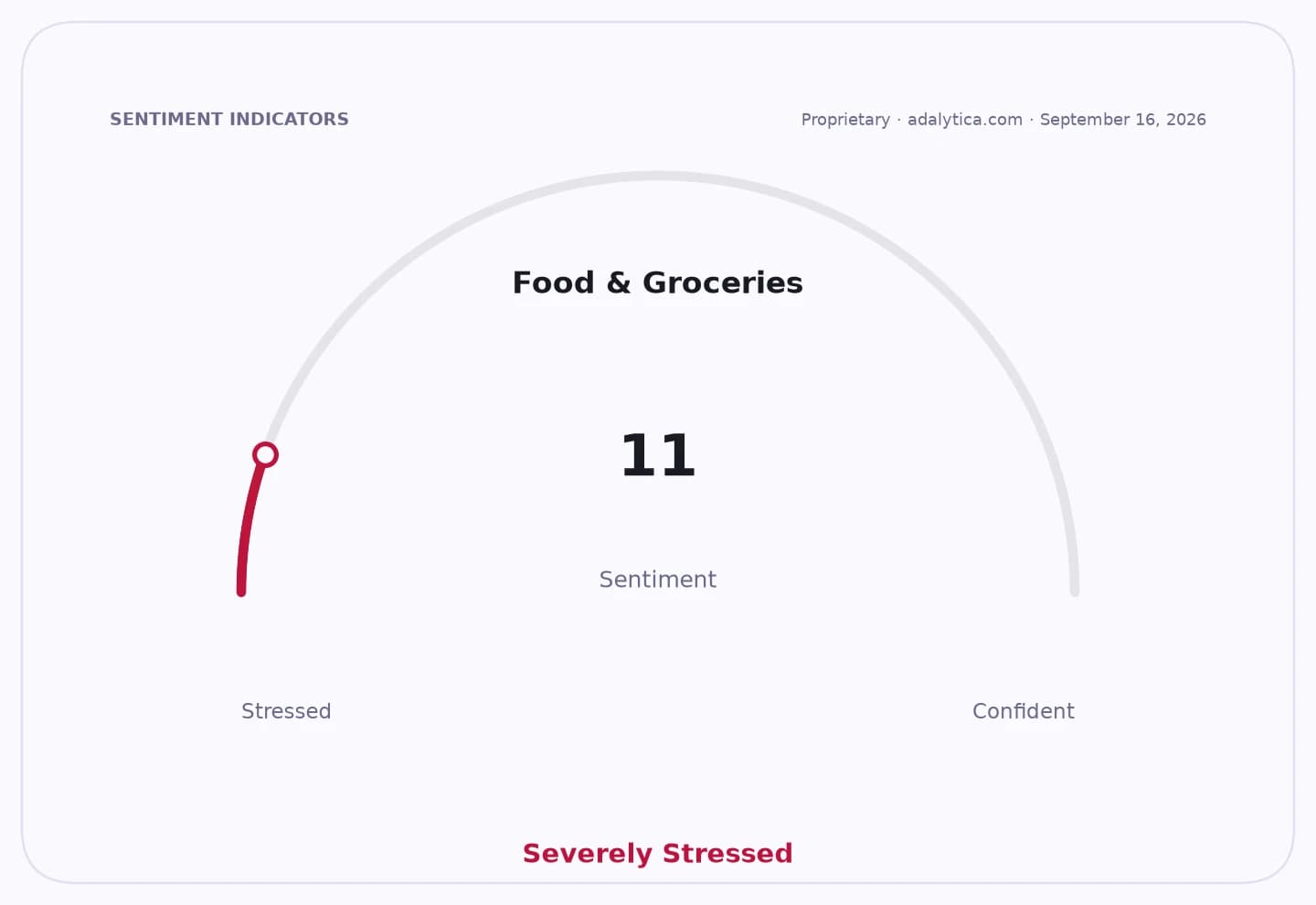
For investors, the message is that food regulation is becoming a price-setting force, not just a compliance issue. Brands tied to packaged rice, nutrition claims, distributors and merchants in the wider grocery chain now face reputational risk, possible enforcement and margin pressure if regulators tighten standards on labeling, sourcing and product verification. The Adalytica Food and Grocery Spending Sentiment gauge shows extreme fear, underscoring how quickly trust shocks can freeze demand in a staple category.
The crackdown also lands at a time when Indonesia is still trying to stabilize food security through farm productivity programs and rice aid distribution. That makes enforcement doubly important: if the public cannot trust what it buys or receives in assistance, the credibility of broader food policy comes under strain, and the cost of intervention rises.
The investable read-through is straightforward. This is bearish for opaque rice traders, weak-label FMCG players and anyone relying on premium claims without hard traceability. It is constructive for companies with audited supply chains, branded credibility, testing capability and government-friendly distribution networks. Over the next few months, the market should pay close attention to whether regulators widen the probe, force recalls or impose stricter certification rules that could reshape the competitive landscape in Indonesian staples.
| Entity | Gains | Losses |
|---|---|---|
| Regulators / Food Task Force | ▲Stronger enforcement reach | ▼More scrutiny if action slows |
| Trusted branded food suppliers | ▲Credibility premium | ▼— |
| Alleged fortified rice brands | ▲— | ▼Sales, reputation, possible penalties |
| Consumers / aid recipients | ▲Better product quality | ▼Near-term confusion and price risk |