Indonesia premium rice shortages hit modern retail
Premium rice is becoming hard to find in parts of Indonesia’s modern retail network, but store staff say purchases are not being capped, pointing instead to a supply squeeze that is tightening consumer choice and risking fresh food inflation.
A spot check at Alfamart, Indomaret and Hero outlets in Jakarta Pusat found premium rice largely missing from shelves, with some stores offering only a single premium brand or none at all. At one Alfamart, only the SPHP rice subsidy product was available at Rp74,500 for 5 kilograms, while premium stock had been gone for two days. Hero had just one premium option left, Shirohana at Rp175,000 for 5 kilograms, and staff said other varieties were already sold out.
The clearest investor and macro takeaway is that the problem looks like availability, not rationing. Employees at all three chains said customers can still buy rice without limits, suggesting the strain is hitting distribution and inventory rather than being managed through store-level purchase caps. That matters because shortages in a staple food quickly feed into household spending, consumer confidence and headline inflation in a market where rice carries outsized weight in daily budgets.
The pressure is visible in pricing as well. Indomaret still had several lines on offer, including Lahap at Rp149,000 for 10 kilograms and Sintanur Wangi at Rp95,900 for 5 kilograms, but the range was narrower than normal and not all products were true premium grades. With stores carrying only partial assortments and some staff unable to say when new stock will arrive, the retail picture points to a supply chain that is still under strain.
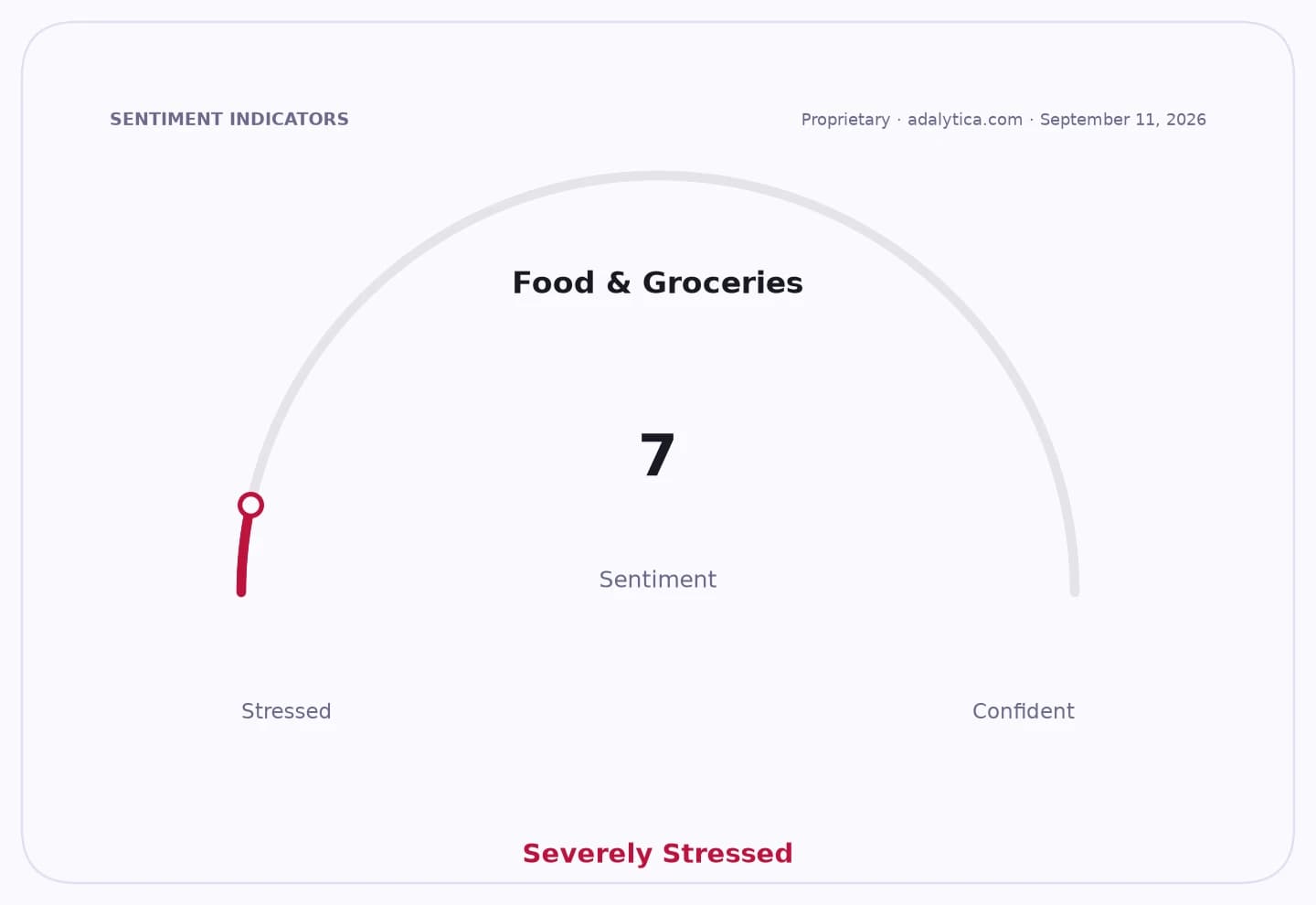
That comes as food-price sensitivity is already elevated. Adalytica’s Food and Grocery Spending Sentiment gauge shows “Extreme Fear” at 7, underscoring how quickly shoppers can become defensive when staple goods tighten. For policymakers, the risk is that temporary retail shortages become a broader inflation issue if supply does not normalize ahead of the next restocking cycle.
The next catalyst is whether shipments due next week refill shelves or whether the shortage spreads beyond Jakarta’s modern trade outlets into a wider retail problem.
| Entity | Gains | Losses |
|---|---|---|
| Rice wholesalers/distributors | ▲Higher bargaining power | ▼Stock drawdowns |
| Premium rice brands | ▲Scarcity-driven attention | ▼Lost shelf presence |
| Consumers | ▲Access to subsidized SPHP rice | ▼Less choice, higher prices |
| Policymakers | ▲Pressure to stabilize supply | ▼Inflation optics if shortages persist |