Inflation squeezes consumers, favors defensive stocks
Rising consumer prices and fading household buying power are becoming the biggest obstacle to a projected 4.1% growth rate, with inflation still eroding real incomes even as energy costs ease in parts of Europe.
That matters because growth built on nominal spending can stall quickly when inflation outpaces wages. For households, it means less room for discretionary purchases and a tighter squeeze on essentials such as food and utilities. For policymakers, it complicates the trade-off between keeping inflation contained and supporting activity. For investors, it raises the risk that any cyclical recovery in consumption will be shallower and more uneven than headline GDP forecasts suggest.
The latest inflation backdrop remains unhelpful. U.S. consumer prices, as a broad proxy for global price pressure, rose to 333.979 in May from 332.407 in April, with a forecast increase to 336.064 in June. Core prices, which strip out food and energy, also climbed to 336.121 in May from 335.423 a month earlier, pointing to sticky underlying inflation rather than a one-off energy shock. At the same time, personal consumption has continued to expand in nominal terms, but that does not necessarily translate into stronger real demand if households are paying more for the same basket of goods and services.
The strain is visible in market positioning as well. Consumer-discretionary ETF XLY has lagged and remains only modestly above its 200-day moving average, suggesting investors are still treating the sector cautiously. The consumer-staples ETF XLP has held up better, trading above both its 50-day and 200-day moving averages, a sign that markets continue to prefer defensive exposure when household budgets are under pressure. Financials have also been firm, but that reflects broader market resilience rather than confidence that consumers are gaining spending power.
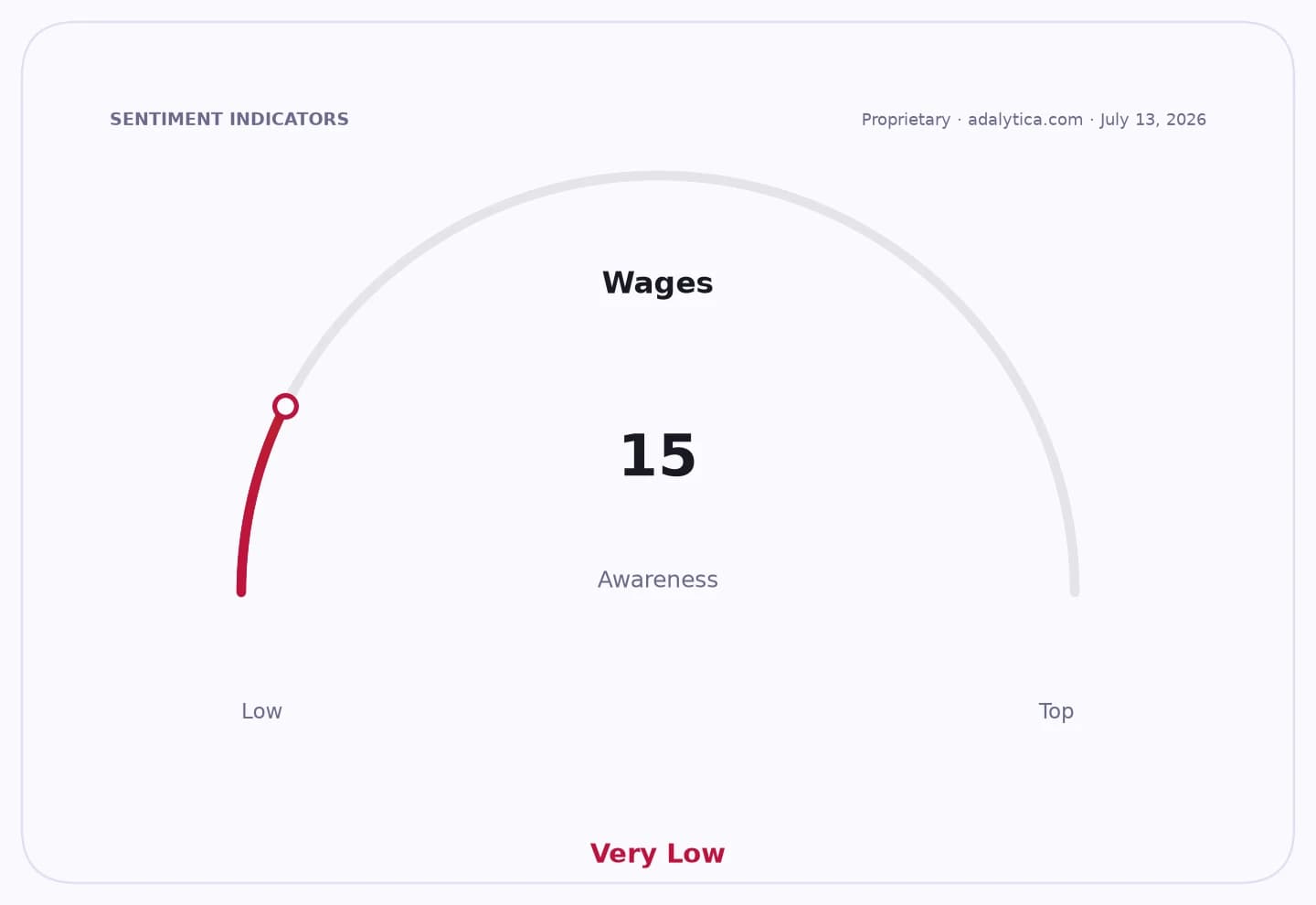
Adalytica’s Wage Inflation Sentiment gauge underscores the fragility of the income picture, showing “Extreme Fear” at 11, with both sentiment and awareness collapsing over the past month. While proprietary gauges should not be read as hard economic data, the message aligns with the broader macro theme: workers and consumers are not yet seeing inflation relief translate into comfort at the checkout line.
The European angle is particularly important. The news flow points to rising food prices and renewed inflation fears tied to Middle East tensions and supply-chain pressure, even as France and some other parts of Europe benefit from lower energy costs. That split matters because Europe’s recovery depends heavily on household consumption, and lower energy bills alone may not offset a broader rise in food and services costs. Bulgaria’s overtaking of Romania in purchasing power highlights how lower inflation, tax burdens and fiscal deficits can quickly improve relative living standards — but it also underlines the unevenness of the region’s economic landscape.
For central banks, the implication is that there is little room to declare victory. If energy volatility re-accelerates inflation while wage growth stays subdued, real purchasing power will remain weak and growth will stay vulnerable. That leaves rates on hold for longer than some investors may prefer, even if disinflation continues in pockets of the economy.
For investors, the narrative is clear: the problem is not just inflation, but inflation that remains high enough to suppress real demand. That favors defensives, quality balance sheets and businesses with pricing power, while leaving rate-sensitive consumer names exposed to repeated downgrades in earnings expectations. The next catalyst will be whether food and energy prices stabilize enough to restore real wage growth; until then, the 4.1% growth outlook looks increasingly aspirational.
| Entity | Gains | Losses |
|---|---|---|
| Staples retailers | ▲defensive demand | ▼limited volume growth |
| Discretionary retailers | ▲pricing power if strong brands | ▼weaker consumer traffic |
| Households | ▲lower energy in some markets | ▼real incomes squeezed |
| Central banks | ▲inflation vigilance credibility | ▼softer growth backdrop |