Inflation keeps consumers focused on savings
Households are still under pressure from prices that have risen far faster than paychecks over the long cycle, and that is keeping consumers focused on ways to avoid overspending.
The latest inflation data show the cost of living remains elevated even after the post-pandemic surge cooled. The consumer price index is projected at 333.86 in September, after rising to 334.13 in August, while the personal consumption expenditures price index is seen at 132.11 in August, up from 131.66 in July. Those are small month-to-month moves, but they come on top of a much larger cumulative climb that has left everyday expenses structurally higher than they were just a few years ago.

That matters because inflation does not just squeeze household balance sheets; it changes behavior. When families start looking for 12 ways to keep spending in check, they are responding to a real economic reset. Discretionary purchases get delayed, comparison shopping gets more aggressive and recurring bills take a bigger share of income. That shift tends to favor low-cost retailers, private-label brands, discount chains and housing models that offer predictability over volatility.
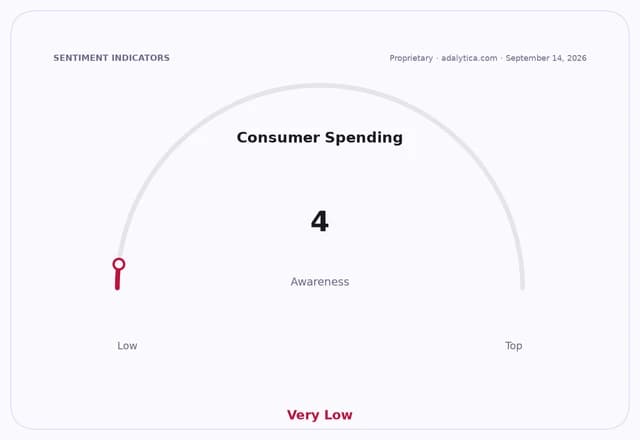
The pressure is showing up in consumer sentiment gauges as well. Adalytica’s Consumer Spending Sentiment snapshot is at 100, or “Extreme Greed,” but its awareness reading is just 4, flagged as “Extreme Fear.” In plain English, households may still want to spend, but they are increasingly alert to price sensitivity and budget leakage. By contrast, Adalytica’s Credit Card Usage Sentiment sits at 22, in “Fear,” suggesting consumers are becoming more cautious about revolving debt and short-term borrowing.
That combination is important for investors because it tends to reshape which businesses can grow without relying on aggressive discounting. Apartment landlords with pricing power, essential-service providers, and companies that help consumers stretch a paycheck can hold up better than premium retailers and highly leveraged discretionary names. American Homes 4 Rent, for example, sits in the middle of a market where shelter costs remain sticky and mortgage affordability is still constrained, keeping renters anchored even as other spending slows.
The larger message is that inflation’s second-order effects are still rippling through the economy. Even if headline price gains are less dramatic than in the peak inflation years, the level of prices is what households live with. That means cost discipline is not just a consumer habit now; it is an investing theme. The market underestimates how durable that behavior can be, and the best positioning is in the businesses that profit from thrift, efficiency and necessity.
| Entity | Gains | Losses |
|---|---|---|
| Discount retailers | ▲More bargain-hunting traffic | ▼Premium brands |
| Private-label brands | ▲Share gains from trading down | ▼Branded consumer goods |
| Apartment landlords | ▲Sticky demand for rentals | ▼Homebuyers facing affordability strain |
| Credit card lenders | ▲Higher balances from stressed consumers | ▼Households avoiding revolving debt |