Inflation, fiscal pressure, and central bank policy

Concerns are rising that governments leaning on inflation to ease fiscal pressure could set off a wider price cycle, lifting costs for households and forcing central banks to keep policy tighter for longer.
The risk is not just higher headline inflation. When prices rise enough to erode debt burdens, real wages and savings also get squeezed, which can trigger demands for higher pay, fresh spending measures and still more price increases. That is why economists warn that any policy designed to manage public finances through inflation can quickly become self-reinforcing.
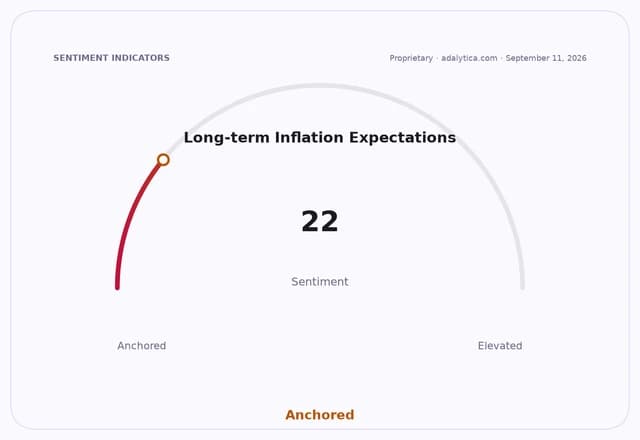
Market pricing already reflects some of that unease. Adalytica’s gauge of confidence in the Fed’s 2% inflation target sits at 41, down 22 points in a day and 59 points over the past week, while its 5-year inflation breakeven sentiment has plunged to 11, labeled “Extreme Fear.” The long-term inflation expectations gauge is also in fear territory at 22, underscoring how quickly confidence can erode when investors suspect inflation will be allowed to do part of the fiscal work.
The worry extends beyond the US. In Australia, One Nation leader Pauline Hanson has brushed aside warnings from economists and the superannuation industry that allowing early access to retirement savings at “3 percent for three years” could stoke inflation, arguing the plan would be inflation-neutral. Critics say such policies can add demand at the same time as they weaken long-term savings, a combination that can amplify price pressures rather than contain them.

That matters for investors because inflation that proves sticky tends to hit bonds, rate-sensitive equities and currencies first, while favoring commodity producers and companies with strong pricing power. It also complicates central bank decisions: if markets think fiscal policy is working against disinflation, rate cuts get pushed back and volatility rises across asset classes.
Recent inflation data and revised expectations suggest the risk is being taken seriously. US consumer prices have kept rising, and Adalytica’s wage inflation sentiment remains at 52, a neutral reading, while 5-year inflation expectations are deeply subdued on the gauge but vulnerable to another shock if policy makers appear willing to tolerate more price growth.
For investors, the key test is whether governments can repair balance sheets without relying on inflation to do the heavy lifting. If they cannot, the result is likely to be slower disinflation, tighter financial conditions and a more persistent premium for inflation protection in markets.
| Entity | Gains | Losses |
|---|---|---|
| Governments using inflation | ▲Short-term debt relief | ▼Credibility on price stability |
| Households and savers | ▲— | ▼Purchasing power |
| Bonds and rate-sensitive stocks | ▲— | ▼Higher yields, tighter policy |
| Commodity producers and pricing-power firms | ▲Higher nominal revenue | ▼— |