Inflation Warning Pushes Yields Higher
Kevin O'Leary is raising a stark warning that inflation is not a spent story, and the market is starting to price that risk back in. U.S. consumer prices are projected to edge higher again in August, while the 10-year Treasury yield has climbed to 4.69%, underscoring the possibility that the Federal Reserve may have to keep policy tighter for longer.
That matters because inflation is the variable that can change everything for equities, bonds and the cost of capital. A hotter price backdrop compresses valuations, delays rate cuts and keeps real borrowing costs elevated across the economy. For consumers, it is the tax that never shows up on a paystub; for investors, it is the force that can abruptly rotate leadership away from long-duration growth and back toward cash flow, pricing power and defensive balance-sheet strength.
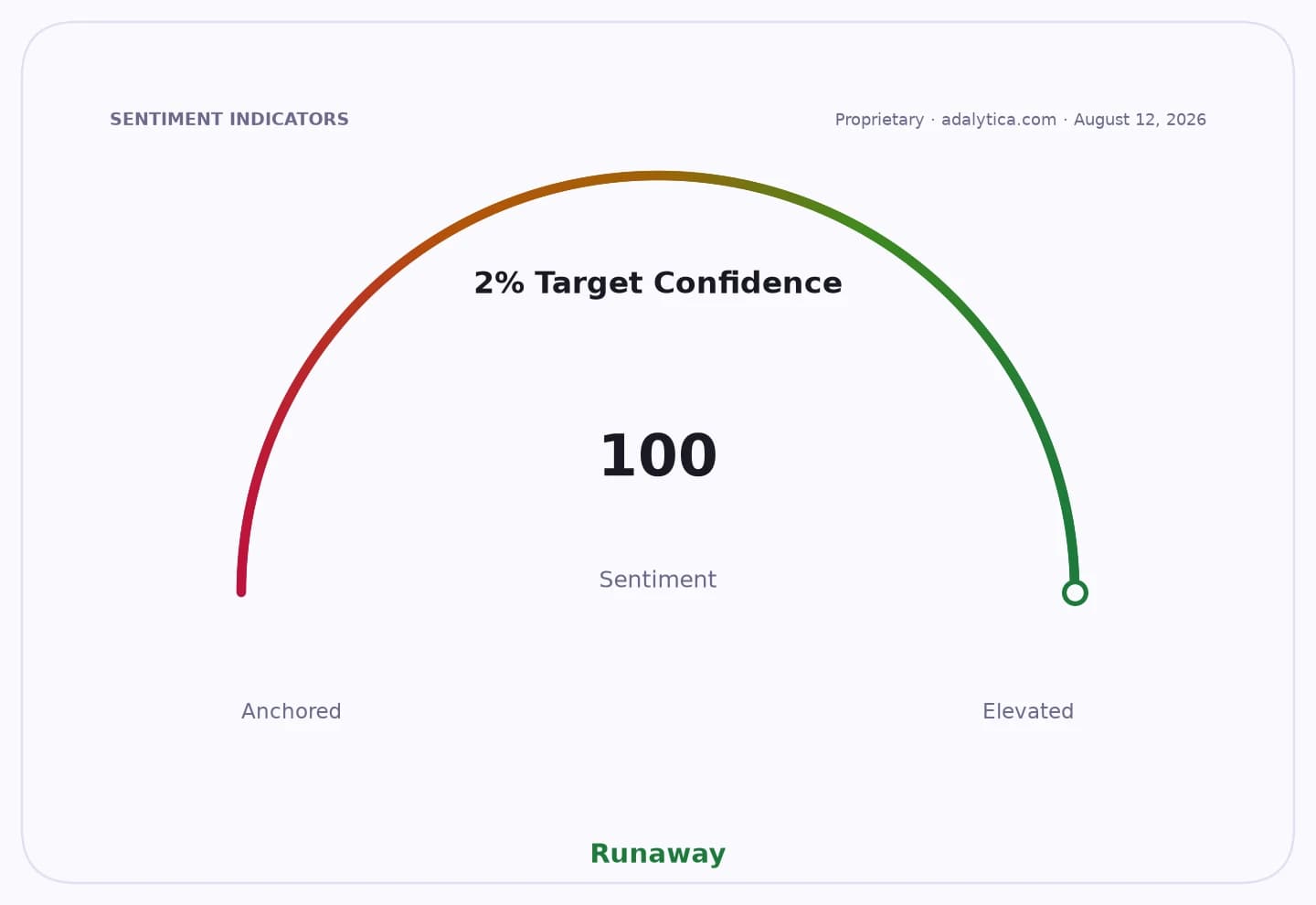
The latest data point in the narrative is not just the headline CPI forecast of 0.35% month over month for August, but the broader signal that inflation expectations are becoming harder to anchor. The Adalytica INFL2 gauge on confidence in the Fed’s 2% target is sitting at an extreme reading, while sentiment tied to long-term inflation expectations, wage inflation and five-year breakevens all remain elevated in the system. In plain English, traders are not dismissing inflation risk — they are re-tilting portfolios around it.
That shift is showing up in the bond market. The 10-year Treasury yield, a benchmark for mortgage rates, corporate debt and equity discount rates, has pushed back near 4.7%. When yields rise on inflation anxiety rather than growth optimism, it tends to hit the most rate-sensitive corners of the market first. The TLT Treasury ETF is trading below its 50-day moving average and under its 200-day average, a sign that duration exposure is still under pressure rather than attracting a durable bid.
The equity tape is telling a similar story. Consumer staples, tracked by XLP, have held up better than consumer discretionary, tracked by XLY, in recent sessions. That is exactly the kind of relative strength investors reach for when inflation threatens to squeeze household budgets and leave less room for spending on travel, apparel and big-ticket purchases. In other words, the market is already voting with its capital: pricing power beats cyclical hope when inflation fears resurface.
For investors, the opportunity is to position ahead of what the market may still be underestimating — not a runaway 1970s inflation spiral, but a sticky, policy-resistant regime where yields stay higher and quality matters more than beta. That favors energy, defense, infrastructure, select staples and companies with the ability to pass through costs without destroying demand. It also argues for caution on long-duration assets whose valuations depend on rapid rate cuts that may not arrive on schedule.
If O'Leary is right, the next catalyst will be the inflation print itself and the Federal Reserve’s reaction function. A hotter read would reinforce the case for higher-for-longer rates, keep pressure on bonds and likely extend the market’s rotation toward defensive and cash-generative names. For now, the asymmetric trade is to respect inflation risk, not fade it.
| Entity | Gains | Losses |
|---|---|---|
| Consumer staples (XLP) | ▲Pricing power, defensive demand | ▼Limited upside in risk-on rallies |
| Consumer discretionary (XLY) | ▲Select retailers with strong brand power | ▼Income-sensitive spending, margin pressure |
| Long Treasuries (TLT) | ▲A dovish Fed surprise | ▼Higher yields, duration losses |
| Inflation hedges | ▲Portfolio protection, relative inflows | ▼Investors betting on quick disinflation |