Iran ceasefire offer could ease oil market risk

Iran’s president says Tehran would return to the June ceasefire if Washington does the same, a conditional opening that could ease one of the Middle East’s most market-sensitive flashpoints if it turns into a real de-escalation.
The message matters because every hint of restraint in the Iran-U.S. standoff can quickly filter into oil, shipping and defense markets. Brent and WTI traders are already pricing in a tense backdrop, with U.S. crude last around $91.15 a barrel and the next-day forecast at $91.75, while the 10-year Treasury yield sits near 4.82%, reflecting a market still balancing inflation risk against growth concerns.
Energy shares have been among the clearest beneficiaries of the recent geopolitical premium. The Energy Select Sector SPDR Fund, XLE, rose to $65.10 on Sept. 2 from $57.31 a month earlier, while the SPDR S&P Oil & Gas Exploration & Production ETF, XOP, climbed to $193.16 from $161.99 over the same stretch, helped by a rally in crude and firmer cash-flow expectations for producers.
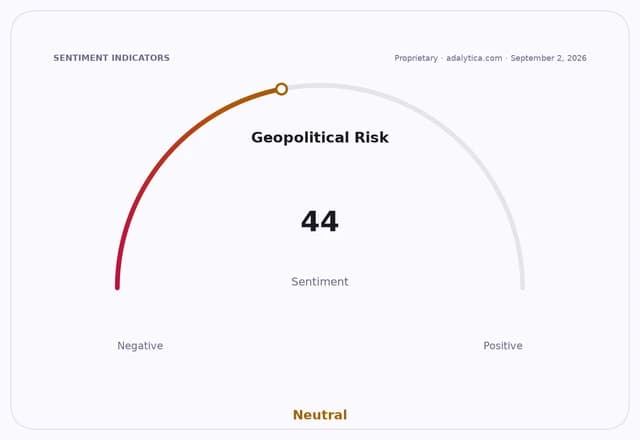
The backdrop is fragile. Iran’s offer is contingent on the U.S. matching its position, and the ceasefire has already been tested by renewed attacks and retaliatory strikes, underscoring how quickly any détente can unravel. Adalytica’s Global Stability Sentiment gauge sits at 44, down 45 points over seven days, a sign that risk appetite around geopolitical stability remains weak even after recent market gains.

For investors, the immediate question is whether this becomes a temporary headline or a durable reduction in supply risk. A credible ceasefire would likely cap oil’s risk premium and cool recent gains in energy stocks; a breakdown would keep crude bid, support upstream producers and reinforce pressure on airlines, refiners and broader inflation-sensitive assets.
The next catalyst is whether Washington responds in kind. Until then, traders are likely to keep treating Iran as a live supply shock, not a resolved one.
| Entity | Gains | Losses |
|---|---|---|
| Energy producers | ▲Higher crude prices | ▼Demand if ceasefire holds |
| Airlines and refiners | ▲Lower fuel costs | ▼Elevated input costs |
| Oil bulls | ▲Geopolitical premium | ▼Price pullback on de-escalation |
| U.S. and Iran negotiators | ▲Diplomatic off-ramp | ▼Credibility if talks fail |