Iran-Russia Ties Lift Oil Risk Premium

Iran’s foreign minister said Tehran consults with Russia “at every opportunity,” underscoring a deepening strategic alignment that is increasingly relevant to energy markets, sanctions policy and the broader risk premium attached to the Middle East.
The comments from Abbas Araqchi matter because they point to a more coordinated Iran-Russia axis at a moment when Washington is weighing whether to broaden sanctions pressure and markets are already pricing in elevated geopolitical danger. For investors, that raises the odds of tighter enforcement, more disruption risk around crude supply routes and a higher floor under energy prices if the relationship translates into closer policy and military cooperation.
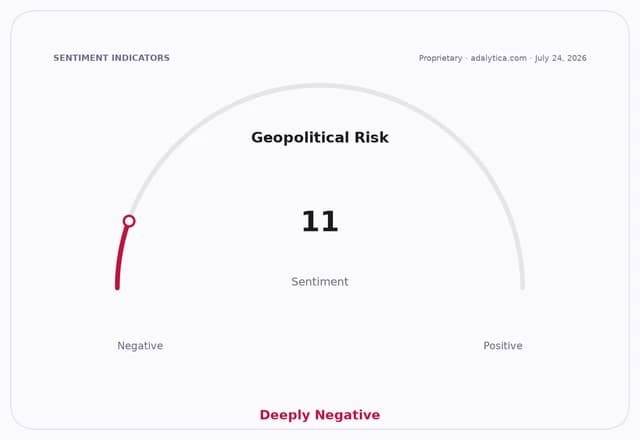
That is already showing up in markets. U.S. oil benchmark USO has surged to 136.39, after touching 139.49 a day earlier, far above its 50-day moving average of 125.38 and more than 38% above the 200-day average of 98.85. The move has been accompanied by an extremely overbought relative strength reading of 82.4, a sign that traders are aggressively adding exposure even as momentum begins to look stretched. Energy stocks have also advanced, with the XLE sector ETF closing at 59.78, near its 52-week highs and well above its 50-day average of 56.54.
The macro significance is broader than a short-term crude rally. Russia and Iran are both central to the geopolitics of sanctioned energy supply, and closer cooperation can complicate efforts by the U.S. and its allies to isolate either country economically. If Tehran and Moscow are coordinating more closely on diplomacy, trade and security, the risk grows that sanctions become less effective at the margin while enforcement costs rise for Western governments and compliance burdens increase for banks, shippers and commodity traders.
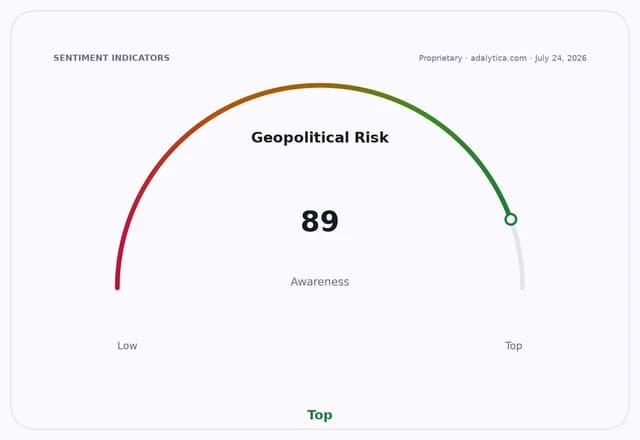
That is where the investor implication sharpens. Bullish oil traders will argue that any signal of tighter Iran-Russia alignment reinforces the case for a persistent geopolitical risk premium in crude and in energy equities, especially if the market starts to anticipate new sanctions or supply-side retaliation. The bearish view is that the market has already run too far, too fast: USO’s price is extended relative to its moving averages and the overbought technical backdrop raises the likelihood of a pullback if the rhetoric does not turn into concrete policy action.
The political backdrop also matters. Former President Donald Trump has urged Republicans to include Iran in a sanctions package aimed at Russia, a reminder that Iran policy could be folded into a wider U.S. debate over how aggressively to confront countries aligned against Washington. That would strengthen the case for more punitive measures, but it also risks pushing energy prices higher at a time when inflation sensitivity remains elevated across developed markets.
For now, the market is telling the same story as the diplomacy: investors are treating Iran-Russia coordination as more than rhetoric. The question is whether it becomes a catalyst for new restrictions and supply stress, or merely another headline that leaves oil overbought and vulnerable to profit-taking.
| Entity | Gains | Losses |
|---|---|---|
| Iran and Russia | ▲Strategic coordination | ▼Diplomatic isolation |
| Oil producers | ▲Higher price support | ▼Demand-sensitive consumers |
| Energy equities | ▲Earnings tailwind | ▼Mean reversion risk |
| U.S. policymakers | ▲Sanctions leverage | ▼Higher inflation pressure |