Iran Sanctions Lift Oil Volatility
The United States has widened pressure on Iran by sanctioning a Dubai-based network it says is tied to Supreme Leader Ayatollah Ali Khamenei’s inner circle, a move that raises the odds of tighter crude supply and more volatility in energy markets.
The Treasury’s Office of Foreign Assets Control said the designations are aimed at sanctions evasion and financing channels linked to one of Tehran’s most powerful political camps. For investors, that matters because Washington is signaling it will hit not just Iran’s oil exports but also the financial infrastructure that helps move the proceeds, making enforcement risk more severe for traders, shippers and regional intermediaries.
The sanctions come as tensions around the Strait of Hormuz remain elevated after attacks on tankers and as the U.S. steps up broader pressure on Tehran. Brent and WTI have already been reacting to the geopolitical backdrop, with crude benchmarks sharply higher in recent months before pulling back; U.S. oil ETF USO has swung from a March high above $150 to about $108.70 on July 10, underscoring how quickly risk premium can come and go as headlines shift.
Technical indicators also point to a market still digesting the shock. USO remains well above its 200-day moving average, but its recent decline has left the fund below its 50-day average and its RSI has cooled from overbought levels, suggesting traders are no longer pricing in the kind of one-way surge seen earlier in the year. WTI futures closed at $74.30 on July 13, off sharply from the March spike above $90 and far below the spring peaks that lifted energy stocks.
That backdrop helps explain why energy equities, while still supported by oil’s elevated absolute level, are vulnerable to fast reversals if diplomacy opens supply or if enforcement actions do not materially curb exports. The XLE energy ETF, at $55.08 on July 10, is holding close to its 50-day average, reflecting a market that is still cautiously constructive but far from euphoric.
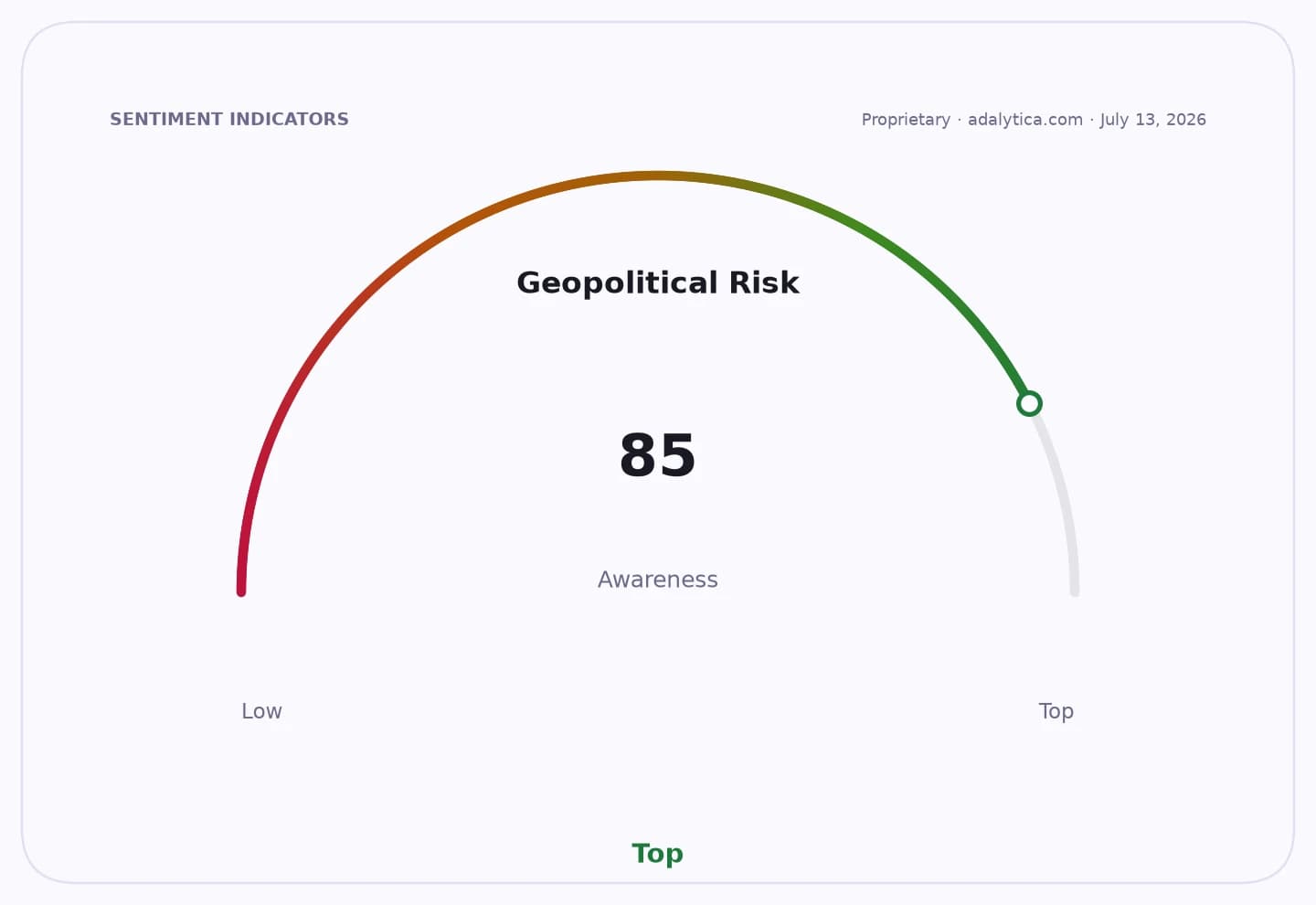
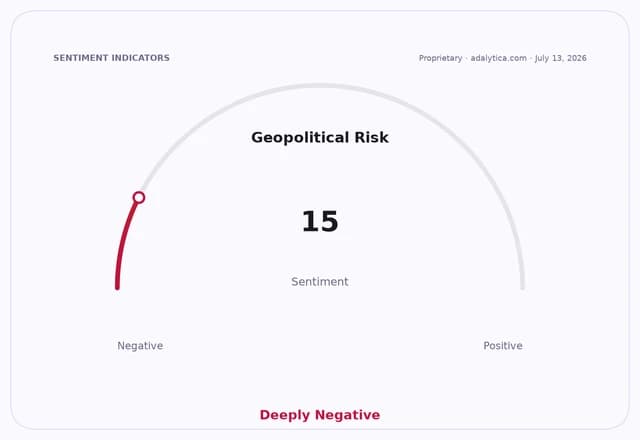
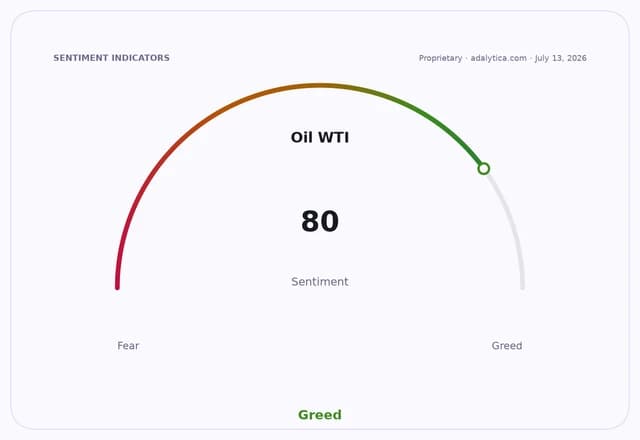
Adalytica’s Global Stability Sentiment gauge sits at 15, or “Extreme Fear,” while awareness is elevated, a combination that points to a market highly alert to the risk of further escalation. Adalytica’s oil WTI trade signals also show “Greed” at 80, even as awareness remains in “Fear,” a split that fits an oil market trading on headline risk rather than clean supply fundamentals.
The immediate question for investors is whether the sanctions force a meaningful disruption to Iranian crude flows or merely add another layer of pressure without changing barrels on the water. Any follow-through on tanker attacks, additional Treasury actions or retaliatory moves from Tehran would likely keep crude, energy stocks and shipping-related assets volatile into the next round of U.S. policy and regional developments.
| Entity | Gains | Losses |
|---|---|---|
| U.S. Treasury / OFAC | ▲More leverage on Iran | ▼Higher enforcement burden |
| Iran / Khamenei network | ▲None | ▼Financing channels, access |
| Oil bulls / energy stocks | ▲Risk premium support | ▼If escalation fades |
| Importers / airlines / consumers | ▲None | ▼Higher fuel costs |