Iran Says It Seized U.S. Underwater Vessel
Iran’s Revolutionary Guard says it seized an advanced U.S. unmanned underwater vessel near the entrance to the Strait of Hormuz, a claim that, if true, would mark a notable escalation in the maritime standoff over the world’s most important oil chokepoint.
The allegation matters because the strait carries roughly a fifth of global oil consumption and any military encounter there can quickly spill into energy prices, shipping insurance costs and broader risk appetite. Tehran says the operation was “complex” and intelligence-led, while Washington has not confirmed the capture and has denied the Iranian account in similar past episodes, leaving room for a familiar cycle of denial, counterclaim and heightened alert.
For investors, the immediate relevance is not the drone itself but what it says about the security premium on Middle East energy flows. Even without a verified incident, the market typically prices a higher probability of disruption when Iran signals it can detect or seize U.S. surveillance assets near the waterway. That tends to support crude, shipping and defense names while pressuring airlines, transport and other fuel-sensitive sectors.
The geopolitical backdrop is one of persistent brinkmanship. Iran has repeatedly sought to show it can police the strait and challenge U.S. reconnaissance operations, while the U.S. has used maritime surveillance and naval presence to deter attacks on tankers and allied vessels. A successful capture, if corroborated, would hand Tehran a propaganda and intelligence win, and could encourage further tit-for-tat encounters at sea.
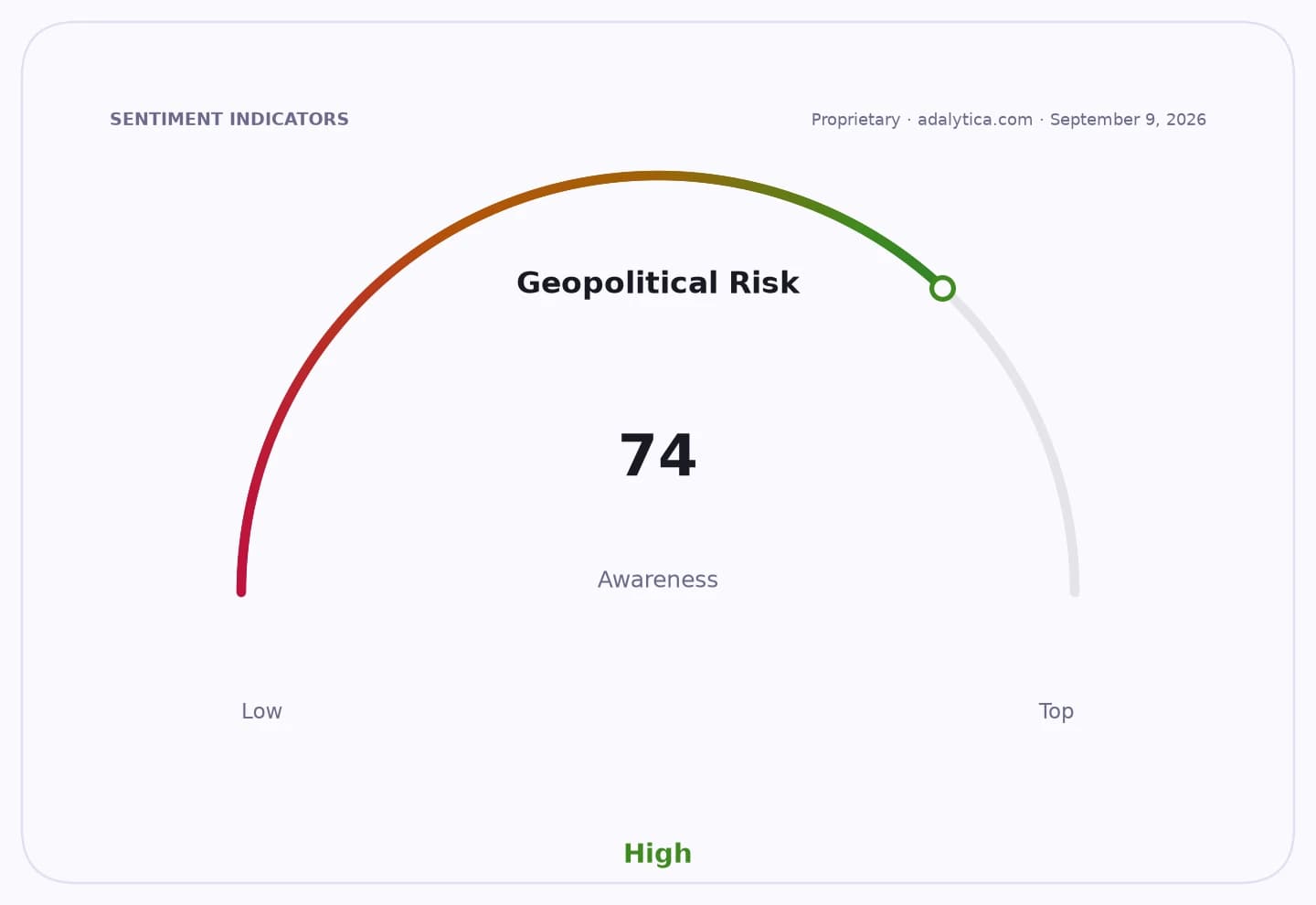
Equities tied to defense and maritime security are likely to draw renewed attention if the dispute deepens. Lockheed Martin, Northrop Grumman and RTX have already traded with sharp swings in recent sessions, reflecting broader defense demand and investor sensitivity to geopolitical headlines. At the same time, the move in risk gauges suggests markets remain alert to spillover risk: Adalytica’s Global Stability Sentiment sits at a neutral 52, while awareness is elevated at 74, indicating the issue is on investors’ radar even if conviction about escalation is not yet extreme.
Oil traders will be watching for any signs the episode affects tanker movements or insurance pricing, but the larger question is whether it changes U.S.-Iran rules of engagement. If the claim is true and the vessel was advanced, it would underline the vulnerability of unmanned systems in contested waters and could push Washington to harden operations or respond more forcefully to future interceptions.
For now, the most important variable is verification. If the U.S. confirms the loss, or if Iran releases imagery that proves the seizure, the incident could become a test of deterrence in a corridor where even limited escalation can carry outsized economic consequences.
| Entity | Gains | Losses |
|---|---|---|
| Iran’s IRGC Navy | ▲propaganda leverage | ▼diplomatic pressure |
| U.S. Navy / Pentagon | ▲none | ▼surveillance setback |
| Oil producers | ▲higher risk premium | ▼potential disruption risk |
| Defense contractors | ▲renewed demand focus | ▼no immediate loss |