Iran Tensions Raise Oil and Defense Risk
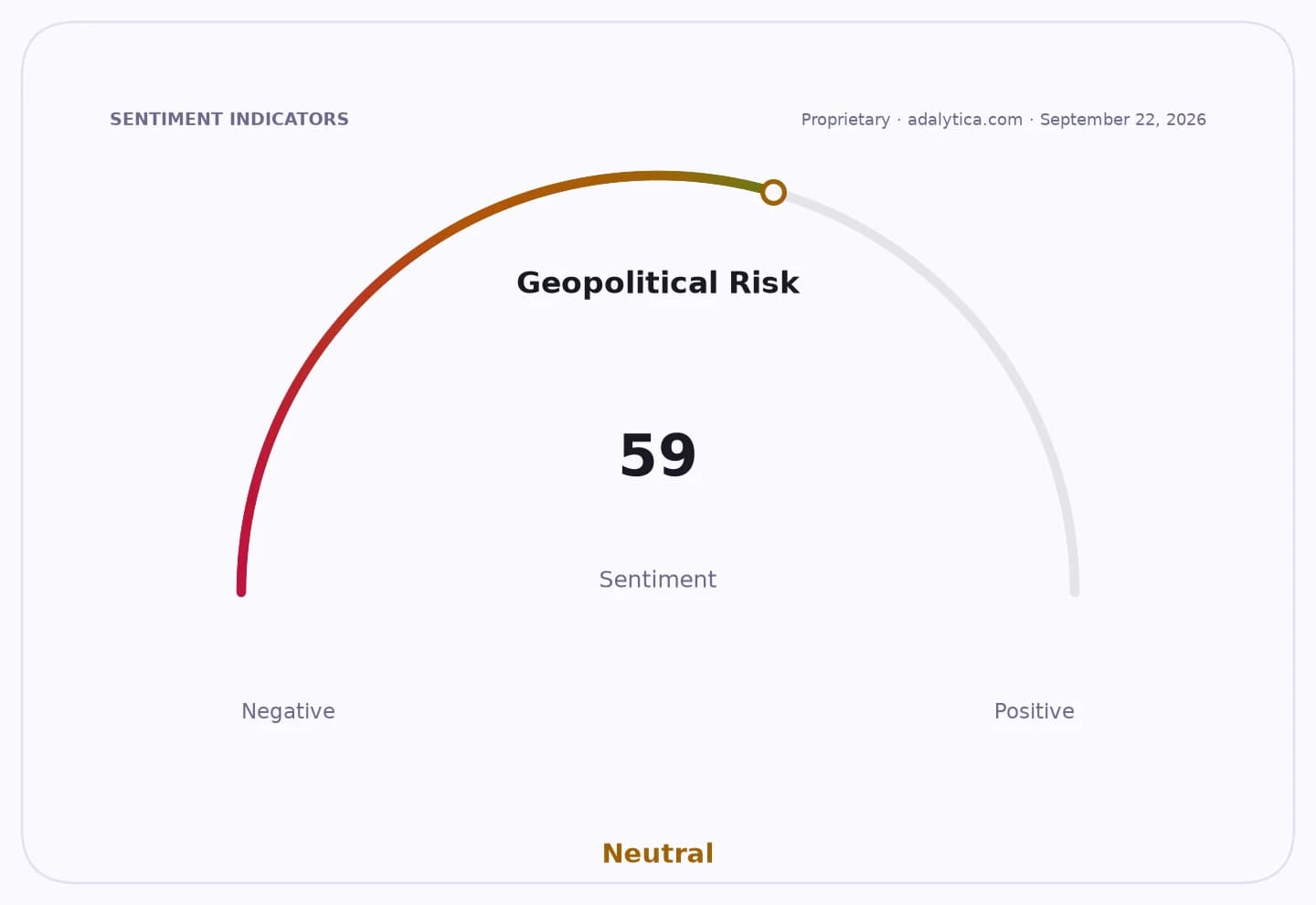
Iran’s hardening stance toward Washington is the bigger market story because it raises the odds of a prolonged security shock in the Middle East at a time when oil, defense logistics and risk assets are still sensitive to every headline.
The U.S. State Department has told Americans in the region to stay alert and for those outside West Asia to seriously reconsider travel there, warning that flights could be canceled, airspace could close and the security situation could deteriorate quickly. That is not routine diplomatic language. It is the kind of alert that tells investors the geopolitical premium in crude and shipping can reprice fast if the standoff turns from rhetoric into action.
Tehran’s message is equally important. Mohsen Rezaei, secretary of Iran’s Supreme National Security Council, said Iran has set seven conditions before talks with the United States can begin, effectively making diplomacy conditional on Washington accepting Tehran’s terms. That makes a near-term breakthrough less likely and keeps the region in a high-fragility state, especially as U.S. officials also warned that Iran-backed Houthi activity against Saudi Arabia and other American interests could widen the conflict.
For investors, the first-order trade is energy. West Asia tensions tend to support crude because they threaten supply lanes, insurance costs and the free flow of barrels through one of the world’s most important export corridors. U.S. crude futures, tracked by USO, have already been trading with elevated volatility and remain far above their longer-run base, while energy equities have outperformed the broader market. The XLE energy ETF has held gains even after a pullback, reflecting how quickly capital moves toward producers when the market starts pricing geopolitical risk.
The second-order trade is infrastructure and defense. Any escalation that disrupts airspace, shipping routes or regional installations would favor companies with exposure to security, logistics, and energy services while pressuring airlines, travelers and parts of global supply chains. It also reinforces a broader thesis the market underestimates: geopolitical instability is not just a short-term headline risk, it is a recurring capex driver for defense, oilfield services and strategic energy infrastructure.
The macro backdrop makes the move more consequential. The 10-year Treasury yield around 4.96% leaves equities vulnerable to any new inflation impulse from higher oil, while the dollar remains bid in classic risk-off fashion, according to Adalytica’s US Dollar Trade Signals, which show “Extreme Greed” in the greenback. That combination can squeeze rate-sensitive parts of the market even as it supports commodity-linked names.
My view is simple: this is still an underpriced tail risk. If tensions keep rising, crude can remain supported well beyond a single spike, and the winners will be the obvious hedges as well as the lesser-known toll collectors — producers, drillers, oilfield services and defense contractors. If diplomacy somehow gains traction, those names may give back part of the premium, but until Iran and the U.S. move off their hard lines, investors should treat West Asia as a live volatility catalyst, not background noise.
| Entity | Gains | Losses |
|---|---|---|
| Oil producers / energy ETFs | ▲Higher crude prices | ▼Demand shock if conflict widens |
| Oilfield services firms | ▲More geopolitical capex demand | ▼Project delays if logistics break |
| Airlines / travel-linked stocks | ▲None | ▼Airspace closures, cancellations |
| US dollar / safe havens | ▲Flight-to-quality inflows | ▼Risk assets and cyclicals |