Iran Calls for US IAEA Membership Suspension

Iran has called for the United States to be stripped of its membership in the International Atomic Energy Agency, escalating a nuclear dispute that is increasingly spilling into energy markets and regional security calculations.
The demand matters because it underscores how far the confrontation between Tehran and Washington has moved beyond rhetoric over inspections and safeguards. By urging the suspension of the US under Article XIX.B of the IAEA statute, Iran is trying to turn the agency’s rules against its most powerful critic and frame Washington as the party violating the nuclear order it says it defends.

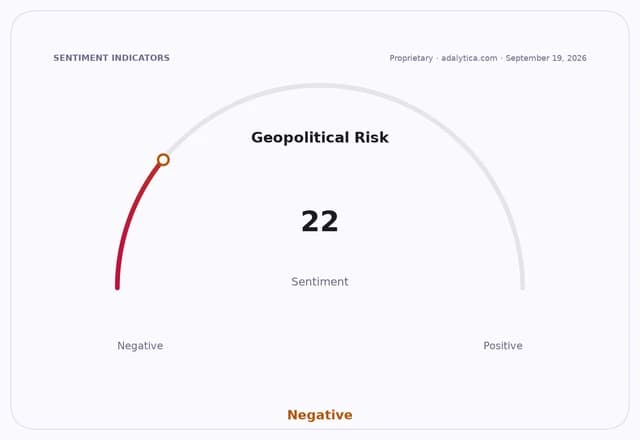
That has economic significance far beyond Vienna. The IAEA sits at the center of global efforts to monitor nuclear activity and prevent proliferation. Any move that further politicizes the agency risks weakening confidence in the international system meant to manage one of the biggest geopolitical tail risks facing markets: a broader conflict involving Iran and the United States, with knock-on effects for crude oil, shipping through the Strait of Hormuz and risk assets tied to Middle East stability.
Investors are already sensitive to that backdrop. The latest flare-up comes after a series of attacks and counterattacks in the region, including US strikes on Iranian tankers and Iranian retaliation against a US base in Jordan, according to the broader news context. That raises the probability of more sanctions, more military posturing and a higher geopolitical risk premium in oil. Energy producers tend to benefit from such spikes, while airlines, refiners, shippers and import-dependent economies are exposed to higher input costs and supply disruptions.
The market signal is consistent with that tension. Uranium-related equities, as tracked by the URA ETF, have been volatile, with the fund closing at $41.65 on Sept. 18, below both its 50-day moving average of $43.15 and its 200-day moving average of $48.27. The latest reading also leaves the fund under technical pressure, with RSI at 35.7 after a sharp drawdown from earlier highs. That suggests traders are positioning cautiously around any escalation that could alter the nuclear outlook or tighten policy toward Iran’s atomic program.
For Tehran, the move is also a political message aimed at domestic and international audiences: that the US should not be allowed to police a system it has, in Iran’s telling, violated. For Washington and its allies, the response is likely to be dismissive, but the optics matter. If the dispute deepens, it could complicate already fragile diplomacy and make it harder for the IAEA to maintain access, credibility and enforcement leverage.
The near-term question for investors is not whether this resolves quickly, but whether it becomes another step in a cycle of escalation that keeps oil, shipping and defense assets bid while keeping broader global stability sentiment under pressure. With the region already on edge, the IAEA fight adds another layer of risk to an increasingly combustible geopolitical backdrop.
| Entity | Gains | Losses |
|---|---|---|
| Iran | ▲Diplomatic leverage | ▼Insulation from scrutiny |
| United States | ▲None immediately | ▼IAEA credibility |
| Energy producers | ▲Higher risk premium | ▼None directly |
| Airlines/shippers/importers | ▲None | ▼Fuel and route costs |