Iran warning lifts USO to $124.15 on Aug. 10
Iran is telling regional governments to stop their territory from being used in any hostile action against the Islamic Republic, sharpening a confrontation that is already pushing oil-related assets higher and deepening fears over the security of the Strait of Hormuz.
The warning raises the stakes around a waterway that handles a large share of global crude flows and can quickly ripple through fuel prices, shipping costs and inflation expectations. For investors, that means any sign of a wider regional conflict is likely to keep a geopolitical premium under oil, even if the market is still pricing in a degree of restraint.

USO, the United States Oil Fund, rose to $124.15 on Aug. 10 from $118.87 three sessions earlier, while the Energy Select Sector SPDR Fund, XLE, climbed to $59.49 from $57.31 over the same stretch. USO’s close remains far above its 50-day moving average of $121.04 and its 200-day average of $101.73, a sign that traders are still paying up for crude exposure after a turbulent summer.
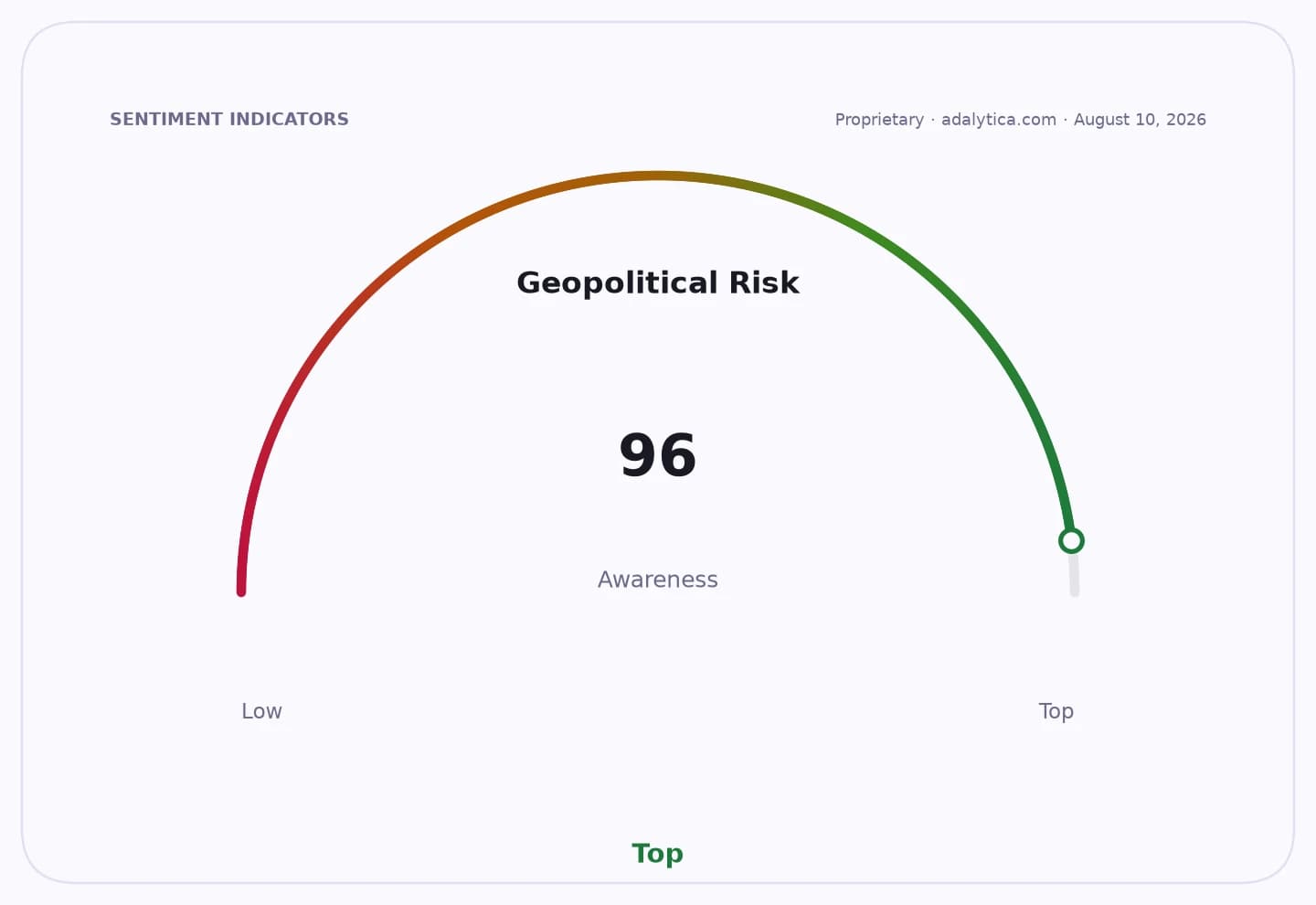
The move comes as Adalytica’s oil WTI trade signals remain in “Greed” territory and its global stability gauge sits at 96, labeled “Extreme Greed,” underscoring how quickly geopolitical risk is being repriced. The backdrop also supports the dollar, whose trade signals are at 100, suggesting investors are still favoring safe-haven assets when tensions flare.

The immediate market question is whether the rhetoric stays contained or spills into shipping lanes, military positioning and sanctions. If the standoff hardens around Hormuz, energy producers, tanker operators and defense-linked assets are likely to benefit, while airlines, importers and oil consumers face the bigger cost pressure.
| Entity | Gains | Losses |
|---|---|---|
| Oil producers | ▲Higher crude prices | ▼Demand destruction risk |
| Energy ETFs/USO/XLE holders | ▲Geopolitical premium | ▼Volatility if tensions ease |
| Safe-haven dollar | ▲Flight-to-quality demand | ▼Risk assets |
| Airlines/importers | ▲Lower fuel costs only if crude falls | ▼Higher fuel and shipping costs |