IWM Rallies to $301 as Investors Rotate Into Small Caps
Investors rushed back into small-cap stocks in July while pulling money from large-cap funds for the first time in 30 months, a sharp rotation that points to a market betting on easier financial conditions, better domestic growth and more room for smaller companies to catch up.
The shift matters because small caps are typically more sensitive to borrowing costs, credit conditions and the economic cycle than their mega-cap peers. With the federal funds rate at 3.63% and the 10-year Treasury yield around 4.65%, investors are increasingly treating rate stability as a green light for higher-beta parts of the market, even as the labor market remains relatively firm with unemployment at 4.1%.
That preference is showing up in price action. The iShares Russell 2000 ETF, or IWM, has climbed to about $301, above its 50-day moving average of $294.11 and close to its upper Bollinger Band, while its RSI reading near 60 suggests momentum has improved without yet flashing extreme overbought conditions. The S&P 500 ETF, SPY, is still holding near $770, but the market’s recent surge in large-cap names has not prevented investors from trimming exposure after a long run of inflows.
For investors, the rotation is a warning that leadership may broaden beyond the handful of giant growth stocks that powered much of the rally. Small caps tend to benefit most when earnings expectations stabilize, refinancing risk eases and domestically focused sectors such as industrials, banks and regional lenders can outperform. They also carry more balance-sheet risk, which makes the move more meaningful if rate cuts or softer yields start to look more likely.
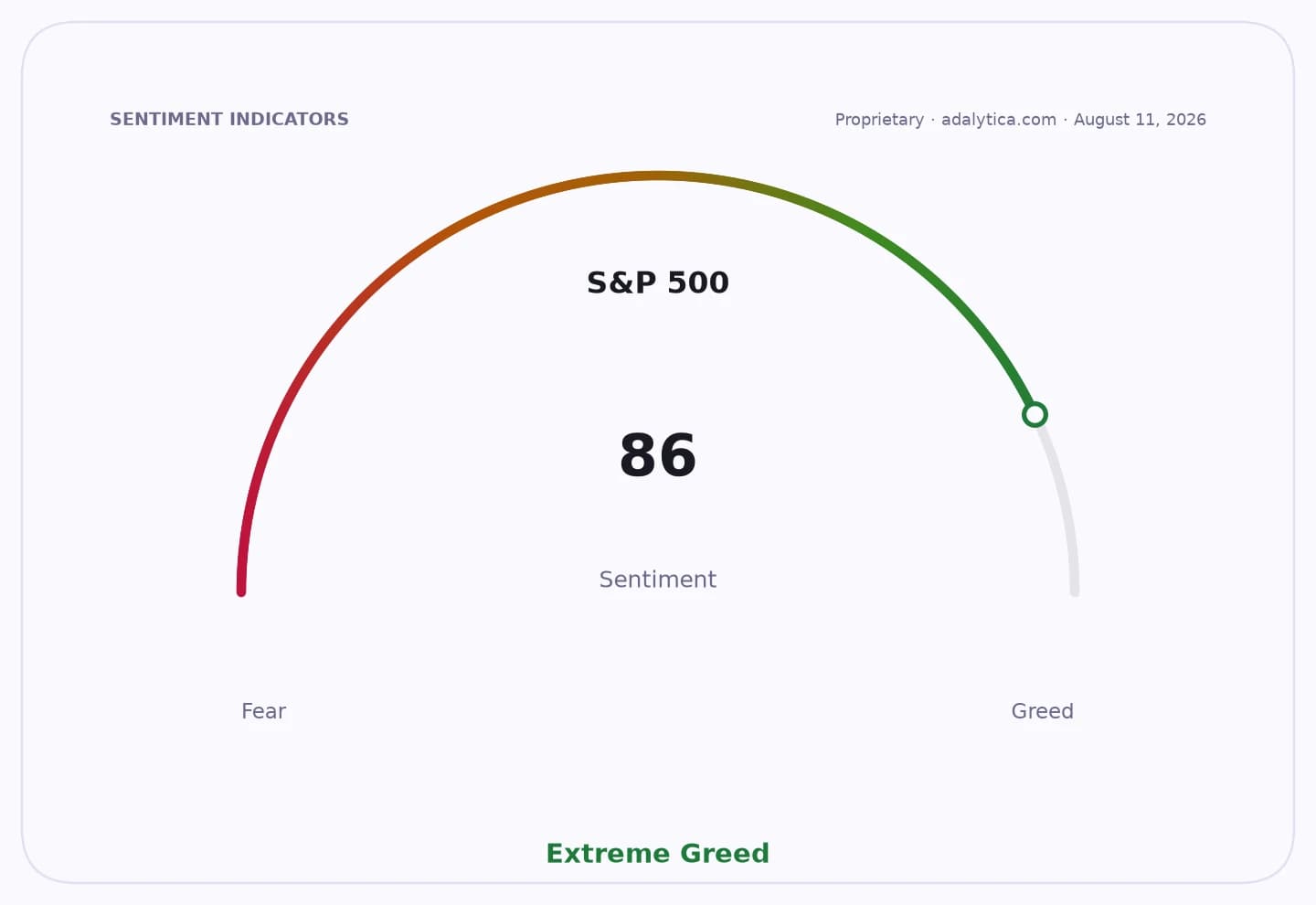
Adalytica’s S&P 500 trade signals still show extreme greed and elevated awareness, suggesting the large-cap trade remains crowded even as money begins to move elsewhere. That leaves room for further volatility if the next leg of the market is driven by a catch-up trade in smaller names rather than another push from mega caps.
The next test is whether the inflow into small caps persists through the late-summer run of inflation and growth data. If it does, portfolio managers may be signaling that the market’s next phase is about cyclicals, domestically exposed companies and lower-quality laggards closing the gap — not just another bid for the biggest stocks.
| Entity | Gains | Losses |
|---|---|---|
| Small-cap funds | ▲New inflows | ▼Prior underweights |
| Large-cap funds | ▲— | ▼First outflow in 30 months |
| IWM / Russell 2000 | ▲Broader demand | ▼Crowded mega-cap trade |
| SPY / mega caps | ▲Relative resilience | ▼Portfolio rotation away |