Japan 10-Year Yield Hits Highest Since 1996
Japan’s 10-year government bond yield climbed to its highest level since 1996, underscoring a market shift toward tighter Bank of Japan policy and a less benign inflation backdrop that could reset borrowing costs across the economy.
The move matters because Japan has spent decades anchored by ultra-low rates, first under deflation and then under aggressive monetary easing. A sustained rise in long-term yields would raise funding costs for the government, corporates and households, while also reducing the relative attractiveness of Japanese bonds to global investors who have long treated them as a low-volatility refuge.
The latest rise reflects growing conviction that the BOJ may be forced to keep normalizing policy as inflation proves stickier and energy costs remain elevated. That has helped push Japanese yields higher even as many developed-market bond markets have been more mixed, with investors parsing whether central banks are near the end of their tightening cycle rather than the beginning of one.
For investors, the yield break is significant because it affects the entire valuation chain. Higher sovereign yields can pressure equity multiples, especially for rate-sensitive sectors such as real estate and utilities, while also improving the appeal of domestic fixed income relative to equities. The move has already been accompanied by notable strength in Japan-focused equity exposure, with the EWJ ETF up to 98.21, though its 14-day RSI of 72.2 suggests the rally is stretched in the short term. The yen-tracking FXY ETF has also firmed to 57.58, reflecting a market that is increasingly pricing less policy divergence with the United States.
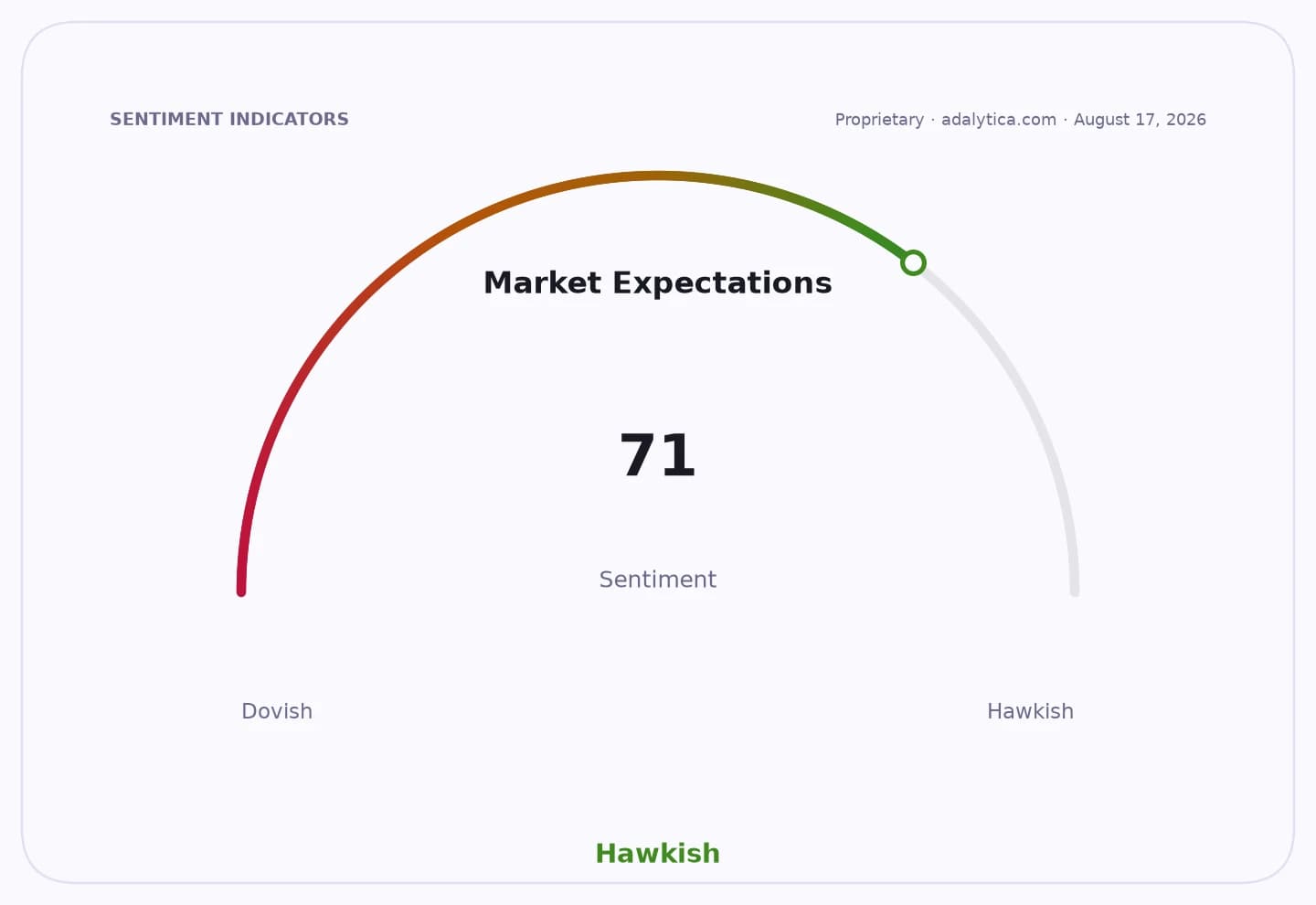
Treasury markets are sending the same broad message of changing rate expectations. Adalytica’s market-expectations gauge for Fed policy sits at 71, in “greed” territory, while US Treasury bond trade signals show fear, indicating investors are still heavily focused on the path of rates and inflation globally. Japan’s move matters beyond its borders because Japanese institutions are major holders of foreign bonds, and a higher domestic yield can alter capital flows out of US Treasuries and other developed-market debt.
The key question now is whether this is a temporary repricing or the start of a longer-term regime change. If the BOJ follows through with further tightening and inflation remains firm, Japan’s bond market could be entering a structurally different phase after years of suppressed yields. If growth cools or inflation eases, the move may prove too aggressive, but for now the market is treating the 1996 high as a warning that Japan’s ultra-low-rate era is no longer the default assumption.
| Entity | Gains | Losses |
|---|---|---|
| Japanese savers | ▲Higher deposit and bond returns | ▼Lower bond prices |
| Banks and insurers | ▲Better net interest margins | ▼Portfolio mark-to-market pressure |
| Japanese government | ▲None | ▼Higher debt-service costs |
| Equity rate-sensitive sectors | ▲None | ▼Higher valuation discounting |